






- Fact Checked
- April 28, 2026
- 11 min read
Vaginal Discharge After Menopause: Causes, pH Balance, and Solutions

- Written by Daniella Levy • Updated on May 27, 2026
- Updated on May 27, 2026

Table of Contents
Table of Contents
You finally made it to the other side of your menstrual cycle… and now your body is doing something totally unexpected when it comes to discharge. Maybe the amount of discharge is different, more or less than you were used to pre-menopause. Maybe it looks different. Maybe it smells different. Menopause is full of completely normal bodily changes. Could this be one of them?
The answer: it depends. After reading this guide, you’ll feel a lot more confident assessing for yourself, and making an appointment with your doctor if necessary.
This post is for informational purposes only and does not constitute medical advice. See full disclaimer below.
Is Vaginal Discharge After Menopause Normal?
Yes, though what “normal” means is a little different now than it was during your reproductive years.
Before menopause, the vagina produces discharge as part of a healthy self-cleaning process.1 Estrogen levels keep tissues plump and moist, while also helping maintain the acidic vaginal pH that keeps harmful bacteria at bay. After menopause, estrogen levels drop significantly as the ovaries reduce hormone production, and the vaginal environment changes along with them.
One of the ways it changes it with, you guessed it, vaginal discharge. Most women will notice one of two things when it comes to discharge: either the amount of discharge decreases noticeably, or the consistency shifts to something thinner and more watery.2 Both can be normal.
Normal vaginal discharge after menopause is typically:
- Clear to light tan or white in color
- Thin, slightly watery, or faintly creamy in texture
- Little to no odor
- Minimal in volume
Abnormal discharge is typically that which is:
- Yellow, green, gray, or bloody
- Accompanied by vaginal itching
- Foul-smelling
Don’t worry. More on all this and what it could signal below.
What Your Discharge Color and Consistency Can Tell You
The thing about your body is that it’s always communicating with you. Your discharge is not different. It’s always signaling something about your vaginal health. You just have to know what to look for.
One of the biggest signals has to do with color. Here are the most common discharge colors and what they may indicate for menopausal women.
- Clear or watery discharge. Often normal! Watery discharge can be a sign of thinning vaginal tissue or simply a shift in vaginal lubrication patterns. Though “normal,” if it’s also accompanied by pain during sex or other uncomfortable symptoms, it’s worth a discussion with your doctor.3
- White discharge or faintly creamy discharge. Usually normal, especially if odorless. If accompanied by itching or a thick, cottage cheese texture, a yeast infection is likely.4
- Gray or off-white discharge with a fishy odor. Classic signs of bacterial vaginosis (BV), and more common after menopause due to rising vaginal pH.5 This type of discharge is your sign to call your doctor for proper diagnosis and treatment.
- Yellow discharge or green discharge. Often signals a bacterial infection, yeast infection, or sexually transmitted infection (STI). Frothy yellow-green discharge in particular can indicate trichomoniasis, an STI that's easily treatable but requires diagnosis.6 Don’t try to self-diagnose, though. Your doctor is the best person for that job. Treating the wrong thing will only make symptoms worse!
- Brown discharge or light tan discharge. Deserves a medical evaluation, especially if it’s recurring. Unexplained brown discharge after menopause can result from old blood leaving the body slowly, from fragile vaginal tissue that's been irritated, and may also indicate polyps or fibroids.7
- Bloody or pink-tinged discharge. Another sign to call your doctor. Any postmenopausal bleeding or vaginal bleeding (even a small amount) should be evaluated promptly to rule out endometrial abnormalities, polyps, or other gynecologic changes.8
How Menopause Changes Your Vaginal pH Balance
You came here to learn about how menopause changes your vaginal discharge, but it’s important you learn this, too, because it’s related: menopause changes your vaginal pH balance.
Before menopause, your vagina was acidic with a vaginal pH typically between 3.8 and 4.5. That acidity isn't random. It's driven by estrogen levels, which support the growth of protective Lactobacillus bacteria. These bacteria, when they grow, produce lactic acid that maintains your pH and keeps bad bacteria in check.9
Because Lactobacillus are supported by estrogen, when estrogen levels decline after menopause, Lactobacillus populations drop too.10 Without enough lactic acid production, vaginal pH rises, often to 5.0 or higher. That more alkaline environment is friendlier to opportunistic bacteria, which is why postmenopausal women are more susceptible to bacterial vaginosis, vaginal infections, and general irritation. (Wondering how long it takes to bring vaginal pH back into range? We break it down here.)
So discharge changes that brought you to this guide today are actually a downstream effect of this pH shift.
Common Causes of Postmenopausal Discharge
Postmenopausal discharge may have a single, identifiable cause (like BV), or it could be caused by a combination of causes, including hormonal changes and everyday lifestyle factors.11
Here are the biggest contributors:
Vaginal Atrophy or Genitourinary Syndrome of Menopause (GSM)
Vaginal atrophy, which is now more accurately called genitourinary syndrome of menopause (GSM) or atrophic vaginitis, is one of the most common causes of unusual discharge after menopause.12 As estrogen levels fall, vaginal walls thin. And as the vaginal walls thin, they lose their elasticity and the tissue becomes more fragile. So fragile that minor friction or irritation can trigger discharge, spotting, or discomfort during sex.
Vaginal dryness is also a hallmark of GSM, and as crazy as it sounds, it can lead to more discharge, not less, as the body responds to inflammation and irritation.13
If you’re struggling with symptoms of GSM, you’re far from alone. It affects roughly half of postmenopausal women, and unlike other menopausal symptoms, GSM can actually get worse over time, not better. So don’t suck it up or tough it out. Talk to your doctor.
Bacterial Vaginosis and Yeast Infections
Remember the vaginal pH shift that comes with menopause and we mentioned earlier? It puts you at greater risk of bacterial vaginosis and yeast infections, both of which can cause discharge changes.14
BV typically presents as a thin, grayish discharge with a noticeable fishy odor, especially after sex.15 Yeast infections tend to cause thicker white discharge with a cottage cheese texture, along with itching and irritation.
Sexually Transmitted Infections (STIs)
Postmenopausal women are not immune to STIs, and they're often underscreened for them.16 Changes in vaginal lubrication and vaginal tissue integrity after menopause can actually increase susceptibility to sexually transmitted infections.
Yellow discharge, unusual odor, or pelvic pain alongside discharge changes are all reasons to ask your healthcare provider about STI testing, regardless of age.17
Lifestyle Factors
Some discharge changes after menopause aren't hormonal at all. Scented soaps, bubble baths, douching, and harsh laundry detergents used on underwear or linens can all disrupt vaginal pH and cause irritation.18
Douching is worth calling out specifically. It washes away beneficial bacteria and makes discharge problems worse, not better, which is why the vast majority of healthcare providers advise against it.
Dehydration affects mucosal moisture throughout the body, including vaginally, which can make vaginal dryness even worse.19
When to See a Doctor: Red Flags to Watch For
Most vaginal discharge after menopause is nothing to worry about, but some changes are your body's way of asking for backup.20
Contact your healthcare provider if you notice:
- Bloody or pink-tinged discharge. Any vaginal bleeding or postmenopausal bleeding warrants evaluation to rule out endometrial abnormalities.
- Yellow discharge or green discharge, especially with odor. This can signal a bacterial infection or STI.
- Gray discharge with a fishy smell. This is a classic BV presentation that’s treatable but needs diagnosis.
- Thick white discharge with itching. Especially if it has a cottage cheese texture, this points to a yeast infection; over-the-counter antifungal treatments are available, but confirm the diagnosis first.
- Frothy discharge. This is a possible sign of trichomoniasis, a very common STI.
- Brown discharge. This could reflect fragile vaginal tissue, polyps, or fibroids, and is absolutely worth investigating
- Discharge accompanied by pelvic pain, fever, or urinary tract symptoms. This could indicate pelvic inflammatory disease or a UTI that has spread further in the urinary tract.
- Pain during intercourse alongside unusual discharge. This may indicate GSM, a vaginal infection, or another gynecologic condition.
- Any sudden change in the amount of discharge or a change that feels significant to you
Trust your instincts. You know your body best. When something feels off, listen and seek professional help.
Solutions for Restoring Balance
The right approach depends on what's driving your discharge changes in the first place, but most women benefit from a combination of daily habits, targeted supplements, and (when needed) medical treatment.21
Here's what the options look like, from the most accessible to the most clinical.
Non-Hormonal Moisturizers and Lubricants
Vaginal moisturizers (used regularly, not just during sex) can help hydrate thinning vaginal tissue and reduce the uncomfortable dryness and discharge changes associated with GSM.22 Look for formulas that are fragrance-free and pH-balanced. Lubricants address discomfort during sex, but moisturizers are the ones doing the long-term vaginal health work.
Probiotics and pH-Balancing Supplements
Replenishing Lactobacillus populations is one of the most effective non-hormonal strategies for postmenopausal vaginal health, and the specific strains matter.23
Happy V's Prebiotic + Probiotic was doctor-formulated with the vaginal microbiome in mind, combining clinically studied strains that target the exact imbalances menopause tends to create. In preclinical trials, our unique formula was even shown to inhibit the growth of Candida and Gardnerella vaginalis (two of the biggest culprits behind yeast infections and BV, specifically, for those who are finding infections more frequent than their pre-menopausal years)
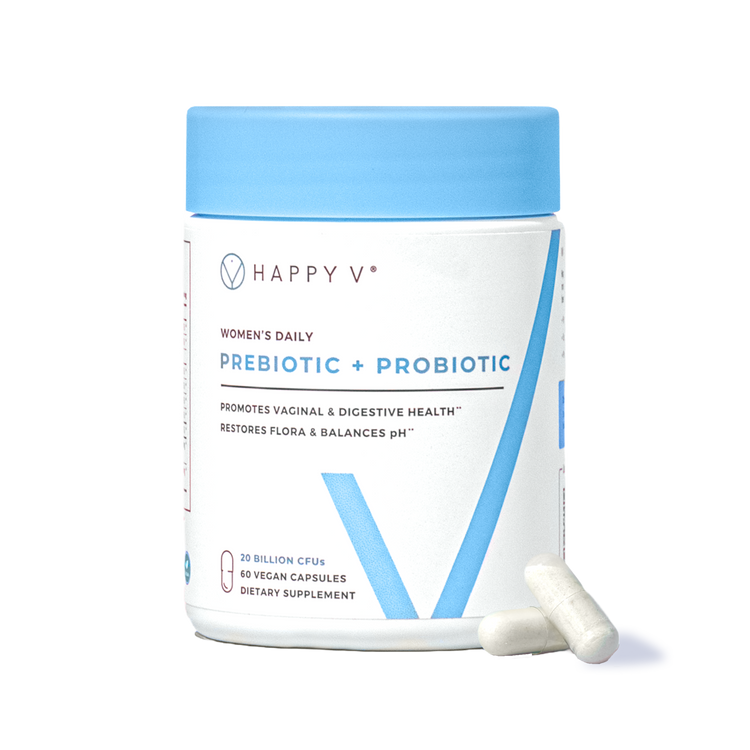 Bestseller
Prebiotic + Probiotic
Maintains vaginal pH and restores gut health.
Medical Treatment Options: Local vs. Systemic Estrogen Therapy
For women experiencing significant discharge changes, vaginal dryness, or discomfort from GSM, hormone replacement therapy is often the most effective medical treatment option, but not all estrogen therapy is the same.24 There are two types worth discussing with your doctor:
Local estrogen therapy. Available as estrogen creams, a vaginal ring, or suppositories, local estrogen therapy is applied directly to vaginal tissue.25 It delivers estrogen where you need it with minimal systemic absorption, making it a lower-risk option for many women. Local estrogen can restore vaginal tissue thickness, normalize vaginal pH, and reduce discharge irregularities.
Systemic hormone replacement therapy (HRT). Taken orally or as a patch, HRT addresses menopause symptoms more broadly, but it's worth knowing that starting or adjusting HRT can itself temporarily change vaginal discharge as a side effect while your body recalibrates.26 If you notice new discharge changes after beginning HRT, let your healthcare provider know.
Which one your doctor ultimately recommends comes down to a variety of factors, including the severity of your GSM symptoms as well as other menopausal symptoms you may be experiencing, like hot flashes, night sweats, and mood swings.
Preventive and Lifestyle Measures
These small habits might not sound like much, but research shows they can meaningfully support vaginal health after menopause:
- Wear cotton underwear to allow breathability and reduce moisture buildup around the vulva
- Avoid scented products and douching in or near the vaginal area, since both disrupt vaginal pH
- Stay hydrated. Mucosal tissues throughout the body, including vaginal tissue, depend on adequate hydration
- Eat phytoestrogen-rich foods like flaxseeds, soy, and legumes, which contain plant compounds that mildly mimic estrogen and may support vaginal tissue health
- Stay sexually active (solo or partnered) to maintain blood flow to vaginal tissue and support natural lubrication
- Consider pelvic floor therapy. A pelvic floor physical therapist can address tissue health, blood flow, and pain during intercourse
- Manage stress. Chronic stress suppresses immune function, which can increase susceptibility to vaginal infections
Keep the Conversation Going
- Visit our blog for more women's health tips.
- Join our private Happy V Facebook group to hear from others who've been there.
- Explore supplements designed to support your vaginal health journey.
Disclaimer: This blog is for informational and educational purposes only and is not intended to diagnose, treat, cure, or prevent any disease. Statements about supplements have not been evaluated by the Food and Drug Administration. For more information about vaginal infections, visit the CDC or speak to a licensed healthcare provider.