

- Fact Checked
- April 29, 2026
- 10 min read
Are Probiotics Safe During Pregnancy? What the Research Says


-
Written by
Hans Graubard
• Updated on June 25, 2026

Dietary supplement manufacturing, regulatory and product development, and DTCt; leadership experience...
-
Medically Reviewed by Dr. Jessica A. Younes

Biotics (probiotics/prebiotics) specialist with focus on women’s health; PhD in Medical...
- Updated on June 25, 2026
Table of Contents
Table of Contents
Pregnancy has a way of turning your normal life into a minefield of "wait, can I still do that?" Sushi? Gone. Deli meat? Gone. A glass of wine at dinner? Obviously out. Even things you'd never think twice about suddenly require a Google search and a text to your OB. Soft cheese. Hot tubs. Even certain face washes. The list has a way of growing.
So if you have been taking probiotics or hoping to start, it’s natural to wonder if probiotics are on the “do not consume” list.

Luckily for us, we have some science to guide our answer. Probiotics during pregnancy have been studied in numerous randomized controlled trials and meta-analyses, and for most healthy pregnant individuals, they appear to be both safe and genuinely beneficial. Let’s talk about what those benefits are and how to choose the right probiotic during pregnancy.
This post is for informational purposes only and does not constitute medical advice. See full disclaimer below.
Are Probiotics Safe While Pregnant?

The short answer: yes, for most people.
The longer answer: A comprehensive systematic review published in the Journal of Perinatology found no association between probiotic use during pregnancy and adverse pregnancy outcomes, including preterm birth or congenital abnormalities.1 Great news, to say the least. And the National Library of Medicine has similarly noted that Lactobacillus probiotics are among the most studied and are generally well-tolerated during pregnancy.
Your Google search might surface a theoretical risk that’s often cited when it comes to probiotics during pregnancy, and that’s that beneficial bacteria could enter the bloodstream, causing bacteremia or fungemia. Notice we said “theoretical” risk, though. This is considered extremely rare in healthy individuals with no underlying immune conditions, and multiple double-blind studies confirm this.
While probiotics are generally safe, it’s still a good idea to discuss them with your OB before taking them, especially if you have a compromised immune system, a history of preterm labor, or any other complicating factors.2 Your OB may even discuss probiotics with you to help alleviate some of the side effects and risk factors we’ll get into next.
Benefits of Taking Probiotics During Pregnancy

We’ve established that probiotics are safe. Now, let’s talk about if they’re worth taking on top of a daily prenatal.
Another short answer for you: yes. There are real, research-backed reasons to consider adding a probiotic to your daily wellness routine during pregnancy.
Research has shown that high-quality probiotics during pregnancy can help:
Support Digestive Health and Pregnancy Constipation
Though it’s not often talked about, constipation is one of the most common discomforts of pregnancy, particularly in the second and third trimesters.3 That’s because hormonal shifts during this time slow the digestive system, and the pressure of a growing uterus only compounds the problem.
Probiotic supplements support a healthy gut microbiome by introducing beneficial gut microbiota that help regulate bowel function and maintain intestinal microbial balance.4 Several clinical trials have shown reductions in constipation and diarrhea with regular probiotic use. They may also help reduce other uncomfortable symptoms like bloating and irritable bowel syndrome, which can flare during pregnancy.
Balance the Vaginal Microbiome and Prevent BV
A Lactobacillus-dominant vaginal flora is protective against vaginal infections like bacterial vaginosis (BV), and pregnancy is a time when hormonal changes can shift that balance, lowering the number of Lactobacillus bacteria in the vagina and increasing the risk of BV.5 Though common, BV is not harmless. It’s associated with an elevated risk of preterm birth, which makes maintaining vaginal health during pregnancy particularly important. Lactobacillus-based probiotic supplements can help you do that.
Not only BV, but yeast infections are also common during pregnancy due to elevated estrogen levels, which fuel the growth of Candida in the vaginal environment. Probiotic supplementation has been shown to help in this regard, too.
Reduce the Risk of Gestational Diabetes
Gestational diabetes mellitus (GDM) is one of the most significant metabolic concerns of pregnancy and comes with a variety of risks for mother and baby.6 Emerging research suggests probiotics may play a supportive role in glucose regulation. Which is pretty incredible, to say the least.
A meta-analysis published in PLOS ONE found that probiotic supplementation was associated with reduced fasting blood glucose and insulin resistance in pregnant individuals at risk for GDM.7 Researchers in metabolic health are still working to understand the mechanism involved in helping this happen, but initial findings are encouraging.
Reduce Preeclampsia Risk
Preeclampsia is a life-threatening blood pressure condition that can develop after 20 weeks, and some evidence suggests that probiotic use during early pregnancy may be associated with a reduced risk of preeclampsia later.8
A large observational study found an inverse relationship between regular probiotic consumption (particularly through cultured milk and live-cultured yogurt) and preeclampsia incidence.9 While the study did not deal with probiotic supplements specifically, meaning more research is needed, the antihypertensive effects observed in some trials are worth noting.
Boost the Baby's Future Immune System
Every mother wants the best for their baby, starting even before birth. One of the most compelling areas of probiotic research in pregnancy involves the developing fetus.10
As soon as they enter the world, your baby has an initial microbiome. This microbiome is acquired during delivery, and the composition of that early microbial community has lifelong implications for immune function. Probiotic use during pregnancy and lactation has been associated with reduced rates of pediatric atopic dermatitis (aka eczema) in infants at risk, particularly with Lactobacillus rhamnosus GG.11
Research also suggests that maternal probiotic supplementation supports healthy T cell differentiation, which plays key roles in immune system development and reducing the risk of allergies.
Support Oral Health During Pregnancy
Here’s another side effect of pregnancy most people don’t know about: pregnancy gingivitis. Pregnancy gingivitis is an inflammatory response that affects the gingival barrier and affects up to 75% (yes, 75%!) of expectant mothers. That’s because hormonal changes alter the oral microbiome and oral mucosa, making gums more reactive to plaque and vulnerable to gingival inflammation.12
Morning sickness can further compromise oral hygiene by exposing teeth to stomach acid. Supporting a healthy oral microbiome is a simple, low-effort add for pregnant individuals dealing with gum sensitivity, and probiotics can help do that in the same way they support the gut and vaginal microbiomes.13
Best Probiotic Strains for Expecting Mothers
While probiotics do have real research behind them, not all probiotic supplements will give you these results.14 There are hundreds of different probiotic strains and only a handful of them have been shown to be beneficial for gut and vaginal health, particularly during pregnancy.
Here are the three most studied. When choosing a probiotic supplement, look for these on the label.
- Lactobacillus rhamnosus (LGG). Perhaps the most researched strain for use during pregnancy, Lactobacillus rhamnosus has been studied for its role in reducing gestational diabetes risk, preventing pediatric eczema, and supporting vaginal health by maintaining a protective Lactobacillus-dominant environment.
- Lactobacillus reuteri. L. reuteri supports immune function and has been studied for its ability to help maintain healthy cholesterol levels.
- Bifidobacterium lactis. Though not a Lactobacillus strain, this bacterium is a key member of a healthy gut microbiome. Bifidobacterium strains help regulate intestinal microbial balance and have been studied in the context of gestational diabetes and infant immune development.15
How to Choose a Safe Prenatal Probiotic
While strain specificity matters, so does safety. After all, you aren’t only caring for your own body, but your baby’s too. Here's what to look for when selecting a probiotic supplement during pregnancy:
- CFU count. Look for a supplement with at least 1–10 billion CFU (or colony-forming units) per serving. Higher CFU doesn't always mean better. What matters more is the specific strains and whether they're clinically studied.
- Strain specificity. Generic "proprietary blend" labels aren't enough. Look for formulas that list specific strains by name and ideally reference the clinical evidence behind those strains, if not on the label, then on their website.
- Third-party testing. Because dietary supplements aren't FDA-regulated the way pharmaceuticals are, third-party verification matters. Look for products that have been independently tested for purity and potency.
- Clean ingredients. Avoid supplements with unnecessary fillers, artificial dyes, or allergens you're sensitive to. During pregnancy, simpler is often better.
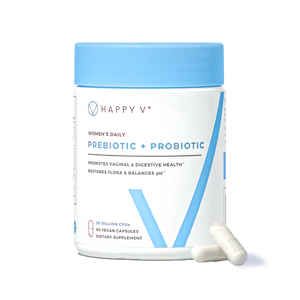
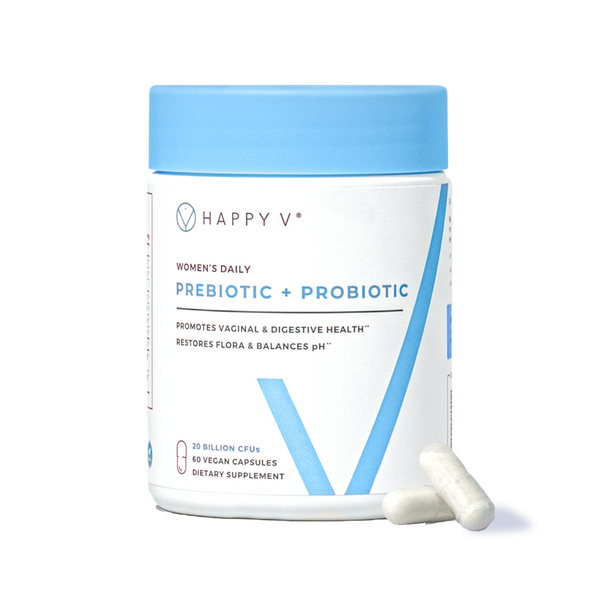
Happy V's probiotic supplements check all of these boxes. Our formulas use clinically studied Lactobacillus strains selected specifically for vaginal and gut health. And because we handle our own manufacturing, we control every step of the process, from strain selection to purity testing to what goes (and doesn't go) on the label. If you're pregnant and looking for a probiotic you can feel confident about, it's worth a conversation with your OB or midwife to see if Happy V is the right fit for you.
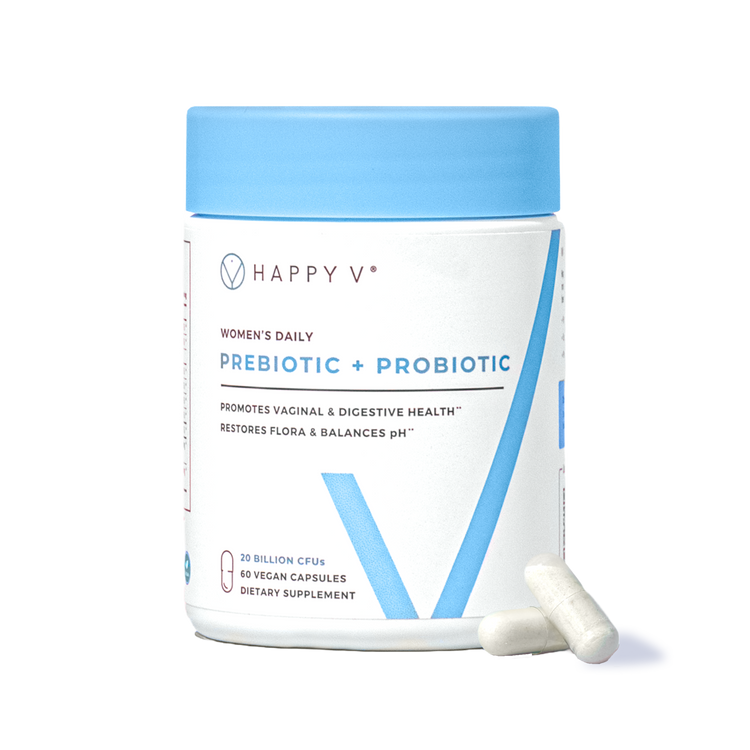 Bestseller
Prebiotic + Probiotic
Maintains vaginal pH and restores gut health.
Food Sources of Probiotics During Pregnancy

When it comes to getting enough probiotics during pregnancy, supplements are your most reliable option. Fermented foods do contain beneficial bacteria, but the strains and quantities vary widely depending on how the food was made and stored, making it difficult to know exactly what you're getting.16
High–quality probiotic supplements, on the other hand, deliver specific, clinically studied strains at consistent doses, which matters when you're trying to achieve a wellness goal during pregnancy (like L. rhamnosus for BV prevention or B. lactis for immune support).
That said, fermented foods are a worthwhile addition to a prenatal diet. They contribute beneficial bacteria alongside fiber, vitamins, and other nutrients, and most are safe to eat during pregnancy when properly prepared, especially;17
- Live-cultured yogurt. One of the most accessible sources; look for "live and active cultures" on the label
- Kefir. A fermented cultured milk drink with a diverse range of probiotic strains
- Sauerkraut. Aka fermented cabbage; choose unpasteurized for live cultures
- Kimchi. A fermented vegetable staple with a range of beneficial bacteria
- Kombucha. Fermented tea; just check sugar content and confirm it's low-alcohol if consuming during pregnancy
Think of food sources as a complement to your supplement, not a replacement for it.
Potential Side Effects and Precautions
For most healthy pregnant individuals, probiotics are well-tolerated. The most commonly reported side effects are minor and temporary and include:
- Bloating and gas, especially in the first week or two as your gut microbiota adjusts
- Mild digestive discomfort, which usually resolves on its own
These symptoms are common when any new probiotic supplement is introduced (even outside of pregnancy) and typically subside within a few days. If you’re concerned, starting with a lower dose and gradually increasing can help.
Like we mentioned earlier, individuals with compromised immune systems, intestinal disorders, or a history of complicated pregnancies should consult their healthcare professional before starting probiotics (or any other supplement).
Keep the Conversation Going
- Visit our blog for more women's health tips.
- Join our private Happy V Facebook group to hear from others who've been there.
- Explore supplements designed to support your vaginal health journey.
Disclaimer: This blog is for informational and educational purposes only and is not intended to diagnose, treat, cure, or prevent any disease. Statements about supplements have not been evaluated by the Food and Drug Administration. For more information about vaginal infections, visit the CDC or speak to a licensed healthcare provider.