





- Fact Checked
- August 24, 2026
- 8 min read
What to Expect at Your First Gynecologist Visit

- Written by Daniella Levy • Updated on August 24, 2026
- Updated on August 24, 2026

Table of Contents
Table of Contents
Booking your first gynecologist appointment can feel a little intimidating, even if you aren’t dealing with any vaginal symptoms, but the truth is, making and maintaining annual visits are one of the most important things you can do for your reproductive health.
Gynecologists do more than prescribe birth control and treat infections. They walk you through pregnancy and prenatal care, screen for reproductive cancers, and help you make sense of hormone shifts at every stage of life. Over time, they build a health history with you, one that helps them catch potential concerns early and give you care that's actually tailored to your body.
If you're nervous about the exam itself, we get it. That nervousness is completely normal, and it tends to ease once you know what's actually going to happen. Let's walk through it together.
This post is for informational purposes only and does not constitute medical advice. See full disclaimer below.
What Is a Gynecologist?
A gynecologist, sometimes called an OB/GYN, is a physician who specializes in reproductive health. "OB" stands for obstetrician, which covers pregnancy and delivery care, while "GYN" refers to gynecology, the branch of medicine focused on the female reproductive system. Some providers focus on one or the other, but many provide care that covers pregnancy, delivery, and everyday reproductive health.
A gynecologist is a key player on your overall healthcare team. They are your go-to person for:
- Irregular periods and menstrual concerns
- Vaginal discharge and infections
- Pain during sex
- Sexually transmitted infections
- Menopause and hormone questions
- Fertility concerns
- Birth control and contraception
- Cancer screenings for ovarian, uterine, breast, and cervical cancer
As you age or as special needs arise, you can also find gynecologists or OB/GYNs who specialize further in areas like high-risk pregnancy or reproductive cancer. For your first visit, though, a general gynecologist is all you need, and know that they are highly trained. Becoming a gynecologist takes four years of medical school followed by a four-year residency in obstetrics and gynecology, with training in both surgery and office-based care.
Timing of Your First Visit
The American College of Obstetricians and Gynecologists (ACOG) recommends scheduling your first gynecologist visit between ages 13 and 15, or as soon as you become sexually active, whichever comes first. Some people wait until their late teens or the transition to college, and that's okay, too, so long as you have your first visit before age 21.
After that first visit, plan for an annual checkup, just like you would your primary care doctor. Your provider may also recommend:
- Pap tests every three years between ages 21 and 65
- Breast exams every one to three years between ages 20 and 40, and yearly after 40
- Pelvic exams every one to three years
These tests are usually performed during your annual exam, so no need to schedule an additional appointment unless something feels off. If something feels off, don’t wait. Reach out to your gynecologist if you notice irregular cycles, unusual bleeding, pelvic pain, signs of infection, or anything else that concerns you.
Importance of Early and Regular Care
There’s a reason ACOG has the age recommendations they do for establishing gynecological care, and it’s not about simply checking a box. Early and regular care gives your provider a baseline for your body, so they can spot changes sooner and catch potential concerns before they grow. It also builds trust,so you can feel comfortable being honest about your sexual practices, your family health history, and your goals for your reproductive health as you age.
Your gynecologist is a long-term partner. Routine visits mean fewer surprises and more proactive healthcare, not just reactive treatment when something's already wrong.
What Happens During the Appointment
Every provider runs their office a little differently, but a first visit typically includes a few key elements, like:
- Urine sample. Before you even meet your provider, staff will likely collect a urine sample to screen for infection or pregnancy.
- Vital signs. A nurse will check your pulse, blood pressure, height, and weight, just like before a primary care appointment.
- Conversation about your history. Your gynecologist will ask about your medical history, family health history, menstrual concerns, and sexual health. Questions may cover your obstetric and gynecologic status, past infections, and whether you've experienced anything like sexual assault that's relevant to your care. These questions can feel personal, but honest answers help your provider give you accurate, appropriate care.
- Physical exam. Depending on your age, symptoms, and comfort level, your first appointment may include a breast exam, a visual external exam, and an internal pelvic exam using a speculum. Some providers also perform a bimanual exam, a Pap smear, a transabdominal or transvaginal ultrasound, or STI testing. Not every exam happens at every visit. Your provider will explain what's recommended for you and why, and you can always ask what a particular exam is checking for.
Your first visit is not just for your provider to get to know you and your body, but a time for you to bring up any questions or concerns you may have when it comes to birth control options, HPV vaccination, hormone questions, pelvic floor therapy, mental health resources, or anything else on your mind. Your provider is there to answer it all, with confidentiality protecting what you share.
Managing Anxiety or Discomfort
Feeling anxious, nervous, or embarrassed before your first visit is totally understandable. You aren’t the first person to ever feel this way, and your gynecologist should be able to walk you through exactly what’s going to happen and help put you at ease.
A few things that can help:
- Write down your concerns and goals ahead of time so you don't forget them in the moment.
- Tell your provider you're nervous. It helps them adjust their pace and explain things more clearly.
- Know that discomfort during a pelvic exam is normal, but pain is not. Speak up if something hurts.
If anxiety about the visit feels bigger than nerves, mention that too. Your provider can point you toward mental health resources or simply give you more time and information before moving forward.
Remember that you are also not helpless during this appointment. You have more control than you might think. You can:
- Ask your provider to explain the benefits and risks of any exam before it happens
- Request to modify or skip certain portions of the exam
- Pause or stop the exam at any point
- Make an informed decision about every part of your care
- Ask about the clinic's privacy policies
Preparing for the Appointment
A little prep goes a long way toward a smoother visit, especially if you are already feeling a little anxious. Before you go, gather:
- Your insurance card and a form of ID
- A list of current medications and known allergies
- Your surgical history and general medical history
- The date of your last period, or your cycle tracking app if you use one
- Written questions or concerns you want to cover
If you book your appointment online, most portals will prompt you for this information ahead of time. It's also completely fine to bring a trusted friend or family member with you, especially for your first visit. You can choose to have them wait in the waiting room or even come into the exam room with you.
What to Do Between Appointments for Vaginal Health
While your annual visit is a cornerstone of your reproductive health, what you do in between matters, too. A few habits worth building into your routine:
- Track your cycle. Whether you use an app or a simple calendar, knowing your patterns makes it easier to spot when something's off.
- Practice simple hygiene basics. Stick to unscented washes and soaps, avoid douching, and wipe from front to back.
- Stay on top of safe sex practices. Regular STI testing and open conversations with partners go a long way.
- Support your body nutritionally. A balanced diet, hydration, and stress management all play a role in hormone balance and vaginal health.
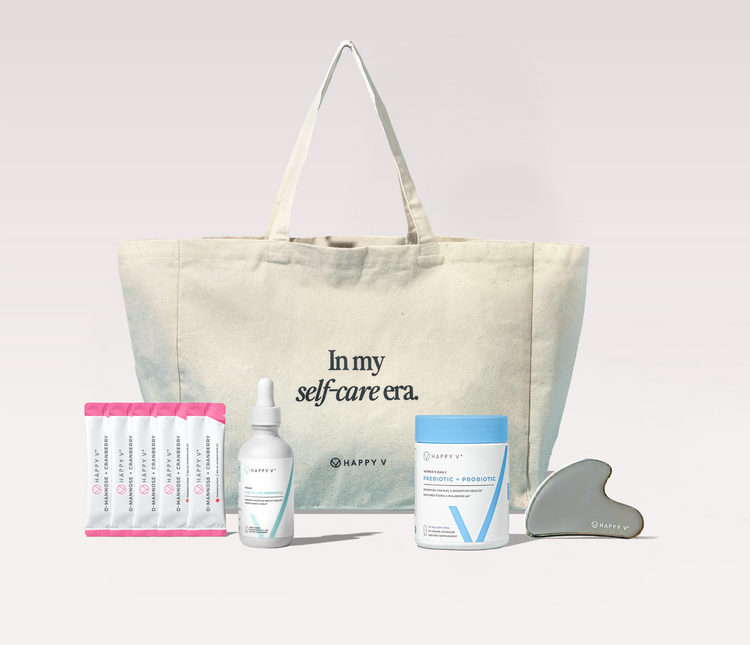
If you're establishing a vaginal healthcare routine for the first time, it can be hard to know where to start. That's exactly what Happy V's Fresh Start Kit is built for. It pairs our best-selling, doctor-formulated Prebiotic + Probiotic with our Liquid Chlorophyll to support your vaginal health and gut health together, since the two systems are closely connected. Rather than waiting until something feels off, this kind of daily routine helps you maintain a healthy vaginal microbiome from the start. It's an easy way to build good habits early, so you're supporting your body proactively between appointments, not just reacting when something comes up.
 MOST LOVED
Fresh Start Kit
Daily support to reset your vaginal health and detox from within.
Regular checkups and healthy daily habits go hand in hand. Combine them, and you're giving your body the best shot at feeling good all year long.
Keep the Conversation Going
- Visit our blog for more women's health tips.
- Join our private Happy V Facebook group to hear from others who've been there.
- Explore supplements designed to support your vaginal health journey.
Disclaimer: This blog is for informational and educational purposes only and is not intended to diagnose, treat, cure, or prevent any disease. Statements about supplements have not been evaluated by the Food and Drug Administration. For more information about vaginal infections, visit the CDC or speak to a licensed healthcare provider.
FAQ
Will I need a Pap smear at my first visit?
Can I talk to my gynecologist about birth control even if I'm not sexually active?
What if I have a family history of reproductive cancer?
Is it normal to feel nervous about a first pelvic exam?
What does a pelvic exam feel like?
How can I make a pelvic exam more comfortable?
What if I've experienced sexual assault?
Do I need to do anything special before my appointment?
Our experts continually monitor the health and wellness space, and we update our articles when new information becomes available.
- Published on: August 24, 2026
- Last updates: August 24, 2026
Written by Daniella Levy
Edited by Liz Breen