



- Fact Checked
- August 03, 2026
- 9 min read
Gut-Vagina Axis: Why Bloating and BV Are Connected

- Written by Daniella Levy • Updated on September 09, 2026
- Updated on September 09, 2026

Table of Contents
Table of Contents
You've treated your bacterial vaginosis.. again. But within a few weeks, those uncomfortable symptoms are back… again.
You know what symptoms we mean: the fishy odor, the vaginal discharge, and overall feeling of discomfort. But maybe there’s another, too, that you’re not as familiar with: bloating. But could a gut issue actually be related to a vaginal infection?
It’s easy for people to miss the connection between bacterial vaginosis (BV) and bloating. After all, they seem like completely unrelated body parts having completely unrelated problems. But those two things are very likely related, and understanding why can change the way you approach treating both… for the better.
This post is all about the gut-vagina axis, or the two-way relationship between your gut microbiome and your vaginal microbiome. These two bacterial communities are in constant conversation with each other, even though they live in different parts of your body. When one falls out of balance, the other tends to follow close behind. And if you've been treating your BV in isolation, focusing only on the vaginal symptoms and never touching your gut health, that disconnect might be exactly why the cycle keeps repeating itself.
This post is for informational purposes only and does not constitute medical advice. See full disclaimer below.
What Is the Gut-Vagina Axis?
The gut-vagina axis refers to the ongoing communication between the bacterial communities living in your gut and the ones living in your vagina.1 It's easy to think of your body as a collection of separate systems, each doing its own thing, but that's not how it works. These two microbial ecosystems (like so many systems in your body) are actually deeply linked, sharing bacterial strains, immune signaling, and even hormonal influences that travel between them constantly.
Your gut is a kind of reserve supply for the beneficial bacteria your vaginal microbiome depends on.2 So when your gut is healthy and diverse, it can continually reseed the vagina with the protective bacteria it needs to stay healthy, too.
Problems start when the gut falls into dysbiosis, an imbalance where harmful bacteria begin to outnumber the beneficial ones.3 When that happens, the reseeding process falters. There's less of the good bacteria available to send to the vagina, and the vaginal microbiome is left with fewer defenses against harmful bacteria that may get introduced. This is why so many women notice that gut issues and vaginal issues seem to flare up around the same time. Physiologically speaking, they're often responding to the same underlying disruption.
Can BV Cause Bloating? Here's What the Science Says
Yes! Bloating and BV can absolutely be connected, and the link actually runs through both directions of the gut-vagina axis.
When your gut microbiome is imbalanced, it produces fewer of the Lactobacillus strains your body relies on to seed and maintain a healthy vaginal environment.4 Without a steady supply of these protective bacteria, harmful, BV-associated bacteria have more room to take hold.
The relationship works in reverse, too. BV triggers a local inflammatory response, and that inflammation doesn't always stay contained to the vaginal environment.5 It can influence gut motility and the composition of gut bacteria, which is part of why so many women with BV also report bloating, irregularity, or general digestive discomfort during a BV flare-up.
At the center of both problems is the same bacterial genus: Lactobacillus. In the vagina, Lactobacillus species produce lactic acid, which keeps the vaginal environment acidic enough to crowd out the harmful bacteria associated with BV. It's essentially your body's built-in defense system, quietly maintaining the conditions that keep things balanced.
In the gut, these Lactobacillus strains are doing similarly essential work: supporting digestion, helping regulate the inflammatory response, and reinforcing the gut lining that keeps everything contained and functioning the way it should.6 When that lining is compromised, it can contribute to the bloating, irregularity, and general digestive discomfort so many women experience.
Because the same bacterial family is holding down both jobs, a shortage of Lactobacillus doesn't pick a lane. It tends to affect both systems at once. That's the real reason bloating and BV so often show up together rather than as isolated, unrelated complaints. They're not two separate problems that happen to coincide. They're two symptoms of the same underlying shortage in protective bacteria.7
The Link Between Recurrent BV and Gut Health
If you've had BV more than once, you already know the frustration. You do everything right (see the doctor, get the prescription, and take it exactly as you should), and it still comes back.
If this is your experience, you aren’t alone. Recurrence is extremely common. And while it's easy to wonder if something is wrong with your body specifically, or if the medication just isn't strong enough, in most cases, neither is true.8
Antibiotics Clear the Infection but Leave the Root Cause Intact
Antibiotics are effective at reducing the harmful bacteria causing an active BV infection. The most commonly prescribed options are metronidazole and tinidazole, taken orally, or clindamycin, which is often applied topically. All of them work extremely well at clearing the immediate overgrowth. What none of them do, though, is rebuild the underlying microbial ecosystem that allowed the imbalance to happen in the first place, either in the gut or the vagina.9
Basically, if antibiotics are the only way you know to approach BV, you only ever treat the flare-up, never the foundation, leaving the cycle to repeat.
The Dysbiosis Reseeding Cycle: How the Gut Re-Infects the Vagina
Because the gut continually reseeds the vaginal microbiome, an imbalanced gut can undo the progress made by BV treatment, sometimes within weeks.10 This reseeding cycle is one of the most overlooked reasons behind recurrent BV.
Learn more about how these bacterial communities interact in our breakdown of "What Is Vaginal Flora? How Your Microbiome Protects You".
A Whole-System Approach to Recurrent BV and Bloating
Breaking the cycle of recurrent BV often means treating the gut and vaginal microbiomes as the connected system they are, not two separate problems with two separate fixes.11
It also typically does not involve one big change or addition, but several smaller changes that add up to something much larger when it comes to microbiome health.12 These include:
Replenishing Lactobacillus with a Daily Probiotic
Remember, BV and the bloating that comes with it both trace back to the same underlying shortage of one bacterial genus: Lactobacillus. Daily probiotics can help reintroduce these beneficial bacteria… but only if the formula actually contains them.
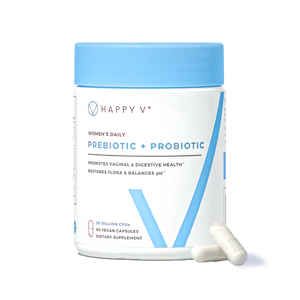
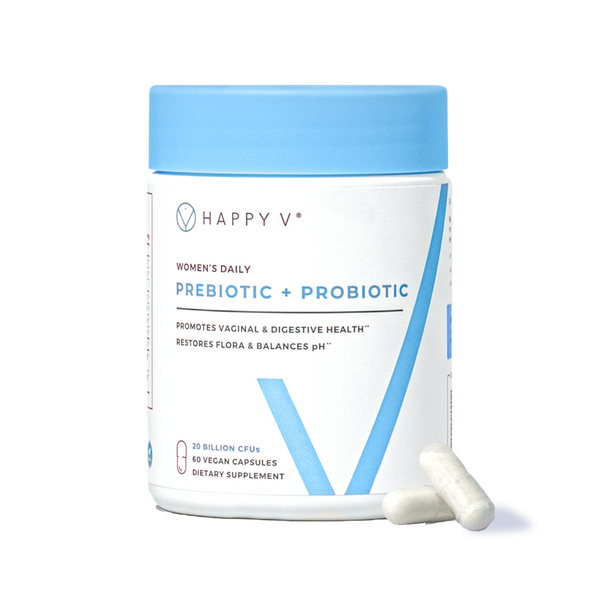
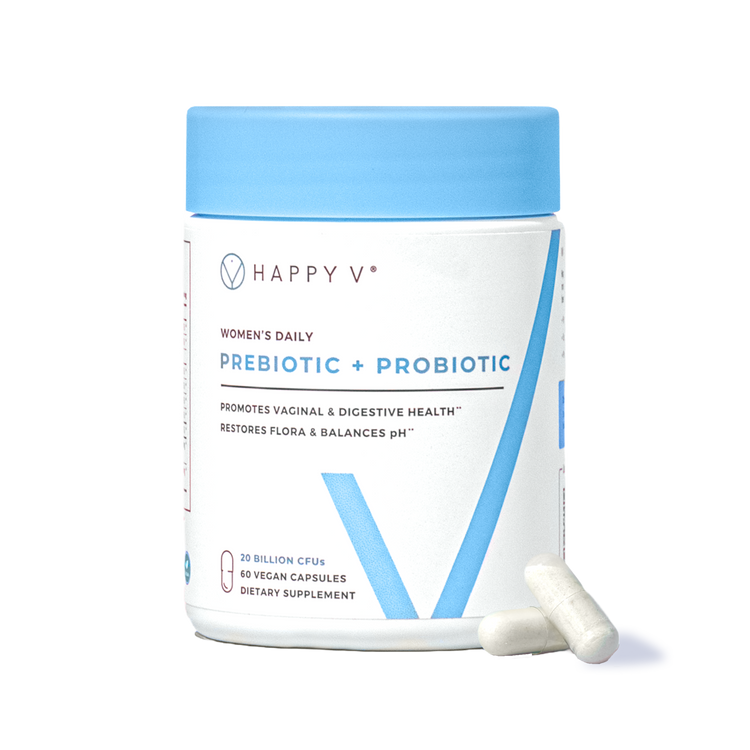
Happy V's Prebiotic + Probiotic includes 7 clinically studied strains of Lactobacillus, each chosen specifically for their ability to support Lactobacillus dominance in the vaginal microbiome and help maintain the slightly acidic vaginal pH that keeps BV-associated bacteria from taking hold. And the proof isn't limited to the individual ingredients in isolation. In a preclinical trial of Happy V's unique formula, the blend was shown to inhibit the growth of Gardnerella vaginalis, the bacteria most commonly associated with BV, as well as Candida species, including Candida albicans, the fungus responsible for the majority of yeast infections.
 Bestseller
Prebiotic + Probiotic
Maintains vaginal pH and restores gut health.
The formula also includes a built-in prebiotic, so the strains you're introducing actually have what they need to colonize and thrive rather than simply passing through. It's a formula designed with vaginal health as the goal from the start.
Incorporating Fiber and Fermented Foods into Your Diet
Probiotics need the right environment to thrive. Prebiotic fiber, which is found in foods like garlic, onions, oats, and bananas, feeds beneficial bacteria in the gut, while fermented foods like yogurt, kefir, and sauerkraut introduce more of the strains your microbiome relies on.13 Our guide to "The Best and Worst Foods For Vaginal Health" breaks this down further.
Making Lifestyle Changes
A few everyday habits can quietly undermine both ecosystems, often without you realizing it. These include:
- Chronic stress. Chronic stress raises cortisol, which can shift the balance of bacteria in your gut.
- High sugar intake. Sugar feeds bad bacteria, letting them outcompete the Lactobacillus strains you want to protect.
- Inadequate sleep. Little or poor quality sleep has documented effects on bacterial diversity in the gut, and that disruption tends to ripple outward to the vaginal microbiome, too.
- Excessive alcohol consumption. Like poor sleep, too much alcohol disrupts gut bacterial diversity in ways that extend beyond digestion alone.
- Douching. Douching disrupts the vaginal pH balance and strips away protective bacteria along with anything it's meant to "clean," which is why most providers recommend against it entirely.
- Sexual activity. While not inherently a problem, it can introduce new bacteria into an already imbalanced environment, which is part of why symptoms so often flare or recur after sex.14
Small, consistent changes in these areas (think: a bit more sleep, a little less sugar, a way to manage stress that actually works for you, and skipping the douche), support gut health and vaginal health as a whole, not just one symptom at a time.
When to See a Specialist
Occasional bloating or a single BV infection isn't usually cause for alarm. But it's time to talk to a healthcare provider if you're experiencing:
- BV recurrence (defined as 3 or more infections in 12 months)
- Persistent digestive symptoms like constipation or diarrhea that don't improve with diet and lifestyle changes
- New symptoms like pelvic pain, abdominal pain, nausea, or fever
While incredibly common, BV is never something to ignore. Left untreated, BV can occasionally lead to more serious complications, like:
- Pelvic inflammatory disease (PID), an infection of the reproductive organs that can affect the fallopian tubes and, in more serious or repeated cases, contribute to infertility or the eventual need for a hysterectomy.
- Sexually transmitted infections (STIs). BV has been linked to a higher susceptibility to STIs such as chlamydia and gonorrhea, since an imbalanced vaginal environment offers less natural protection against other bacteria and pathogens.
- Pregnancy complications. If you're pregnant, untreated BV has been associated with preterm birth and low birth weight.
Keep the Conversation Going
- Visit our blog for more women's health tips.
- Join our private Happy V Facebook group to hear from others who've been there.
- Explore supplements designed to support your vaginal health journey.
Disclaimer: This blog is for informational and educational purposes only and is not intended to diagnose, treat, cure, or prevent any disease. Statements about supplements have not been evaluated by the Food and Drug Administration. For more information about vaginal infections, visit the CDC or speak to a licensed healthcare provider.