


- Fact Checked
- July 31, 2026
- 9 min read
Can a Yeast Infection Cause Bleeding? What's Normal and What's Not

- Written by Daniella Levy • Updated on September 17, 2026
- Updated on September 17, 2026

Table of Contents
Table of Contents
If you have a vagina, you're probably pretty familiar with what a yeast infection is and what it feels like. In fact, the Mayo Clinic estimates that nearly 3 in 4 women will experience a yeast infection at least once in their lifetime, and for some, that number is much (and sometimes MUCH) higher.
But what if you notice unexplained vaginal bleeding alongside a yeast infection? Is that normal, or is it cause for concern? That's what we're unpacking today. Because while symptoms like itching and thick, white discharge are expected with a yeast infection, bleeding is a less typical one. Let's talk about what can cause it, when it's nothing to worry about, and when it's time to call your doctor.
This post is for informational purposes only and does not constitute medical advice. See full disclaimer below.
Understanding Yeast Infections

Before we get into why bleeding sometimes shows up with a yeast infection, let's talk about what a yeast infection actually is.
Vaginal yeast infections go by a few different names. You might hear them called candidiasis, vulvovaginal candidiasis, or vaginal candidiasis.1 All these terms describe the same thing: an overgrowth of Candida fungus in your vagina (primarily Candida albicans), which throws off your natural balance and leads to vaginitis or inflammation of the vaginal tissue.
The most common yeast infection symptoms include:
- Vaginal itching, burning, and irritation
- Thick, white discharge that often resembles cottage cheese
- Pain or discomfort during urination or sex
Less common symptoms can include:
- Redness and swelling of the vulva
- Soreness and a rash on the surrounding skin
- Discomfort or pelvic pain
Which symptoms you experience and how severe they are can vary from one infection to the next, so even if you’ve had a yeast infection before, the next may present a little differently.2 Maybe your last infection was mild and cleared up in a few days, but this one seems to be dragging on for weeks.
That's why it's worth seeing a doctor any time you suspect a vaginal infection. Not only can it prevent an infection from dragging on and getting worse, but an appointment will actually make sure you have a yeast infection in the first place, since the symptoms of yeast infections also overlap with common infections like bacterial vaginosis (BV) and UTIs.3
Can Yeast Infections Cause Bleeding?
So we just listed a bunch of classic and less common symptoms of yeast infection, and bleeding wasn’t on either list.4 So can a yeast infection ever cause vaginal bleeding? The answer is yes… and also no.
A yeast infection itself doesn't directly cause bleeding, but the symptoms that come with it can lead to spotting or light bleeding.5 Here's how:
- Scratching. If the itching from your yeast infection has you scratching, that can cause microabrasions, or small tears in delicate skin, that can result in light bleeding or streaky red discharge.6
- Pain during sex. Yeast infections often lead to vaginal dryness and irritated, inflamed tissue. Add friction from sex into the mix, and you can end up with minor tearing and bleeding after sex.7
- Inflammation. Chronic inflammation from a yeast infection can leave the vaginal tissue more fragile than usual, making it easier to develop small skin lesions or cracks that bleed.8
Most of the time, this kind of bleeding shows up as minor spotting rather than anything heavy. You might notice pink spotting, a light brown discharge, or blood mixed with discharge after routine activities like exercising or using the bathroom, especially if the area is already irritated from itching. Superficial wounds like this tend to heal quickly once the underlying yeast infection is treated.
Other Causes of Vaginal Bleeding

Does your bleeding look or show up differently than what we described above? There are several other reasons you might notice vaginal bleeding outside your period that have nothing to do with a yeast infection. The most common include:
- Bacterial vaginosis (BV). BV can also irritate vaginal tissue and lead to spotting, and it's often confused with a yeast infection because of overlapping symptoms.
- Sexually transmitted infections (STIs). Trichomoniasis, chlamydia, and gonorrhea can all cause vaginal bleeding, unusual discharge, or spotting between periods, especially if left untreated.
- Urinary tract infection (UTI). A UTI can sometimes cause slight spotting, though this is less common than with an STI or BV.
- Hormonal changes. Bleeding between periods can also be linked to hormonal changes, including those related to birth control, perimenopause, or menopause.
- Implantation. If there's any chance of pregnancy, light spotting could be implantation bleeding rather than anything infection-related.
- Cervicitis or cervix irritation. Inflammation of the cervix, sometimes from an STI, can also cause postcoital bleeding.
None of these are automatically a medical emergency, but they shouldn't be ignored either. If you're dealing with persistent or heavy bleeding outside your period, call your healthcare provider. And if that bleeding comes with fever, pelvic pain, or foul-smelling discharge, don't wait, since that combination can point to something like an STI or a more serious infection.9
Treating a Yeast Infection: Can It Go Away on Its Own?
If the itching and irritation with a yeast infection are so intense that it’s leading to light spotting or bleeding, that’s a sign to see your doctor for treatment, not wait it out and hope it goes away.
Yeast infections are typically treated with antifungal medications, many of which are available over the counter.10 That said, it's worth seeing your doctor before heading to the pharmacy, since yeast infection symptoms can sometimes look a lot like BV or trichomoniasis, and each needs a different treatment to actually clear up. A pelvic exam or vaginal swab can confirm what you're dealing with. If your yeast infection has progressed to the point of bleeding, your doctor may prescribe a prescription antifungal. The most common over-the-counter antifungal treatments are clotrimazole and miconazole (both available as topical creams or a vaginal suppository), while prescriptions tend to be the oral antifungal fluconazole. Which one is right for you often comes down to personal preference and your doctor's recommendation based on your health history.
It's worth noting that antifungal treatments can occasionally come with mild side effects like abdominal cramping, headaches, or temporary vaginal burning as the medication does its job.11 While no one ever wants to experience side effects, these are manageable and taking antifungals is often required to fully resolve symptoms like discharge, itching, and any related bleeding (which are often more uncomfortable than antifungal side effects!).
When to Seek Medical Attention

Like we said, any uncomfortable vaginal symptoms is your body’s way of saying it’s time to call in professional support, but it’s especially important to call your doctor to be seen quickly if you notice:12
- Heavy bleeding or bleeding that doesn't taper off
- Vaginal bleeding paired with fever, pelvic pain, or foul-smelling discharge
- Any suspected vaginal infection while pregnant
- Recurrent yeast infections that keep coming back despite antifungal treatment
While yeast infections are incredibly common, recurrent yeast infections in particular are worth investigating further, since they can point to an underlying issue like uncontrolled blood sugar or a weakened immune system. Your doctor is the best person to help you investigate that and rule things out.
Prevention and Management of Yeast Infections

While most women will deal with a yeast infection at some point, there's plenty you can do to lower your risk of it becoming a recurring problem. Here are the prevention practices with the most evidence behind them:
- Practice good hygiene. This includes using condoms during sex, choosing breathable cotton underwear over synthetic fabrics, and always wiping front to back after using the bathroom. These small habits help keep bacteria and excess moisture from building up in the vaginal area, both of which can create the perfect environment for Candida to overgrow.
- Skip the irritants. Scented soaps, bubble baths, and douche products might smell nice and make you feel like you’re keeping clean down there, but they can disrupt your natural vaginal flora and strip away the healthy bacteria that keep Candida in check. Stick to gentle, fragrance-free cleansers on the outside, and skip douching altogether. Your vagina is self-cleaning and doesn't need help maintaining its own pH balance.
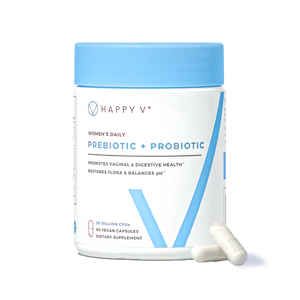
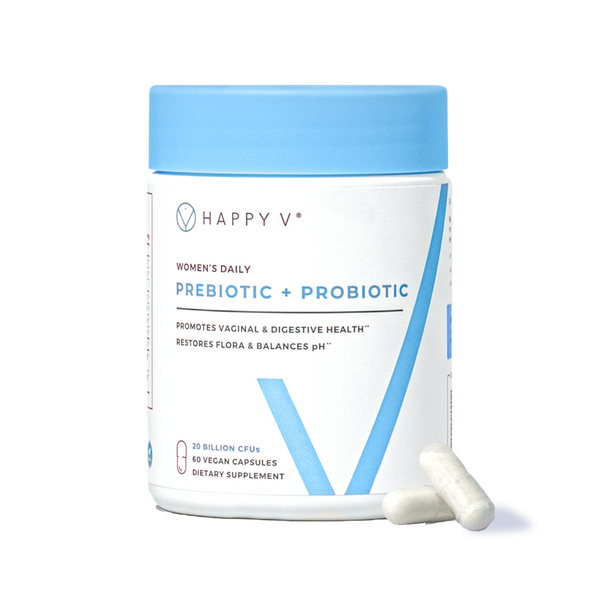
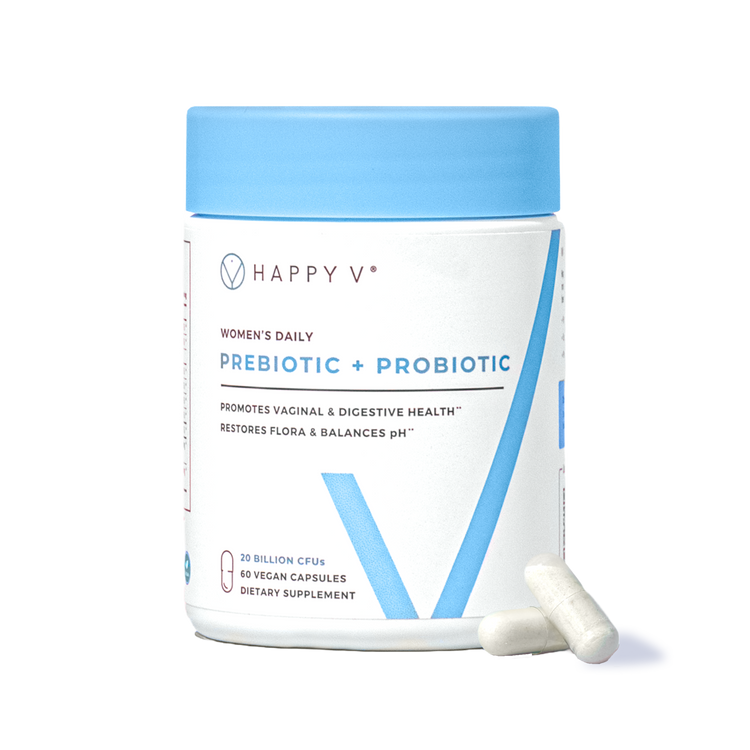
- Support your vaginal microbiome. Probiotics are healthy bacteria that help crowd out bad bacteria and fungi before they can cause an infection, and the biggest probiotic players in your vagina are those from the Lactobacillus species... but only certain strains. Daily probiotics can be helpful in maintaining long-term vaginal health, but only if they contain clinically studied strains of Lactobacillus. Happy V's Prebiotic + Probiotic is doctor-formulated with 7 Lactobacillus strains clinically shown to help restore your vaginal microbiome, plus Vitamin C and garlic extract for their immune-boosting and antimicrobial properties, giving you an extra layer of support against yeast infections, BV, and UTIs alike. In fact, in a preclinical study, our unique formula was shown to inhibit the growth of both Candida albicans and Gardnerella vaginalis, the top baddies behind yeast infections and BV respectively.
 Bestseller
Prebiotic + Probiotic
Maintains vaginal pH and restores gut health.
- Manage underlying conditions. Diabetes and hormonal imbalances can weaken your immune system or disrupt your vaginal flora, making yeast infections more likely and harder to shake. Keeping blood sugar levels in check, working with your doctor on any hormonal issues, and staying on top of regular checkups all go a long way toward lowering your risk of recurrent infections.13
Keep the Conversation Going
- Visit our blog for more women's health tips.
- Join our private Happy V Facebook group to hear from others who've been there.
- Explore supplements designed to support your vaginal health journey.
Disclaimer: This blog is for informational and educational purposes only and is not intended to diagnose, treat, cure, or prevent any disease. Statements about supplements have not been evaluated by the Food and Drug Administration. For more information about vaginal infections, visit the CDC or speak to a licensed healthcare provider.