


- Fact Checked
- August 05, 2026
- 10 min read
Best (and Worst!) Products for Vaginal Odor: What Works and What Doesn’t

- Written by Daniella Levy • Updated on September 09, 2026
- Updated on September 09, 2026

Table of Contents
Table of Contents
Vaginal odor is one of those topics that nobody wants to talk about, but nearly every woman deals with at least once in their life.
If recent vaginal odor has led you down a product rabbit hole, it’s easy to assume the solution is a stronger cleanser, deodorizing spray, scented wipes, or another product that promises instant freshness. But here’s the thing: the best products aren’t the ones that simply cover up smell, but the ones that help address why the odor is happening in the first place.
Strong odors are usually the sign that a vaginal microbiome imbalance has evolved into some sort of vaginal infection. Bacterial vaginosis (BV) is the most common cause of unusual vaginal odor, affecting approximately 29% of women between the ages of 14 and 49. Other causes can include hormonal fluctuations, sexually transmitted infections, a forgotten tampon, or irritation from products used around the vulva, none of which will be helped by a simple perfume.
So what do you do instead to get rid of the odor? Keep reading!
This post is for informational purposes only and does not constitute medical advice. See full disclaimer below.
What Causes Vaginal Odor?
Your vagina will likely never be completely odorless. In fact, every vagina has a natural, mild, maybe even a little musky scent.1
It may change slightly throughout your menstrual cycle, after sex, during exercise, or because of hormonal fluctuations, so a temporary change to your vaginal odor isn’t necessarily a sign something is wrong. A sudden, strong, foul, or fishy odor, on the other hand, can signal a vaginal infection or other change that definitely deserves attention.2
Common causes of strong vaginal odor include:
- Bacterial vaginosis. BV often causes a strong fishy odor and thin gray or white discharge.
- Trichomoniasis. Also known as trich, this sexually transmitted infection can cause a foul smell, irritation, and yellow-green discharge.
- Yeast infections. Yeast infections are more likely to cause itching and thick, white discharge than strong odor, but they can still change how the area smells.
- Other sexually transmitted infections. Chlamydia and other infections may cause abnormal discharge, bleeding, pain, or odor.
- A forgotten tampon. A forgotten tampon can cause a particularly strong, unpleasant smell and should be removed promptly.
- Hormonal changes. Pregnancy, perimenopause, menopause, and other shifts in estrogen can change vaginal secretions and vaginal flora.
- Sex and semen. Semen is alkaline and can temporarily raise vaginal pH after sex, which may also come with a noticeable change in odor.
- Menstruation. Blood can temporarily change vaginal pH and produce a stronger, almost metallic scent.
- Sweat and moisture. Damp clothing, tight synthetic fabrics, and wet swimsuits can trap sweat and make normal odor more noticeable.
Remember, vaginal odor isn’t a diagnosis. It’s a symptom of something. If that “something” is a potential vaginal infection, the best course of action is to seek the appropriate treatment, not try to cover it up with a fragrance.3
The Best Products for Vaginal Odor
The best products for vaginal odor aren’t the ones that simply cover up the smell. They’re the ones that support the underlying factors that help keep odor from coming back.4
That starts with figuring out what’s causing the change. If the odor is related to bacterial vaginosis, trichomoniasis, or another infection, you may need antibiotics or another prescription treatment to clear it.5 No wash, probiotic, supplement, or home remedy should take the place of that care.
The products and habits below are better suited to what comes next: supporting a balanced vaginal microbiome, reducing everyday sweat and buildup, and helping create an environment where odor is less likely to return after the underlying issue has been addressed.6
Vaginal Probiotics
When odor is related to an imbalance in vaginal bacteria, vaginal probiotics may offer more meaningful support than a product designed to hide the smell.7
When it comes to vaginal infections, most people put their emphasis on the bad bacteria that is overgrowing in the microbiome.8 But the core issue isn’t necessarily too much bad bacteria; it’s too little good bacteria.
In your vagina, protective Lactobacillus bacteria produce lactic acid, which helps maintain an acidic vaginal environment. When Lactobacillus levels fall, less lactic acid is produced, which means less natural protection against bad bacteria.9
Look for a probiotic that is not only formulated for vaginal use but also clearly lists:
- The complete strain names
- The amount of each strain
- A prebiotic or other ingredient that helps beneficial bacteria thrive
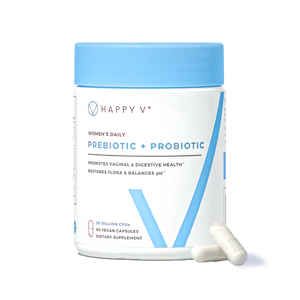
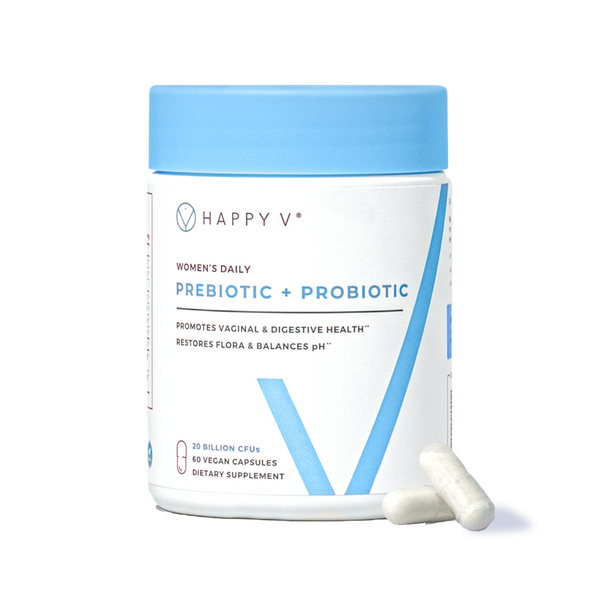
Happy V Prebiotic + Probiotic contains seven clinically studied strains of Lactobacillus, including L. crispatus CCFM1110™ and L. rhamnosus HN001™, that have all been shown to support healthy vaginal flora and everyday balance.
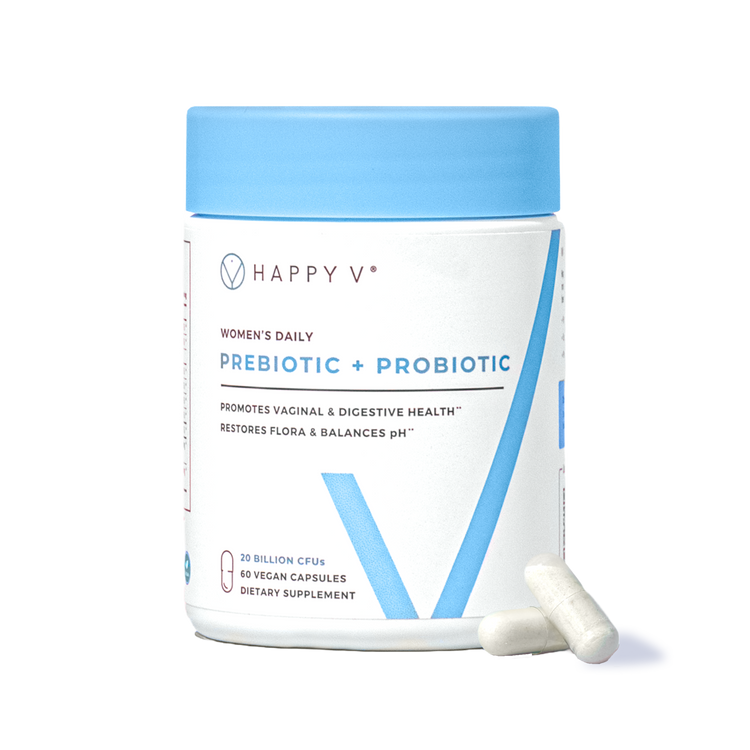 Bestseller
Prebiotic + Probiotic
Maintains vaginal pH and restores gut health.
Vaginal probiotics aren’t a replacement for antibiotics or prescription treatment when you have an active infection, but they can help address the underlying imbalance that led to symptoms in the first place.
A Gentle Feminine Wash
The vulva (that’s the external part!) can collect sweat, oil, urine residue, and other everyday buildup that can lead to noticeable odors.10 Cleaning the area once a day can help, but washing more aggressively isn’t better.
Use warm water alone or choose a gentle, fragrance-free wash designed for use on intimate skin. A good formula should be:
- Hypoallergenic
- Free from added fragrance
- Made without harsh detergents
- Appropriate for sensitive intimate skin
- pH-conscious or pH-balanced
- Gynecologist tested, when possible
Happy V’s Feminine Wash checks all these boxes and is designed for gentle, daily use. Just remember that we are only talking about the external vulva, not your actual vagina! The vagina is self cleaning and doesn’t need soap, water, or another product inserted internally.11
Breathable Cotton Underwear
Sometimes the most helpful solution isn’t a supplement or cleanser, but something a lot more basic.12
Breathable cotton underwear allows more airflow and helps prevent moisture from sitting against the skin. This may make a noticeable difference if you’re noticing that odor becomes more obvious after exercise, during hot weather, or after spending time in damp clothing.
It’s also important to change out of sweaty workout clothes and wet swimsuits promptly, and some women find it helps to sleep without underwear at all.
Fiber and Fermented Foods
What you eat won’t instantly change vaginal odor, but your daily diet can help support the communities of bacteria throughout your body, including those in your vagina.
Try including:
- Fiber-rich fruits and vegetables
- Whole grains
- Beans and legumes
- Yogurt with live cultures
- Kefir
- Other fermented foods
These foods won’t treat bacterial vaginosis or yeast infections, but they can be part of a broader routine that supports gut and vaginal health.13 You can read more about in our article "The Best and Worst Foods For Vaginal Health".
Condoms
Even if you aren’t trying to avoid pregnancy or are using another method of contraception to avoid getting pregnant, condoms can still be helpful.14
Sex can temporarily change vaginal pH because semen is more alkaline than the vagina’s usual environment.15 Using condoms reduces direct exposure to semen and may help if you consistently notice odor changes or even infection flare-ups after sex.
If you use sex toys, make sure they’re cleaned both before and after use according to the manufacturer’s instructions. Avoid sharing toys unless they’re cleaned thoroughly or covered with a new condom between users.
The Worst Products and Practices for Vaginal Odor
What you do to address vaginal odor is just as important as what you don’t do.16 Products that promise to make you smell floral, fruity, or “fresh all day” are often addressing the wrong problem, and in some cases, can even make the problem worse.
Here are the practices and products to avoid if you’re trying to prevent vaginal odor.
Douches
Douching may temporarily wash away vaginal secretions, but it also removes that protective Lactobacillus bacteria that help keep less desirable bacteria under control.17
This is why, over time, douching can increase the likelihood of BV, irritation, and recurrent odor.18 Remember, the vagina is self-cleaning and doesn’t need to be flushed or cleaned internally, so douching is as potentially harmful as it is totally unnecessary.
Feminine Sprays and Powders
Sprays and powders may cover odor briefly, but they don’t treat the underlying cause.19 They often also contain fragrances by way of chemicals that can irritate sensitive vulvar skin and make itching, burning, or discomfort worse.
Scented Wipes
Wipes can be convenient after exercise or while traveling, but fragranced wipes may leave behind irritating ingredients.
When you need to freshen up, choose plain water or an unscented, hypoallergenic wipe. Even then, wipes should be used externally and shouldn’t replace gentle washing.
Scented Soaps and Body Washes
General body washes and scented soaps are often too harsh for intimate skin. They can strip the skin barrier and leave the vulva feeling dry, tight, or irritated.20
Choose a gentle cleanser designed for intimate use, like Happy V’s Feminine Wash.
Scented Tampons and Pads
Scented tampons, perfumed pads, and fragranced liners can expose the vulva to fragrance for hours at a time, increasing the likelihood of irritation and odor.21 Unscented menstrual products are the better choice, especially if you’re prone to irritation or recurring vaginal symptoms.
Tea Tree Oil and Other DIY Remedies
Tea tree oil is often promoted online as a natural way to manage vaginal odor or infections, but it can burn or irritate sensitive tissue, especially when applied undiluted.22
Other home remedies, including vinegar rinses, hydrogen peroxide, yogurt insertion, or essential oils, can also cause irritation and may delay proper diagnosis and treatment.23
It’s important to remember that “natural” doesn’t automatically mean safe for vaginal tissue.
When Vaginal Odor Needs Medical Attention
Some changes in scent are temporary and harmless. For example, stronger smells that you notice after your period, exercise, or sex usually resolve on their own within a day or two.
Other changes require a trip to a healthcare provider, especially if the odor:
- Is strong, foul, or distinctly fishy
- Lasts longer than a week
- Keeps returning
- Comes with gray, green, or yellow discharge
- Is accompanied by itching, irritation, or burning
- Occurs with pain during sex or urination
- Comes with pelvic pain, fever, or bleeding
- Appears after sex with a new partner
- May be related to a forgotten tampon
Don’t try to self-diagnose at home. Since the symptoms of common vaginal infections overlap, it’s easy to confuse them, but many require different forms of treatment. Treating the wrong infection will only make symptoms worse and increase your risk of complications.
Keep the Conversation Going
- Visit our blog for more women's health tips.
- Join our private Happy V Facebook group to hear from others who've been there.
- Explore supplements designed to support your vaginal health journey.
Disclaimer: This blog is for informational and educational purposes only and is not intended to diagnose, treat, cure, or prevent any disease. Statements about supplements have not been evaluated by the Food and Drug Administration. For more information about vaginal infections, visit the CDC or speak to a licensed healthcare provider.