

- Fact Checked
- August 26, 2026
- 11 min read
Meet Your Estrobolome: Why Perimenopause May Be Wrecking Your Digestion

- Written by Daniella Levy • Updated on August 26, 2026
- Updated on August 26, 2026

Table of Contents
Table of Contents
Here is something that may sound familiar: you're a woman in your mid-40s, and lately, it feels like your body feels like it's speaking a language you don't recognize anymore. Foods you've eaten your whole life suddenly leave you bloated. Constipation has become a monthly guest instead of an occasional visitor. So you did the right thing and went to see your doctor. At your appointment, they ran the usual tests, ruled out IBS and food allergies, and sent you home with a shrug.
Though this whole process is definitely crazy-making, trust us when we say you’re not imagining things. The missing link that many women and even some doctors miss is something called your estrobolome, and once you understand it, a lot of your symptoms start to make a lot more sense.
This post is for informational purposes only and does not constitute medical advice. See full disclaimer below.
What Is the Estrobolome?
To put it simply, your estrobolome is the collection of gut bacteria responsible for metabolizing and recirculating estrogen in your body. Think of it as a specialized crew within your broader gut microbiome whose job it is to help regulate how much estrogen stays active in your system versus how much gets cleared out.
Though a majority of people have never heard the term before, researchers have been studying the estrobolome for over a decade, and it turns out your gut bacteria have a lot more influence over your hormonal health than most people realize.
When your estrobolome is working well, it helps maintain steady, balanced estrogen levels. When it's disrupted, the effects ripple out into your digestion, your mood, your weight, and more. A common time for disruption is (you guessed it!) perimenopause. But as you’ll discover as you keep reading, this disruption doesn’t have to be your new normal. You can take steps to support your estrobolome and regain your digestive comfort.
The Estrogen-Gut Connection
Your estrobolome and your hormones are kind of a two-way street. Declining estrogen during perimenopause changes the makeup of your gut bacteria, and a disrupted gut microbiome makes it harder for your body to metabolize estrogen properly. Once that starts happening, symptoms tend to build on each other pretty quickly.
Here's roughly how it works. Your liver "tags" used estrogen for elimination, then sends it into bile so it can move through your digestive tract and out of your body. Your gut bacteria have a say in this too, though. Certain microbes can undo that tagging process, called deconjugation, which lets some of that estrogen slip back into circulation instead of leaving your body for good. A healthy gut keeps this in balance. But when certain bacteria overgrow, too much estrogen gets released back into circulation, which can tip you toward estrogen dominance.
This same relationship is also why some women on hormone replacement therapy (HRT) notice their response to treatment isn't always consistent. Since your liver and gut are working together to process estrogen, gut health can influence how well HRT is absorbed and metabolized, not just how much estrogen your body is producing on its own. If you're on HRT and things feel unpredictable, a comprehensive gut test can help clarify whether dysbiosis is part of the picture before assuming it's a dosage issue.
The Estrogen Recycling Loop, How It Works When Healthy
In a healthy system, this recycling process is a feature, not a bug. Your liver sends used estrogen to your gut for elimination, and certain gut bacteria produce an enzyme called beta-glucuronidase that reactivates a small amount of it so it can recirculate. This recycling isn’t dangerous. In the right balance, this is just a normal part of healthy estrogen metabolism.
What Happens When the Estrobolome Is Disrupted
Problems start when gut dysbiosis sets in, meaning your microbial diversity drops and certain bacteria populations shift out of balance, particularly those that can reactivate recycled estrogen. This can cause your hormone levels to swing more than expected, exacerbating your perimenopause symptoms.
Perimenopause Digestive Symptoms That May Be Hormone-Driven
Most women are familiar with perimenopause symptoms like mood swings, hot flashes, and night sweats that are caused by hormonal fluctuations. If you’ve been experiencing digestive symptoms along with these classic perimenopause symptoms, it might not be a separate dietary issue.
Common digestive symptoms driven by hormonal changes include:
Bloating, Gas, and Constipation
Declining estrogen affects gut motility and the composition of bacteria that produce short-chain fatty acids, compounds that support a healthy gut lining and regular digestion. When those bacterial populations shift, bloating and constipation often follow, even without any change to your diet. For many women, this also shows up as abdominal weight gain that feels disconnected from any changes in diet or exercise, another downstream effect of the same hormone-gut feedback loop.
New Food Sensitivities and IBS-Like Flares
Gut permeability, sometimes called a "leaky gut," can increase as estrogen fluctuates. A less resilient gut barrier means your body may react to foods it previously tolerated just fine, which can look and feel a lot like new food sensitivities or IBS.
Beyond Digestion: How an Imbalanced Estrobolome Affects the Rest of Your Body
Your estrobolome's reach goes well past your gut. An imbalance here can also ripple out into your mood, your thyroid, and a handful of other estrogen-related conditions worth knowing about.
The Gut-Mood Connection
Your gut produces a significant portion of your body's serotonin, and gut bacteria play a role in that production. So if your estrobolome is out of balance, it's not unusual to notice mood swings, brain fog, or increased anxiety alongside your digestive symptoms.
The Estrobolome-Thyroid Connection
Your gut and thyroid are connected through what’s called the gut-thyroid axis. This connection means an imbalanced estrobolome can have downstream effects on thyroid function, too.
When your gut is out of balance, it can trigger low-grade immune activity that sometimes contributes to autoimmune thyroid conditions like Hashimoto's thyroiditis, where the immune system mistakenly attacks the thyroid. Some researchers believe this happens partly because certain gut bacteria closely resemble thyroid tissue, which can confuse the immune system into targeting both.
Your gut also plays a role in converting thyroid hormone into its active, usable form. So when your microbiome is disrupted, you can end up with symptoms of hypothyroidism, like fatigue, hair thinning, or unexplained weight changes, even if your standard thyroid labs come back looking normal.
If you've been treating your thyroid and your gut as two separate issues, this is your sign to talk to your doctor about looking at them together, especially if you're noticing those symptoms alongside your digestive ones.
Other Related Health Conditions
An imbalanced estrobolome has been linked to a range of estrogen-dependent conditions, including PMOS (formerly PCOS), endometriosis, and endometrial hyperplasia. Some research has also connected estrobolome imbalance to metabolic syndrome, insulin resistance, mood disorders, low libido, and skin issues like adult acne. Because circulating estrogen levels are involved, researchers have also looked at the estrobolome's relationship to breast cancer risk, along with cardiovascular disease and fertility, though this remains an active area of study rather than settled science.
Signs of an Imbalanced Estrobolome
Estrobolome imbalance shows up differently from woman to woman, but one thing to know is that estrobolome dysfunction often presents as a cluster of symptoms instead of just one and can include:
- Persistent bloating
- Brain fog or trouble concentrating
- Mood swings or increased anxiety
- Low libido
- Skin issues, like adult acne
- Irregular or heavy periods
- PMS-type symptoms
- Fatigue
If you're noticing several of these at once, that's often the clearest sign something systemic is going on, rather than a handful of unrelated issues.
How Is Estrobolome Imbalance Tested?
Both microbiome testing and comprehensive stool testing can offer a clearer picture of what's happening in your gut. These tests typically assess microbial diversity, flag markers of gut dysbiosis, and in some cases measure beta-glucuronidase activity directly, giving you and your provider more to work with than symptoms alone. You can ask your doctor about them directly during your next appointment.
How to Reset Your Estrobolome
The estrobolome is complex and has far-reaching effects on different systems across your body. The good news, though, is the complex estrobolome responds extremely well to small, consistent lifestyle interventions that you can start implementing today.
Here are the strategies with the most science behind them.
Focus on Fiber to Feed the Right Bacteria
Fiber is one of the most powerful tools for estrobolome support. It feeds the beneficial bacteria living in your gut, especially certain strains of Bifidobacterium and Lactobacillus. Fiber also supports short-chain fatty acid (SCFA) producers and beneficial strains like bacteroides, which play a role in maintaining gut barrier function and keeping your microbiome resilient.
Aim to get your fiber from a variety of sources, including vegetables, legumes, whole grains, and fruit.
Eat Fermented Foods and Take a Daily Probiotic
Fermented foods like yogurt, kefir, sauerkraut, and kimchi introduce beneficial bacteria that support microbial diversity in your gut. Though they are a great addition to your diet, they do not contain probiotics, despite what many health blogs may claim.
That’s because, in order to be a probiotic, a bacteria must be shown to provide a clear clinical benefit (not just crowd out more harmful bacteria or support general microbial diversity).
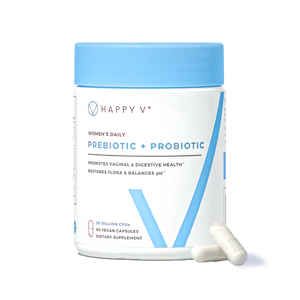
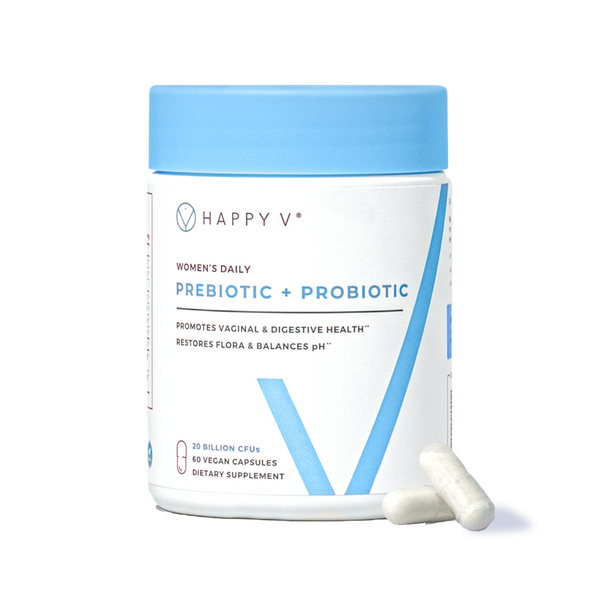
Happy V’s Prebiotic + Probiotic contains 7 clinically studied probiotic strains, including Lactobacillus acidophilus LA-14®, Lactobacillus rhamnosus HN001™, and Lactobacillus crispatus CCFM1110™. Beyond their more well-known role in vaginal health, these strains also support your digestive system directly. The LA-14® strain in particular has been linked to improvement in gut-related conditions like IBD, and the formula as a whole is designed to improve gut regularity and reduce bloating.
Support Estrogen Metabolism Directly
Beyond feeding your gut bacteria, you can also support the estrogen metabolism side of the equation directly. DIM (or diindolylmethane, a compound derived from cruciferous vegetables like broccoli and kale), is one of the most researched ingredients for this. It helps your body break down and metabolize estrogen more efficiently, which is especially relevant during perimenopause and menopause, when your estrogen levels are shifting and your estrobolome is under more strain than usual.
Happy V® Menopause Relief combines clinically studied ingredients selected to support the systems connected to menopause comfort, including estrogen metabolism, stress response, mood, sleep, vaginal comfort, urinary wellness, and antioxidant support. DIM, Genistein, and BroccoRaphanin® target estrogen metabolism and hormone balance, working alongside ingredients formulated to ease other perimenopause and menopause symptoms at the same time. If you're already working on your gut through fiber, fermented foods, and a daily probiotic, this is a natural next layer for supporting the hormone side of that same equation.
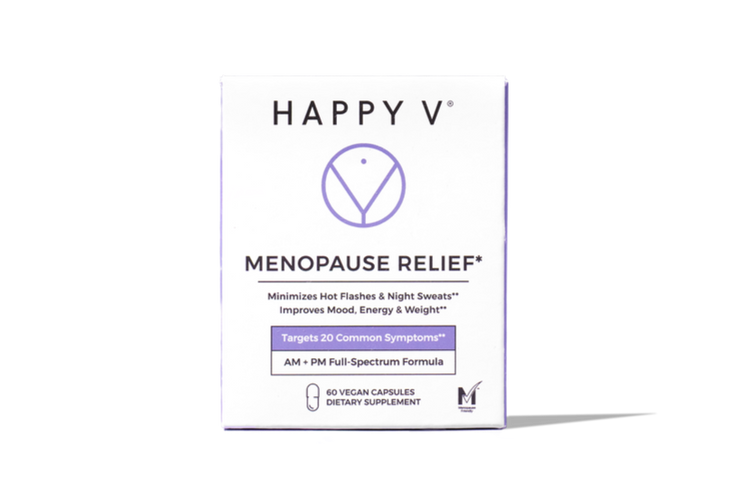
Menopause Relief AM + PM
Supports mood, energy and weight. Minimizes hot flashes and night sweats.
Examine Certain Lifestyle Factors, Especially Stress and Sleep
Chronic stress and poor sleep both affect gut microbial diversity and hormone regulation, which means lifestyle habits aren't a side note, but a huge part of the estrobolome equation. Reducing exposure to endocrine-disrupting chemicals, found in some plastics and personal care products, is another lifestyle factor worth considering, since these compounds can interfere with the same estrogen pathways your estrobolome is trying to regulate.
When to See a Specialist
Most estrobolome-related digestive symptoms respond well to the strategies above, but some signs warrant a closer look from a gastroenterologist or a functional medicine provider. These include:
- Severe or worsening abdominal pain
- Blood in your stool
- Unexplained weight loss
- Any symptoms that don't improve after a few months of consistent lifestyle changes
Comprehensive stool testing or a functional gut panel can help pinpoint what’s going on and give your doctor the data they need to make an effective treatment plan.
Keep the Conversation Going
- Visit our blog for more women's health tips.
- Join our private Happy V Facebook group to hear from others who've been there.
- Explore supplements designed to support your vaginal health journey.
Disclaimer: This blog is for informational and educational purposes only and is not intended to diagnose, treat, cure, or prevent any disease. Statements about supplements have not been evaluated by the Food and Drug Administration. For more information about vaginal infections, visit the CDC or speak to a licensed healthcare provider.
FAQ
What is the estrobolome?
Can perimenopause cause digestive issues like bloating and constipation?
What does an estrobolome reset involve?
Which estrobolome supplements are most evidence-backed?
How long does it take to see improvement after supporting your estrobolome?
Our experts continually monitor the health and wellness space, and we update our articles when new information becomes available.
- Published on: August 26, 2026
- Last updates: August 26, 2026
Written by Daniella Levy
Edited by Liz Breen