

- Fact Checked
- May 08, 2026
- 10 min read
Is Your Yeast Infection Due to Hormones? Here’s How to Tell

- Written by Daniella Levy • Updated on May 27, 2026
- Updated on May 27, 2026

Table of Contents
Table of Contents
If you're struggling with recurrent yeast infections and notice that symptoms seem to show up at the same point in your cycle, during pregnancy, or right after starting a new month of birth control pills, there may be a reason.
Hormonal fluctuations, especially when it comes to fluctuations with estrogen, play a direct role in vulvovaginal candidiasis. About 75% of women will experience at least one vaginal yeast infection in their lifetime, and many of those infections are tied to hormonal changes. Though many hormonal changes are unavoidable and just part of being a woman (looking at you, menstrual cycle), when you understand the connection between hormones and symptoms, you can anticipate symptom flare-ups and take steps to stay ahead of them.
This post is for informational purposes only and does not constitute medical advice. See full disclaimer below.
How Estrogen Affects Your Vaginal Environment
You have probably heard of the hormone estrogen in relation to your monthly cycle, but estrogen and your hormones more generally have a larger role in your overall health than you might realize.1 For starters, they shape the entire environment inside your vagina, influencing vaginal pH, glycogen levels, and which microorganisms get to thrive.
When estrogen is high, vaginal tissue produces more glycogen, which fuels yeast growth, including Candida albicans, one of the main culprits of yeast infections.2 Estrogen also helps these Candida cells attach more easily to vaginal walls and weakens your epithelial cells' natural ability to keep yeast overgrowth in check. A 2022 study even found that these estrogen-adapted Candida actually acquire a protein that helps them hide from your immune system, which helps explain why high-estrogen life phases (like pregnancy) carry a higher infection risk.
Interestingly, progesterone alone doesn't appear to have the same effect.3 Research has shown that estrogen was essential for sustaining vaginal candidiasis, while progesterone levels had no demonstrable role. So when estrogen is elevated relative to progesterone, whether due to birth control pills, xenoestrogens from environmental sources, or your natural cycle, Candida has more opportunity to overgrow.
This is why some women can literally be caught in the cycle of infection: because their yeast infections are tied to the hormonal changes that happen naturally over the course of their menstrual cycle.4
When Low Estrogen Is the Problem
So high estrogen puts you at risk for yeast infection, but that doesn’t make low estrogen desirable.5 In fact, low estrogen creates a different kind of imbalance.
During perimenopause and menopause, declining estrogen reduces glycogen in vaginal tissue, which means less fuel for the Lactobacillus bacteria that keep vaginal pH acidic and protective.6 Without adequate Lactobacillus, your vaginal pH rises, making you more susceptible to infections beyond yeast overgrowth, like bacterial vaginosis (BV).
Symptoms to Look For
Hormonally-driven yeast infections feel the same as any other yeast infection.7 It’s really timing that’s the giveaway.
As with any yeast infection, you’ll notice:
- Intense itching in and around the vagina and vulva
- Burning sensation, especially during urination or sex
- Thick, white, cottage cheese-like vaginal discharge (typically odorless)
- Redness and swelling of the vulva
- Pain during sex
- Vaginal dryness or irritation, especially during perimenopause or postmenopause
These symptoms are not exclusive to a yeast infection, though. They overlap with bacterial vaginosis, vaginitis, and even some sexually transmitted infections (STIs).8 So instead of running to the pharmacy for some Monistat, call your doctor to confirm your diagnosis. Treating the wrong infection will only make things worse.
Hormonal Life Stages and Your Risk of Yeast Infections
Every stage of life is to be embraced. But some come with more risks than others, particularly when it comes to hormonally-driven yeast infections.9 Here are the life stages more associated with a greater risk of yeast infections.
Right Before You Menstruate
Many women notice symptoms of a yeast infection tend to arrive right before their period.10 This is because during the luteal phase (or the second half of your menstrual cycle that comes after ovulation), estrogen experiences a secondary peak that can stimulate Candida growth.
If infections consistently occur during the same phase, there's actually a name for it: cyclic vulvovaginitis.11 Tracking your cycle alongside your symptoms is one of the best ways to confirm the pattern so you can have a more informed discussion with your doctor.
Menstrual Cycle Tracking
How Do You Track Your Menstrual Cycle And Why Does It Matter for Your Health?
During Pregnancy
Pregnancy is a high-risk window for vaginal yeast infections (and all vaginal infections, really).12 That’s because, during pregnancy, levels can rise up to 30-fold (!), dramatically shifting the vaginal microbiome.
Between 20% and 30% of pregnant women develop vulvovaginal candidiasis, driven by elevated estrogen increasing glycogen and reducing the body's ability to control yeast growth.13 If you're pregnant and noticing symptoms like itching, burning, cottage cheese-like vaginal discharge, please talk to your OB/GYN or healthcare provider before grabbing an over-the-counter antifungal. Some antifungal options aren't recommended during pregnancy.
During Perimenopause
Perimenopause (aka the years directly leading up to menopause) often gets overlooked in women's health conversations about yeast infections, but hormonal fluctuations during this transition can be significant.14
Estrogen levels don't decline in a straight line. Instead, they swing up and down. Those surges can temporarily create conditions that favor Candida even as you're moving toward menopause. If you're in perimenopause and experiencing recurrent yeast infections or unusual vaginal discharge, hormonal fluctuations may be the underlying driver.15
When Using Hormonal Birth Control or HRT
Hormonal birth control pills can increase your risk of vaginal yeast infections, as can hormone therapy during menopause, since it brings estrogen levels back up, reintroducing yeast-friendly conditions.16 In fact, one study found that 26% of postmenopausal women using estrogen hormone therapy developed yeast infections, compared to just 4% of those not using it. This doesn’t mean you should avoid HRT altogether. Many women find it is the only thing that helps them combat disruptive symptoms like hot flashes, night sweats, and mood swings. If you've noticed more frequent infections since starting hormonal contraception or HRT, your healthcare provider or gynecologist can help you explore lower-dose or progestin-only alternatives.
Other Risk Factors Worth Knowing
Hormones are often the underlying driver of recurrent yeast infections, but they rarely work alone.17
Other risk factors can further increase your risk, particularly during the hormonal transitions we just discussed. These include:
- Antibiotic use. Though potentially life-saving, antibiotic use wipes out protective Lactobacillus bacteria, leaving room for Candida overgrowth
- Blood sugar imbalances or diabetes. These raise glycogen levels in vaginal tissue, fueling yeast growth
- A weakened immune system. Illness, corticosteroid therapy, or chronic stress all reduce your ability to keep Candida in check
- Poor diet, especially one high in sugar and refined carbohydrates can promote yeast overgrowth
- Wet clothes and swimsuits. If left on too long, they trap moisture and warmth, creating ideal conditions for Candida overgrowth
- Tight, non-breathable clothing, for all the same reasons we just mentioned
- Sexually transmitted infections. STIs can alter the vaginal environment in ways that increase susceptibility to secondary infections
- Xenoestrogens. Xenoestrogens from plastics, pesticides, and personal care products can mimic estrogen in the body and may contribute to estrogen imbalance18
How to Know If Hormones Are Causing Your Yeast Infection
Like we said earlier, the symptoms of a hormonally-driven yeast infection are the same as any other. It’s about the pattern and timing of these symptoms. Ask yourself:
- Do infections consistently appear the week before my period?
- Do they coincide with starting birth control pills, becoming pregnant, or beginning hormone therapy?
- Did chronic yeast infections begin during perimenopause or after starting HRT?
- Are they recurring (meaning four or more times a year)?
If you're seeing a pattern, creating a symptom log alongside your cycle data can help your OB/GYN or healthcare provider connect the dots.19 They may also check your blood sugar for diabetes, run a thyroid panel, or order an adrenal cortisol test if there's reason to suspect the adrenals are contributing to hormonal imbalance.
For a deeper look at how your hormones are behaving throughout the month, the DUTCH Complete or Plus test is a comprehensive option that measures estrogen, progesterone, cortisol, and other key hormones.20 It can be especially useful if your symptoms are clearly cyclical but the cause hasn't been identified.
If you want more insight into the state and composition of your vaginal microbiome, at-home vaginal microbiome testing is now widely available.21 Just take a swab, ship it off, and they’ll mail you the results (though it can still help to have a doctor interpret these results and make them actionable).
Treatment and Prevention: What Actually Helps
For an active infection, the best course of action is an antifungal. The most common are:
- Over-the-counter antifungal creams (like miconazole or clotrimazole) for mild to moderate infections
- Fluconazole, a prescription oral antifungal medication, for more stubborn cases
Your doctor will direct you toward the best option for your current infection. If you are postmenopausal and also dealing with vaginal dryness and recurring infections due to low estrogen, they may also suggest vaginal estrogen therapy.
When the infection is clear and the Candida growth is dealt with, it’s time to focus on prevention by supporting your vaginal microbiome, particularly the protective Lactobacillus bacteria that keep Candida at bay.
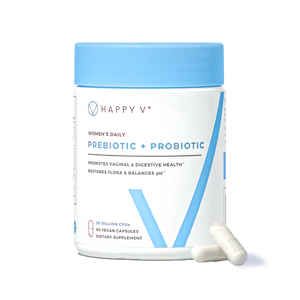
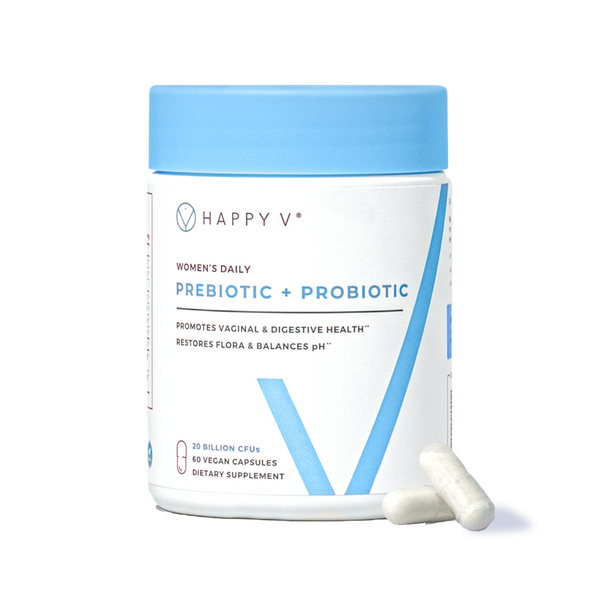
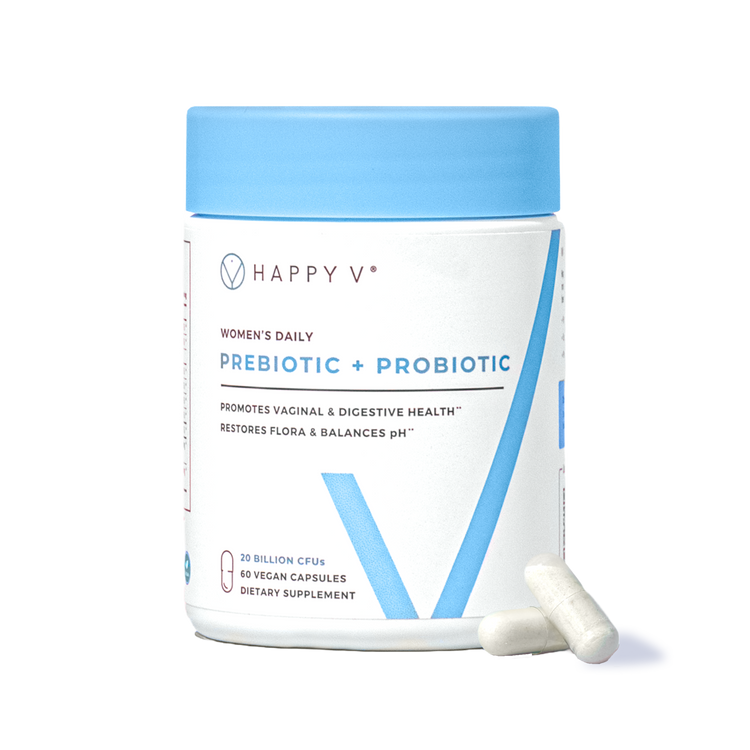
Happy V's Prebiotic + Probiotic contains clinically studied strains of Lactobacillus shown to help support a balanced microbiome. In our preclinical studies, our unique formula was shown to inhibit the growth of several species of Candida, including Candida albicans. Think of daily probiotics as reinforcing your body's natural defenses, especially during hormonal transitions when that defense needs the most support.
 Bestseller
Prebiotic + Probiotic
Maintains vaginal pH and restores gut health.
Other home remedies and lifestyle habits that have scientific merit when it comes to vaginal health include:
- Wearing cotton underwear. Cotton breathes, which keeps moisture down and reduces yeast-friendly conditions
- Not douching, which strips protective bacteria and disrupts vaginal pH
- Changing tampons and pads regularly during your period
- Changing out of wet clothes and swimsuits promptly
- Managing blood sugar through diet, since elevated glucose in vaginal secretions feeds yeast growth
- Limiting sugar and refined carbohydrates in your diet
When to See a Doctor
We know you’re busy and the last thing you want to do is schedule another doctor’s visit for vaginal symptoms, but it’s important to talk to your healthcare provider if:
- You're experiencing recurrent yeast infections (four or more per year)
- Over-the-counter antifungal treatments aren't working
- You're pregnant and experiencing symptoms
- Symptoms are severe and include significant pain, major swelling, or pain during sex
- You're unsure whether it's a yeast infection or another type of vaginal infection
- You're in perimenopause, and symptoms feel unfamiliar or different from before
Your OB/GYN or healthcare provider can confirm the diagnosis, test for underlying health conditions like diabetes or hormonal imbalance, and work with you on a plan that addresses root causes, not just symptoms.
Keep the Conversation Going
- Visit our blog for more women's health tips.
- Join our private Happy V Facebook group to hear from others who've been there.
- Explore supplements designed to support your vaginal health journey.
Disclaimer: This blog is for informational and educational purposes only and is not intended to diagnose, treat, cure, or prevent any disease. Statements about supplements have not been evaluated by the Food and Drug Administration. For more information about vaginal infections, visit the CDC or speak to a licensed healthcare provider.