

- Fact Checked
- September 14, 2026
- 9 min read
Brown Discharge After Sex: What It Means and When to See a Doctor

- Written by Daniella Levy • Updated on September 14, 2026
- Updated on September 14, 2026

Table of Contents
Table of Contents
You just had sex, you go to the bathroom, and there it is, something you’ve never seen before: brown discharge. Any time you see something new, especially when it comes to your body, it’s easy for your mind to jump to a worse case scenario. But in most cases, brown discharge after sex is not cause for concern. It’s usually just old blood leaving your body, and it’s more common than you’d think.
That said, "usually normal" isn't the same as "always ignore it." We’ll outline the common causes of brown discharge as well as the signs to seek out your doctor, so you know exactly what to do next.
This post is for informational purposes only and does not constitute medical advice. See full disclaimer below.
Why Does Vaginal Discharge Turn Brown?
Fresh blood, including menstrual blood, is usually bright red. Over time, as that blood gets exposed to oxygen, it can turn brown. This process is called oxidation, and it’s actually the same process that causes apple slices to turn brown when left on the counter.
If blood has taken longer to leave your vagina for some reason, it can appear brown. The color itself isn't the diagnosis. What matters more is where the blood is coming from and what else is going on with your body.
Causes of Brown Discharge After Sex
While there are a lot of potential causes for brown discharge after sex, ranging from simple friction to an infection or underlying condition, the truth is that a majority of instances are caused by just a handful of things.
The most common causes of brown sex after discharge are:
- Cervical irritation and cervical ectropion. The cervix has a lot of small blood vessels near its surface, and friction during penetration can cause light bleeding. This is especially common if you have cervical ectropion, a condition where the softer, glandular cells that normally line the inside of the cervix are present on the outer surface. It's benign, but it bleeds easily on contact.
- Vaginal dryness. Without enough natural lubrication, sex can cause micro-tears in vaginal tissue. This is more common around perimenopause and menopause, while breastfeeding, or when using hormonal contraceptives that lower estrogen levels.
- Cervical polyps. These are small, usually noncancerous growths on the cervix that can bleed after sex due to contact.
- End of period. The last of your menstrual blood can take longer to exit the body and oxidize along the way, showing up as brown discharge. If you have sex right after your period ends, this leftover blood is a common explanation.
Less common causes include:
- Hormonal contraceptives. Birth control pills, hormonal IUDs, and other hormonal contraception can cause breakthrough bleeding or spotting, especially in the first few months of use or if you miss a pill.
- Hormonal imbalance. Conditions like PMOS (formerly PCOS) can throw off your cycle and cause irregular, unpredictable spotting, including brown discharge after sex.
- Ovulation. Some people spot around ovulation due to the natural dip in estrogen that happens midway through the menstrual cycle. If sex happens to line up with ovulation, that spotting can show up as brown discharge afterward.
- Vaginal trauma. Rough sex, insufficient lubrication, or deep penetration can all cause minor trauma to vaginal tissue.
- Infections. Bacterial vaginosis, trichomoniasis, and other vaginal infections can inflame tissue and cause spotting.
- STIs. Chlamydia and gonorrhea often cause cervicitis, or inflammation of the cervix, which bleeds easily and can lead to postcoital brown discharge.
- Pelvic inflammatory disease, ovarian cysts, endometrial cancer, and cervical cancer. These can all cause abnormal bleeding. They’re far less common than the causes above, but they're part of why persistent or unusual bleeding deserves a professional evaluation rather than a guess.
Infections and Medical Conditions Worth Knowing About
Vaginal infections and STIs are some of the lesser common causes of brown discharge after sex, but they are still a possibility. So how do you know?
While it isn’t your job to self-diagnose, the biggest sign that brown discharge may be caused by some kind of infection is the presence of other symptoms, like itching, an unusual odor, or pelvic pain. These are all signs to call your doctor, so they can test you for:
- Bacterial vaginosis (BV). BV happens when the vaginal microbiome tips out of balance and is often signaled by a fishy odor and thin discharge.
- Trichomoniasis. Trich is a common STI that can cause frothy discharge, irritation, and spotting.
- Cervicitis. Cervicitis can happen when chlamydia or gonorrhea inflames the cervix, making it prone to bleeding, particularly after sex.
- Pelvic inflammatory disease (PID). PID is an infection of the reproductive organs that can develop when STIs go untreated. It's more serious and typically comes with pelvic pain, fever, or unusual discharge alongside the spotting.
- Yeast infections. Yeast infections don't typically cause brown discharge on their own, but the itching and irritation they cause can lead to bleeding during sex.
If you haven't been tested recently, especially with a new partner, this is a good moment to schedule an STI screening. Chlamydia and gonorrhea are frequently asymptomatic until they cause complications like cervicitis or PID.
Other Contributing Factors: Pregnancy, Menopause, and Medical Devices
Beyond cervical sensitivity, hormones, and infections, there are other life events that can make brown discharge after sex more likely, especially:
- Early pregnancy. Implantation bleeding, which happens when a fertilized egg attaches to the uterine lining, can show up as light brown or pink spotting around the time your period would normally arrive. Brown discharge after sex during early pregnancy can also come from the cervix simply being more sensitive due to increased blood flow. Rarely, it can signal an ectopic pregnancy or miscarriage, so any bleeding during pregnancy is worth a call to your provider.
- Perimenopause and menopause. As estrogen drops, vaginal tissue becomes thinner and drier, a condition called vaginal atrophy. This makes tissue more prone to micro-tears during sex. Postmenopausal bleeding of any kind, brown or otherwise, should always be evaluated by a doctor since it can occasionally point to something like endometrial cancer.
- IUDs. Both hormonal and copper IUDs can cause irregular spotting, especially in the months after insertion.
- Uterine fibroids and endometriosis. These conditions can cause irregular bleeding patterns, including brown discharge after sex, along with heavier periods or pelvic pain.
- Recent pelvic exams or Pap smears. If you've had a pelvic exam or Pap smear in the days before having sex, some light brown spotting afterward can simply be leftover irritation from the exam itself.
Management and Prevention Strategies
You can't always prevent brown discharge, but a few habits make it less likely and also easier to track when something is off. These include:
- Using a personal lubricant during sex to reduce friction, especially if you experience vaginal dryness.
- Adjusting depth of penetration or switching positions if you notice bleeding tends to happen with certain positions.
- Tracking your menstrual cycle so you can tell the difference between hormonal spotting and something new.
- Keeping up with regular gynecologist visits and Pap smears, since these catch cervical changes early.
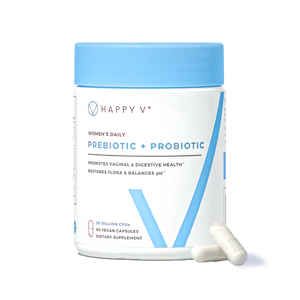
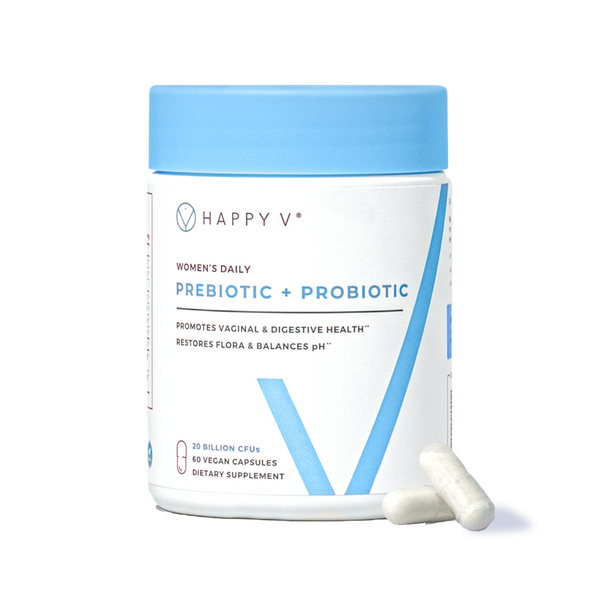
- Supporting your vaginal pH. An imbalanced vaginal microbiome makes tissue more prone to irritation and infections like BV, both of which can contribute to spotting. Happy V's pH Balance Kit pairs the Feminine Wash with the Prebiotic + Probiotic supplement to support a healthy vaginal microbiome from the outside in, so your body is better equipped to keep irritation, odor, and imbalance in check.
 WHILE SUPPLIES LAST
The pH Balance Kit
Balance your microbiome from within, support your skin barrier from without.
- Not douching. Douching disrupts your natural pH and can make you more prone to BV and irritation, which can in turn make spotting more likely.
- Considering vaginal estrogen cream or a vaginal moisturizer if dryness is the culprit, particularly during perimenopause or menopause. Talk to your doctor about what's right for you, since there are prescription and over-the-counter options available.
When to Seek Medical Attention
A little brown discharge after sex (and especially around ovulation, the end of your period, or when starting a new birth control method), is rarely a sign of anything serious. Your body is simply clearing out old blood or reacting to normal cervical sensitivity.
That being said, reach out to your OB/GYN if you notice:
- Bleeding after sex that happens repeatedly, not just once
- Discharge with an abnormal odor
- Pelvic pain or cramping alongside the discharge
- Bleeding that's heavy rather than light spotting
- Any bleeding after menopause
- Discharge alongside symptoms like fever, itching, or pain during sex
A pelvic exam and Pap smear can rule out some of the less common causes we mentioned, like cervical polyps or early cervical changes, and give you real answers instead of the anxiety that comes from the guessing game.
Final Thoughts
Brown discharge after sex is usually your body's way of clearing out old blood. Cervical sensitivity, hormonal shifts, and the tail end of your period explain most cases. If the bleeding is new, recurring, or paired with other symptoms, book a visit with your OB/GYN rather than waiting it out. And taking care of your vaginal health day to day, from what you use to wash to how you support your microbiome, goes a long way toward keeping irritation and imbalance from becoming a pattern in the first place.
Keep the Conversation Going
- Visit our blog for more women's health tips.
- Join our private Happy V Facebook group to hear from others who've been there.
- Explore supplements designed to support your vaginal health journey.
Disclaimer: This blog is for informational and educational purposes only and is not intended to diagnose, treat, cure, or prevent any disease. Statements about supplements have not been evaluated by the Food and Drug Administration. For more information about vaginal infections, visit the CDC or speak to a licensed healthcare provider.
FAQ
Does brown discharge after sex mean I’m pregnant?
When should I see a doctor about dark brown discharge?
Why am I bleeding after sex when I’m not on my period?
Why do I have brown discharge when I wipe?
What causes reddish-brown discharge after unprotected sex?
Is brown discharge after sex normal when I’m on birth control?
Can a Pap smear or pelvic exam cause brown discharge after sex?
How long does brown discharge after sex usually last?
Our experts continually monitor the health and wellness space, and we update our articles when new information becomes available.
- Published on: September 14, 2026
- Last updates: September 14, 2026
Written by Daniella Levy
Edited by Liz Breen