

- Fact Checked
- June 03, 2026
- 13 min read
Why Am I Itchy After Sex? 6 Causes for Post-Sex Vaginal Itching & How to Find Relief

- Written by Daniella Levy • Updated on July 20, 2026
- Updated on July 20, 2026

Table of Contents
Table of Contents

Feeling an itchy vagina after sex can be alarming, to say the least, especially if it’s never happened before. But before you spiral into worst-case scenarios, know this: post-sex vaginal itching is incredibly common and usually has a straightforward explanation.
According to the CDC, the majority of women will experience at least one vaginal infection characterized by itching, burning, or discharge during their lifetime.1 And while these infections can sometimes be the cause of itching post-sex, it may be due to friction or an allergic reaction. So how do you tell? While this article isn’t meant to help you self-diagnose, we will definitely give you some ways to distinguish one cause from the other so you can have more productive conversations with your doctor, if necessary.
This post is for informational purposes only and does not constitute medical advice. See full disclaimer below.
6 Common Causes of Vaginal Itching After Sex

Remember, all symptoms are signals. Your body is trying to tell you something about what it needs. And while all of these causes share itching as a common symptom, each one comes with its own distinct clues. Paying attention to what else is going on (besides that uncomfortable itch), will go a long way in helping you find the right fix.
1. Friction and Inadequate Lubrication
One of the most common causes of post-sex vaginal itching is also the simplest: friction.
When there’s not enough natural or artificial lubrication, delicate vaginal and vulvar tissue can become irritated, leading to microtears that cause itching, rawness, and burning. This can happen to anyone, but it is especially common during hormonal shifts, like those that occur in the days before your period, during postpartum, and perimenopause, when natural lubrication tends to decrease.2
Friction-related irritation can range from mild redness and a temporary stinging sensation to significant vulvar pain and skin that looks chafed or even slightly raw.3 In more severe cases, repeated friction without adequate lubrication can actually cause small blisters or superficial skin breakdown on the more delicate inner tissues of the vulva. If this is left unaddressed, the skin in these areas can develop a thickened, scaly appearance over time (a condition known as lichen simplex chronicus) as a result of repeated scratching and rubbing.
It is also worth knowing that vigorous or prolonged sex increases friction load on vulvar skin, which is some of the most delicate skin on the body. Even with sufficient lubrication, certain positions or activity levels can cause post-sex rawness that lingers for a day or two.4
We aren’t saying this to put you off sex or your favorite positions, but to emphasize how much simple habits (like proper lubrication) matter for your long-term health and comfort.
When it comes to preventing friction, using a water-based, fragrance-free lube can help significantly. So can slowing down and allowing more time for arousal (aka foreplay) before penetration, since natural lubrication is largely dependent on adequate stimulation.
If dryness and friction are recurring problems rather than occasional ones, it is worth exploring whether an underlying hormonal cause is at play. We’ll get into this more a bit later.
2. Vaginal Dryness and Hormonal Changes
Despite its reputation, vaginal dryness is not just a menopause issue. Fluctuating estrogen levels at any stage of life (including while breastfeeding, during certain phases of your menstrual cycle, or while using hormonal birth control) can reduce vaginal moisture and leave tissue more vulnerable to irritation during sex. Dry skin conditions like eczema can also affect the vulvar area and make post-sex irritation more likely, even when hormones are not the primary factor.5
When estrogen levels drop, vaginal tissue can become thinner, less elastic, and less able to self-lubricate. In the context of perimenopause or menopause, this is sometimes referred to as genitourinary syndrome of menopause (GSM), but hormonal dryness and the vulvar itching it causes can affect women at any age.6
Certain health conditions can also contribute to vaginal dryness and chronic vulvar itching. Diabetes, for example, is associated with increased susceptibility to vaginal infections and can affect tissue health. If you experience persistent dryness, vulvar itching, or recurrent infections and have not been evaluated for underlying conditions, it is worth bringing up with your healthcare provider.7
Depending on the cause, your provider may recommend over-the-counter vaginal moisturizers used regularly between sexual activity or prescription vaginal estrogen, especially if the dryness is more than occasional.8
3. Latex or Condom Allergies
Latex allergies affect a small but not insignificant portion of the population, which can lead to immediate vaginal irritation after sex if a latex condom was used.9
Symptoms of an allergic reaction differ slightly from other causes that typically appear within minutes to hours and include vulvar itching, redness, and swelling. In rare cases, a severe allergic reaction (anaphylaxis) is possible, though it’s pretty uncommon. If you notice symptoms consistently after using latex condoms but not otherwise, a latex allergy or sensitivity is worth discussing with your doctor.10
If condoms are your preferred method of birth control or you prefer them for STI protection, switching to non-latex condoms made from polyurethane or polyisoprene can make a significant difference.11
4. Reactions to Lubricants, Spermicides, or Personal Care Products
Condoms aren’t the only thing that can cause a reaction. Many lubricants contain ingredients like glycerin, parabens, and fragrances that can irritate sensitive vaginal tissue and trigger contact dermatitis. Spermicides (and particularly those containing nonoxynol-9) are especially known to cause vaginal irritation and can increase susceptibility to bacterial infections with repeated use.12
Scented soaps, bath products, vaginal deodorants or sprays, and even detergents used to wash underwear can also contribute to post-sex itching. So can synthetic underwear fabrics, which trap heat and moisture against already-sensitized skin. Basically, the vulva and vaginal tissue are highly sensitive to chemical irritants, and because sex involves increased blood flow to the area, any mild sensitivity you might not notice day-to-day can become much more apparent afterward.13
Contact dermatitis from these products usually involves symptoms like vulvar itching, redness, and sometimes even a burning sensation. In more reactive cases, swelling of the vulvar tissue is possible. Symptoms usually appear within hours of exposure and resolve once the irritant is removed.14
If you aren’t sure what could be triggering a skin reaction, try the elimination approach. Start with anything new you might have added to your routine, whether it’s a lube, a condom brand, a new soap, or a fabric softener, and remove it from your routine for a week and see whether symptoms improve.15
What to look for instead: water-based lubricants that are fragrance-free, glycerin-free, and paraben-free. Avoid products with added warming, cooling, or tingling sensations, and skip vaginal deodorants and sprays entirely. They offer no health benefit and are actually a common irritant.16
For personal hygiene, stick with warm water and mild, unscented soap on the vulva (that’s the external part!) only. The vagina is self-cleaning and does not need soap, douching, or any internal products.17
5. Vaginal pH Imbalance
This is one of the most underappreciated causes of post-sex itching, and it is worth understanding in a little more detail.
A healthy vaginal environment is slightly acidic, with a pH typically between 3.8 and 4.5. That acidity is maintained primarily by Lactobacillus bacteria, which produce lactic acid and hydrogen peroxide to keep the environment inhospitable to harmful microorganisms. When pH rises, or becomes less acidic, this protective bacterial balance can be disrupted, leaving you more vulnerable to irritation and infection.18
Sexual activity can shift vaginal pH in several ways. First, semen is alkaline, with a pH between 7.2 and 8.0, meaning it directly raises vaginal pH after sex. This actually helps the sperm to swim better. Saliva, which has a pH around 6.5 to 7.5, can also have a mildly alkalinizing effect.19 Even condom lubricants and spermicides can alter the vaginal environment temporarily.
For most women, vaginal pH self-corrects relatively quickly. But if your Lactobacillus population is already low due to recent antibiotic use, hormonal changes, diet, or other factors, your vagina may not recover as efficiently. That window of elevated pH is when itching, irritation, and opportunistic infections like bacterial vaginosis or thrush (yeast) are most likely to take hold.20
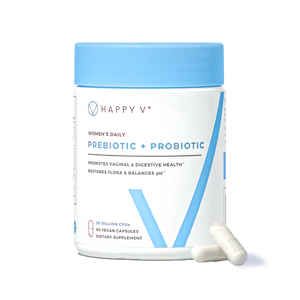
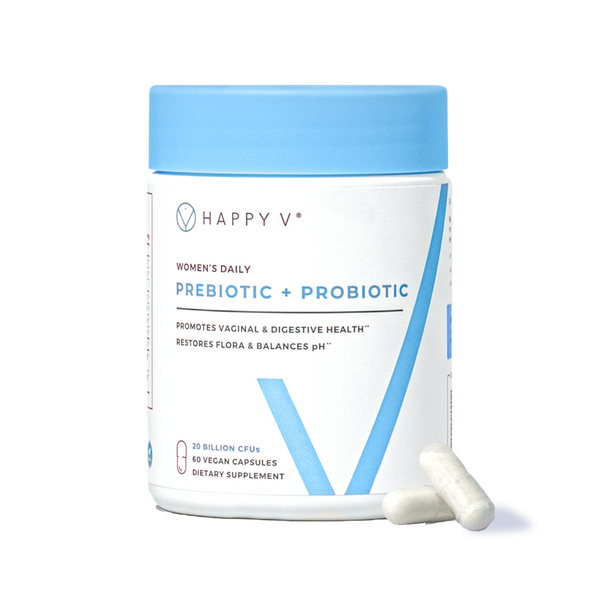
Supporting a healthy vaginal microbiome daily, not just reactively, is key for preventing discomfort after sex. Happy V Prebiotic + Probiotic contains clinically studied strains including Lactobacillus crispatus and Lactobacillus rhamnosus, which help maintain vaginal pH balance and support your body's natural defenses. Urinating after sex and gently rinsing the external vulva with water can also help clear residual semen and minimize prolonged pH disruption, especially if you have a history of infections like bacterial vaginosis or vaginal yeast infections.
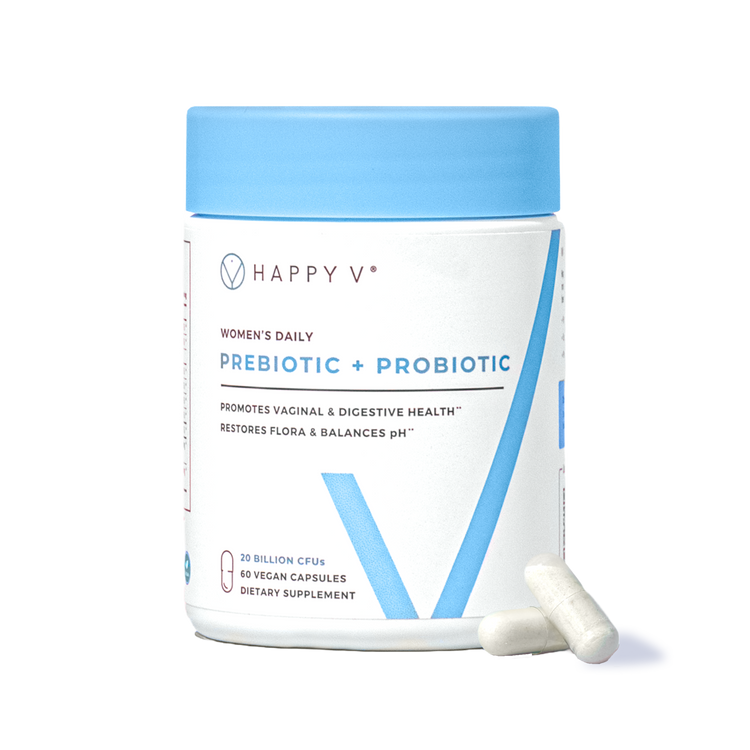 Bestseller
Prebiotic + Probiotic
Maintains vaginal pH and restores gut health.
6. Infections: Yeast, BV, and STIs

Sometimes post-sex itching is not caused by the sex itself, but by a vaginal infection that sex has either triggered or revealed. The most common are yeast infections, bacterial vaginosis, urinary tract infections, and STIs.21
Yeast infections (vaginal thrush, vaginal candidiasis)
Yeast infections are not sexually transmitted, but sexual activity can disrupt vaginal pH and the microbiome in ways that allow Candida (aka yeast) to overgrow.

An estimated 75% of women will experience at least one yeast infection in their lifetime, and symptoms include intense vulvar itching, thick white discharge, and redness or swelling.
Over-the-counter antifungal treatments are usually effective for uncomplicated cases, but if you experience frequent or recurring yeast infections, it’s worth speaking with a healthcare provider, as recurrent infections can sometimes be associated with underlying conditions like diabetes or immune changes.22
Bacterial vaginosis (BV)
BV is the most common vaginal infection in women ages 15 to 44, and sexual activity is a known risk factor. BV occurs when the balance of bacteria in the vagina is disrupted and anaerobic bacteria overgrow.23
Along with itching, BV typically causes thin, grayish or white vaginal discharge with a distinct fishy odor. Antibiotics are required to clear BV. If you’re unsure whether you are dealing with BV or a yeast infection, check out our guide to telling the difference between the two.24
Urinary tract infections (UTIs)
UTIs can also cause irritation that becomes more noticeable after sex. While UTIs are more known for causing burning with urination and pelvic discomfort rather than vulvar itching, the post-sex inflammation associated with UTIs can contribute to general vulvar discomfort and itching. UTIs are particularly common after penetrative sex, which is why urinating after sex is widely recommended. It helps to flush bad bacteria out of the urethra before it has a chance to take hold and cause infection.25
Sexually transmitted infections (STIs)
STIs can also cause post-sex itching and should definitely not be overlooked. Common STIs associated with vaginal itching and irritation include:
- Trichomoniasis (caused by Trichomonas vaginalis): often causes vulvar itching along with frothy, yellow-green vaginal discharge and an unpleasant odor
- Chlamydia: may cause itching, unusual discharge, and pain during sex, though it is often asymptomatic
- Gonorrhea: can cause vaginal discharge, pain, and irritation, and like chlamydia, is often symptom-free in women
- Genital herpes (herpes simplex virus): may begin with mild vulvar itching or tingling before progressing to painful blisters or sores
- Genital warts (HPV): certain strains of HPV can cause warts and itching in the vaginal and vulvar area
- Pubic lice: cause intense itching in the pubic area and can be transmitted through close sexual contact
If you have a new sexual partner, have not been recently tested, or notice any unusual discharge, sores, or blisters alongside the itching, getting tested for STIs is the right move. Many STIs are easily treatable and, when caught early, have minimal long-term impact.
Semen allergy
So this one is definitely less common, but can be a real cause of post-sex vulvar itching. Seminal plasma hypersensitivity, or an allergic reaction to proteins in semen, can cause localized itching, redness, swelling, and burning within minutes of unprotected sex.26
Unlike BV or a yeast infection, symptoms appear immediately and are limited to unprotected intercourse. If you consistently notice itching only after unprotected sex with no other explanation, a semen allergy may be worth discussing with an allergist or gynecologist.27
How to Find Relief

If you are dealing with vaginal or vulvar itching after sex, there are several things you can do at home while you figure out the cause.
- Avoid scratching. It worsens irritation and can break the skin, increasing the risk of bacterial infections.
- Apply a cool compress to the external vulva for temporary relief.
- Take an oral antihistamine. An over-the-counter option can help ease itching caused by an allergic reaction.
- Wear loose, breathable cotton underwear and avoid tight-fitting clothing while symptoms persist.
- Skip scented soaps, douches, and fragranced products in the area until things calm down.
- Eliminate the new variable. If you recently introduced a new lubricant, condom brand, or detergent, take a break from it and see if symptoms resolve.
- Switch to unscented menstrual products. If tampons or other products tend to worsen irritation in the days after sex, unscented options or alternative products may help.
If you feel like your itching is connected to vaginal pH imbalance or recurring vaginal infections, adding Happy V Prebiotic + Probiotic to your daily routine can help maintain healthy Lactobacillus levels, support a balanced vaginal pH, and bolster overall resilience against common symptoms.
When to See a Doctor
Occasional itching after sex is usually nothing to worry about. But certain signs warrant a visit to your healthcare provider. These include:
- Itching lasts more than a few days or keeps coming back
- Unusual vaginal discharge, a strong or unusual odor, or a change in discharge color or texture alongside the itching
- Sores, blisters, or bumps on the vulva or surrounding skin
- Pain during sex or burning during urination
- You have a new sexual partner and are unsure of your STI status
A healthcare provider can perform tests to identify the exact cause and recommend the most effective treatment. Do not try to self-treat if you’re unsure what you’re dealing with. You may be wrong and end up treating the wrong thing, which can make symptoms worse and increase the likelihood of complications.
Keep the Conversation Going
- Visit our blog for more women's health tips.
- Join our private Happy V Facebook group to hear from others who've been there.
- Explore supplements designed to support your vaginal health journey.
Disclaimer: This blog is for informational and educational purposes only and is not intended to diagnose, treat, cure, or prevent any disease. Statements about supplements have not been evaluated by the Food and Drug Administration. For more information about vaginal infections, visit the CDC or speak to a licensed healthcare provider.