



- Fact Checked
- June 09, 2026
- 11 min read
Can Hot Tubs Cause UTIs? Your 2026 Summer Guide

- Written by Daniella Levy • Updated on August 14, 2026
- Updated on August 14, 2026

Table of Contents
Table of Contents
There are few things more relaxing than a dip in the hot tub (just ask any Love Island cast member). The warm water… the jets… it’s bliss. That is, until a few days later when you’re dealing with burning, pelvic discomfort, and that urgent need to “go”... which are all decidedly NOT bliss.
If you’ve noticed the connection between hot tub sessions and urinary tract infection (UTI) symptoms, you aren’t alone and you aren’t crazy to wonder if the hot tub can actually be causing your UTIs.
The short answer? Hot tubs don’t directly cause UTIs, but they can absolutely set the stage for one. And when you understand that connection, you can actually take meaningful steps to break it, so you can enjoy those soaks without the symptom flare-ups.
This post is for informational purposes only and does not constitute medical advice. See full disclaimer below.
Hot Tubs and UTI Risk: What's the Connection?

Hot tubs don't inject bacteria into your bladder or anything like that, but they do create an environment where several known UTI risk factors come together all at once.1
Urinary tract infections happen when bacteria (most commonly E. coli from the GI tract) make their way into the urethra and travel up toward the bladder.2 Because women have shorter urethras than men, we're already more susceptible, hot tub or no. But add warm water, chemical imbalances, and prolonged soaking to the mix, and the odds tip further in bacteria's favor.3

Here's how hot tub use can nudge you toward a UTI:
- Bacterial exposure in the water. We aren’t trying to turn anyone into a germaphobe here, but the fact is, hot tubs are warm, wet, and used by multiple people, a combination that encourages bacterial growth. Even well-maintained tubs can harbor bacteria if chlorine or bromine levels dip. One of the most common culprits is Pseudomonas aeruginosa, a bacterium that thrives in warm, moist environments and can survive in the biofilms that form on tub surfaces. While Pseudomonas is more associated with skin infections than UTIs, any disruption to your body's natural bacterial balance in or around the urethra can open the door to trouble.4
- Disrupted vaginal pH balance. The vaginal microbiome is healthiest when it has a slightly acidic vaginal pH, typically between pH 3.8 and 4.5. Hot tub water, and especially water with fluctuating chlorine levels or improper pH, can throw that balance off. When vaginal pH rises, the protective Lactobacillus bacteria that keep harmful strains in check can be deleted, leaving you more vulnerable to both vaginal infections and UTIs.5
- Prolonged moisture exposure. Sitting in warm water for an extended period keeps the vulvar and vaginal area moist and warm, conditions that bacteria love.5 Staying in a wet swimsuit after you've gotten out further compounds the problem, trapping moisture against the skin and creating a breeding ground for bacterial growth right next to the urethra opening.
- Improper hygiene before and after. Hot tubs are a shared space. Bacteria from other bathers can end up in the water, and without a proper post-soak rinse, some of that can linger on your skin near the urethra. Sexual activity in a hot tub raises the risk further, since it can physically introduce bacteria toward the urethra, just as it can outside of the water.7
Basically, your vaginal microbiome is delicate, and for a variety of reasons, hot tubs are hard on it. Between the hot water exposure, chemical effects from chlorine or bromine, and prolonged moisture exposure, a single soak can affect the environment that keeps harmful bacteria in check.8
Another factor we mentioned in passing but is worth talking about in more detail are biofilms, or the thin layers of bacteria that form on tub surfaces and jets.9 They're resistant to standard disinfectants and can introduce unfamiliar bacteria to the vaginal area, even when a tub appears clean.
If you're prone to recurring UTIs (or other recurring infections like bacterial vaginosis or yeast infections), a relaxing dip in the hot tub may end up being not-so-relaxing in the long-run after all.
Common Misconceptions About Hot Tubs and UTIs
The idea that hot tubs can directly cause UTIs is a myth, and there are plenty more to clear up before this post is over, including:
- "Hot tubs directly cause UTIs." Not quite. A hot tub is just one contributing factor. UTIs require bacteria to travel into the urinary tract. The hot tub creates conditions that make that more likely, but it doesn't cause the infection on its own.10
- "Indoor hot tubs are safer than outdoor ones." A poorly maintained indoor tub can harbor just as much bacterial exposure as an outdoor one. Ventilation does play a role in other hot tub-related health issues (like hot tub lung), but it doesn't meaningfully affect UTI risk. That comes down to water quality and cleanliness.11
- "If the water looks clean, it's fine." Water chemistry balance, including pH levels, chlorine or bromine levels, and disinfectant levels, can be off even when water looks crystal clear. You can't assess bacterial risk by sight alone.
- "Getting a UTI after hot tubbing means the tub gave you one." It's more likely that the hot tub use further disturbed your vaginal pH balance or prolonged moisture exposure in a way that allowed your own bacteria to overgrow or migrate. The source is often internal, not external.
Other Health Risks From Hot Tubs

Okay, we promise, we are not trying to turn you off of hot tubs, but since we’re here and you are someone who wants to be informed, UTIs aren't the only thing to be aware of when it comes to hot tubs.
Here's a quick look at other infections and conditions associated with hot tub use:
- Hot tub rash (Pseudomonas aeruginosa folliculitis). One of the most common hot tub-related infections, hot tub rash causes itchy spots and dermatitis, usually appearing within a day or two of soaking.12 It's caused by Pseudomonas aeruginosa and typically clears on its own, though severe cases may need treatment.
- Hot tub lung. Caused by a type of bacteria called nontuberculous mycobacteria (NTM), hot tub lung is a respiratory system infection that can cause cough, trouble breathing, and flu-like symptoms. It's more common in indoor hot tubs with poor ventilation.13
- Legionnaires' disease: Caused by Legionella bacteria, this serious respiratory illness can be transmitted through hot tub mist, and immunocompromised individuals are at higher risk.14
- Chemical irritation: Even without infection, the chemicals used to maintain hot tubs can cause skin irritation, vulvar and vaginal irritation, and allergic reactions in some people.15
Symptoms After Hot Tub Use: UTI or Something Else?
After a soak, it can be hard to tell whether what you're feeling is a UTI, vaginal irritation, or another condition.16 Here's a rough guide, though really, any vaginal or urinary symptoms should be checked by a doctor. Self-diagnosis is never a good idea because it’s easier than you think to treat the wrong thing, making symptoms worse.
Generally, symptoms that suggest a UTI may include:
- Frequent urination or urgency to “go”
- Burning during urination
- Bladder pain or pelvic pain
- Cloudy or strong-smelling urine
- Blood in the urine
Symptoms that may point to irritation or another condition altogether include:
- External discomfort (itching or burning at the skin surface)
- Rash or red bumps on the skin (hot tub rash)
- Vaginal itching or unusual discharge (possible yeast infection or BV)
- Cough, fatigue, or trouble breathing (possible hot tub lung)
Irritation from chemical exposure often resolves within a day or two, while UTI symptoms and other infection symptoms tend to persist or worsen without treatment. If it’s been a few days and you aren’t feeling better, see a doctor.17
How to Prevent UTIs From Hot Tub Use

If you are someone who is prone to UTIs, does this mean you are doomed to never relax in a hot tub again?18 Not necessary. Some people with a history of severe or recurrent UTIs may opt out of hot tubs altogether, but others incorporate these simple habits to mitigate UTI risk:
- Shower before and after. A pre-soak rinse reduces the bacteria you bring into the water, while showering afterward with mild, unscented soap gets rid of anything you picked up during your soak, especially near the urethra and vulvar area.19 Just don’t douche or wash with anything scented!
- Change out of your wet swimsuit immediately. Don't lounge in a wet swimsuit. Prolonged moisture exposure is one of the most avoidable risk factors. Change into dry clothes and pat the vulvar area dry as soon as you're done soaking.
- Urinate after soaking. Urinating frequently after hot tub use (just like after sex) helps flush out any bacteria that may have migrated toward the urethra.20
- Check the water quality. Admittedly, this is hard to do if you don’t own the hot tub, but it can be worth at least asking about. Properly maintained water should have a pH between 7.2 and 7.8 and appropriate disinfectant levels. Tubs with ozone generators or UV light purification offer an added layer of bacteria control.
- Limit soaking time. Prolonged soaking increases bacterial and chemical exposure. Shorter sessions (especially in shared hot tubs) lower your overall risk.
- Stay hydrated. Drinking water before and after hot tub use helps support urinary tract health and reduces dehydration risk. Staying hydrated (even on days you aren’t hitting up the hot tub) is one of the simplest ways to maintain urinary health.
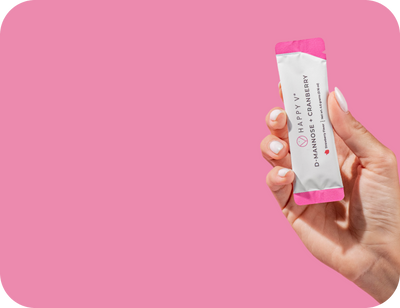
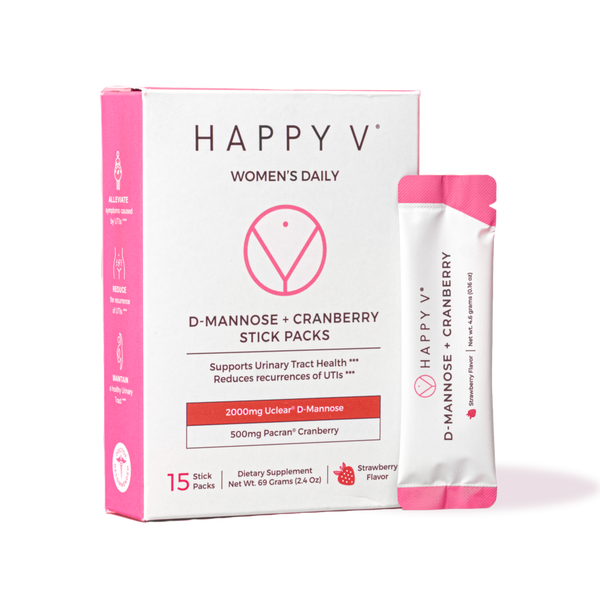
- Take urinary supporting supplements. Happy V's D-Mannose + Cranberry is doctor-formulated specifically to support urinary tract health, and works best when taken daily (not just on the days you soak). In clinical studies, D-Mannose has shown to help prevent bacteria (including E. coli, the bacteria behind most UTIs) from adhering to the walls of the bladder and urinary tract, and whole cranberry provides additional support through naturally occurring compounds that also make it harder for bacteria to get a foothold. If you're prone to UTIs or plan to soak regularly, making it part of your daily routine, rather than reaching for it only when symptoms strike, is where you'll see the real difference.

D-Mannose + Cranberry
Supports urinary tract health and promotes long-term wellness.
- Skip the hot tub during sex. Sexual activity in a hot tub combines two significant UTI risk factors: physical introduction of bacteria toward the urethra plus the bacterial exposure already present in the water. If you're UTI-prone, it's worth finding another way to spice things up.
When to Seek Medical Help
If symptoms appear after hot tub use, don’t minimize them, even if you are familiar with UTIs. Instead, pay attention to how they develop.
See your healthcare provider if you're experiencing:
- UTI symptoms (burning, urgency, frequent urination) that don't resolve within a day or two
- Blood in the urine
- Fever, chills, or back pain (which can indicate a kidney infection)
- Pelvic pain or abdominal pain
- A rash that spreads or doesn't improve
- Respiratory symptoms like cough or trouble breathing
A UTI that reaches the kidneys can escalate quickly. In rare cases, an untreated UTI can lead to urosepsis, a serious systemic complication. Don't wait it out if symptoms are worsening.
At your appointment, your primary medical provider can confirm a UTI diagnosis and discuss antibiotic treatment if needed. For recurring symptoms, a more comprehensive look at your urinary and vaginal health may be in order.
The Bottom Line
Love Island makes hot tubs look consequence-free. Real life, unfortunately, is a different story. But with the right habits and a little daily support, hot tub use doesn’t have to trigger UTI symptoms. Shower before and after, change out of your wet swimsuit right away, stay hydrated, and give your urinary tract some extra backup with daily support from Happy V's D-Mannose + Cranberry. Your body does a lot of work to keep you healthy. A little support in return goes a long way.
Keep the Conversation Going
- Visit our blog for more women's health tips.
- Join our private Happy V Facebook group to hear from others who've been there.
- Explore supplements designed to support your vaginal health journey.
Disclaimer: This blog is for informational and educational purposes only and is not intended to diagnose, treat, cure, or prevent any disease. Statements about supplements have not been evaluated by the Food and Drug Administration. For more information about vaginal infections, visit the CDC or speak to a licensed healthcare provider.