




- Fact Checked
- June 10, 2026
- 11 min read
The Shared Vaginal Microbiome: What Same-Sex Couples Need to Know About BV

- Written by Daniella Levy • Updated on August 28, 2026
- Updated on August 28, 2026

Table of Contents
Table of Contents
Treating bacterial vaginosis (BV) and watching it come back a few weeks later is frustrating enough on its own. But if you're in a relationship with another woman, there's actually a biological reason the cycle is harder to break, and it has everything to do with something researchers call the shared vaginal microbiota.
Research shows BV recurrence rates are notably higher in same-sex female couples, and the explanation goes deeper than most people realize: vaginal bacterial communities can be transmitted between sexual partners and even between mothers and daughters across generations.
This Pride Month, we're getting into the science behind the shared vaginal microbiota, because understanding your vaginal microbiome means understanding your body on a deeper level, regardless of your sexual orientation.
This post is for informational purposes only and does not constitute medical advice. See full disclaimer below.
What Makes a Vaginal Microbiome "Healthy"?
Vaginal microbiome health is perhaps the biggest key to overall vaginal health, but what makes a microbiome “healthy”?1
Think of your vaginal microbiome as a living ecosystem. When it's thriving, it's dominated by Lactobacillus species like Lactobacillus acidophilus, Lactobacillus crispatus, and Lactobacillus gasseri.2 These probiotic bacteria produce lactic acid and, in some cases, hydrogen peroxide and bacteriocins (natural antimicrobial compounds) that keep vaginal pH low and create an environment that’s naturally more resistant to infection.
When Lactobacillus populations drop and other bacteria move in, that causes an imbalance known as vaginal dysbiosis.3 When the imbalance tips far enough, it becomes bacterial vaginosis, where bacteria like Gardnerella vaginalis, Prevotella spp., and Atopobium have come to dominate the vaginal environment, leading to symptoms like vaginal discharge, odor, and discomfort.
Symptoms alone aren’t enough to diagnose BV, not only because the symptoms of BV overlap with other common vaginal infections but because many cases of BV are asymptomatic.4 Instead, BV is confirmed using something called a Nugent score (a microscopy-based lab test) or Amsel's criteria, which looks at discharge characteristics, vaginal pH, and the presence of “clue cells,” or vaginal cells coated in bacteria.

BV is a notoriously stubborn infection, with studies suggesting that up to 60% of people experience recurrence within a year of treatment.5 In same-sex female couples, that risk is even higher. To understand why, we have to dive further into the science of what’s known as “the shared vaginal microbiota.”
The Science of Shared Vaginal Microbiota

First, let's define what we mean by "shared vaginal microbiota." Turns out, your vaginal microbiome isn't as private as you might think. Just like you can share gut bacteria with people you live with, research shows that vaginal bacteria can be transferred between sexual partners, meaning the health of your vaginal microbiome and your partner's are genuinely connected. When both partners have vaginas, that connection becomes directly relevant to BV infections and recurrence.6
How Researchers Study It
Scientists study the shared vaginal microbiota using DNA sequencing techniques that can identify every species of bacteria in a sample, and even trace specific strains back to their origin.7 The basic process works like this: participants provide vaginal swab samples, DNA is extracted from those samples, and sequencing technology reads the genetic material to produce a detailed map of every organism present.
The most common tool is 16S rRNA gene sequencing, which identifies bacteria by analyzing a gene region that acts like a biological fingerprint, meaning it’s unique to each species.8 For even more precision, researchers use genome-resolved metagenomics, which can reconstruct complete bacterial genomes from a sample and confirm whether a strain found in one person is genuinely the same strain found in another, not just a look-alike. Together, these approaches give researchers a clear picture of not just what's living in the vaginal microbiome, but whether specific bacteria are being shared between people.
What the Research Shows
The findings are clear: when two people with vaginas are sexually active together, their vaginal microbiomes tend to look significantly more similar than those of unrelated individuals.9 Scientists measure this using a metric called the Yue and Clayton θ (θYC) distance, which essentially scores how alike two microbial communities are. The lower the score, the more similar the communities, and between same-sex sexual partners, those scores are consistently lower than between strangers.
For BV, the practical implication is straightforward: if one partner carries BV-associated bacteria like Gardnerella vaginalis, Prevotella spp., or Atopobium, those bacteria can transfer during sexual activity, including oral sex, shared sex toys, or genital-to-genital contact. If one partner is treated but the other isn't, reinfection is highly likely.10 This back-and-forth pattern of BV is sometimes called "ping-pong" transmission, and it's one of the main reasons recurrence is so much harder to break in same-sex couples.

When Partners' Microbiomes Don't Match
Not everyone's vaginal microbiome looks the same, even when it's healthy. Researchers classify vaginal microbiomes into community state types (CSTs) based on which bacteria are dominant. Some people naturally have a strongly L. crispatus-dominant microbiome (aka the most stable, protective profile). Others tend toward Lactobacillus iners dominance, which is associated with a less stable environment more prone to disruption. Others still have lower overall Lactobacillus levels, which puts them at higher baseline risk for BV.11
Your CST is influenced by a range of factors including estrogen levels, reproductive stage, menstruation, menopause, hormonal contraception, genetics, and sexual behavior.12 When two partners have different CSTs (and especially if one tends toward lower Lactobacillus levels), it creates a mismatch that keeps working against both of them. Even after one partner successfully treats BV and restores her balance, that imbalance in the other can keep the cycle going.
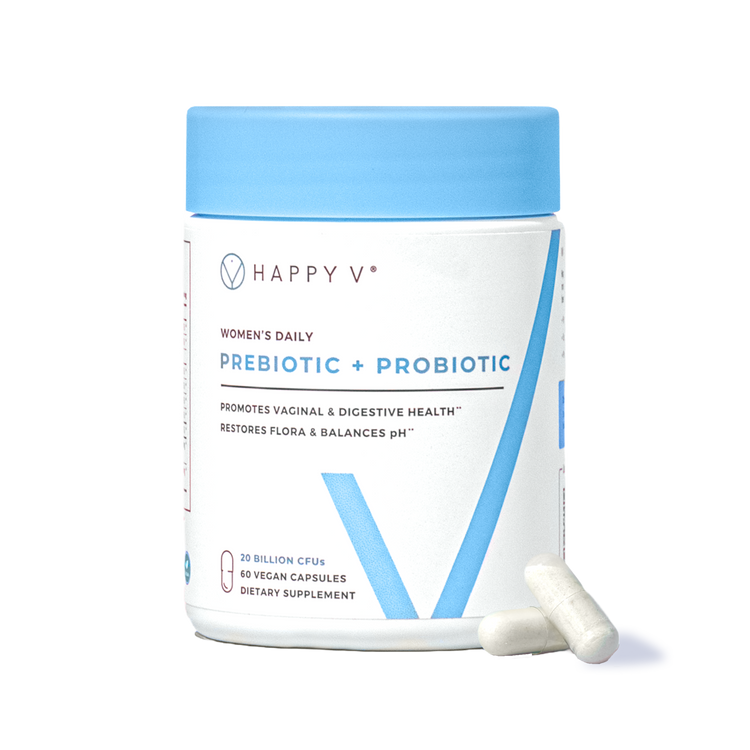 Bestseller
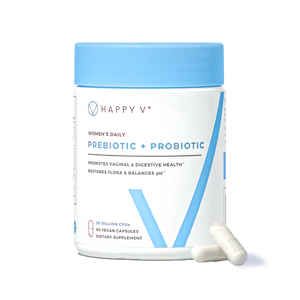
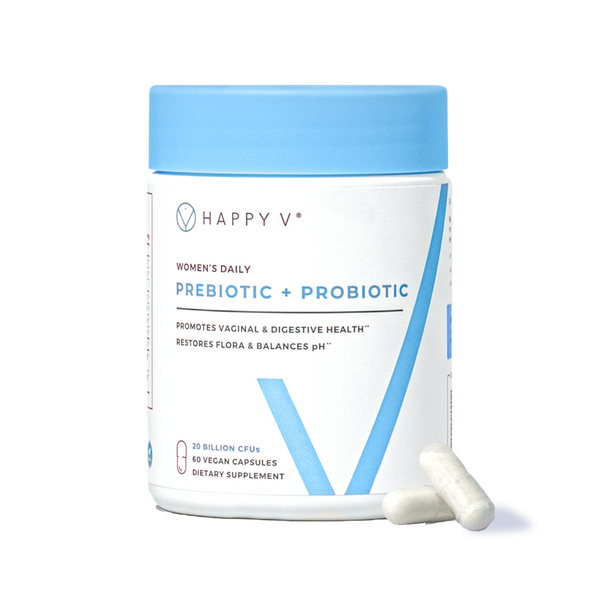
Prebiotic + Probiotic
Maintains vaginal pH and restores gut health.
A Double Whammy: Biofilm, Partners, and the BV Cycle
Understanding that BV can be shared between partners explains a lot. But there's another piece of the puzzle worth knowing: even without reinfection from a partner, BV has a stubborn biological tendency to come back on its own, whether you’re homosexual or heterosexual.
That’s because Gardnerella vaginalis, one of the key bacteria behind BV, forms biofilms, which are essentially protective shields that allow bacteria to cling to vaginal tissue and resist being fully cleared by antibiotics.13 You can finish a full course of treatment, feel better, and still have enough residual bacteria to trigger a recurrence within weeks.
Layer that on top of the ping-pong transmission dynamic between partners, and you have a cycle that's genuinely difficult to break, with biofilm-protected bacteria surviving treatment on one end, reintroduction from an untreated partner on the other.14
It's also worth noting that certain habits can accelerate disruption. Vaginal douching, for example, strips away the natural bacterial community, including the protective Lactobacillus strains that keep BV at bay, making an otherwise stable microbiome vulnerable.15 It's one of the most common microbiome disruptors, and one of the easiest to avoid.
Mothers, Daughters, and the Inherited Microbiome
Here's something that might surprise you: the sharing of vaginal microbiota doesn't just happen between sexual partners.16 Research suggests it happens between mothers and daughters, too, and even across generations.
Scientists have found specific L. crispatus strains in both mothers and their daughters at rates that strongly suggest genuine transmission rather than coincidence.17 When researchers compare the vaginal microbiome composition of mother-daughter pairs against unrelated women, the mother-daughter pairs consistently look more similar to each other, even after accounting for the fact that they often live together and share similar lifestyles. That similarity holds all the way down to the individual strain level, not just the species.
How do researchers confirm this? By essentially building genetic family trees of bacterial strains, comparing core genome sequences and tracking tiny mutations to determine whether bacteria in a daughter's microbiome are genuinely descended from strains her mother carried, or just similar-looking bacteria acquired from somewhere else. Mutation rate calculations help establish the transmission timeline, giving researchers confidence that what they're seeing is inheritance, not coincidence.18
How It Starts: Birth Mode
The most likely starting point is birth itself. Babies born via vaginal delivery pass directly through their mother’s birth canal, where they're exposed to their mother's vaginal bacteria for the first time.19 Those bacteria can become early colonizers of the infant's own developing microbiome, and research shows they can persist for years, possibly shaping vaginal microbiome composition well into adulthood. Babies born by C-section miss that initial exposure, which is one reason birth mode consistently shows up as a meaningful variable in mother-daughter microbiota research.
It's worth noting that not every study finds greater similarity between mothers and daughters, and researchers are still working to separate the effects of genetics, birth mode, cohabitation, and shared environment from one another.20 But the overall trend in the evidence points toward a genuine generational connection, one that makes the vaginal microbiome far more of a family affair than most people realize.
The L. crispatus strains protecting your vaginal microbiome today may trace their lineage directly to bacteria your mother carried.21 That's not just a fascinating scientific footnote; it's a reminder of how deeply biological vaginal health really is. Vaginal health isn't always the easiest thing to bring up with a parent, but it turns out she may have inherited the same microbiome tendencies (and fought the same battles) long before you did, so a possibly awkward conversation may actually be extremely helpful in breaking the cycle.
Could a Microbiome Transplant Cure Chronic BV?
For people dealing with BV that just won't stay gone, researchers are exploring a genuinely novel approach: vaginal microbiota transplantation, or VMT. The concept is similar to fecal transplants used for certain gut conditions where researchers take a healthy, Lactobacillus-dominant vaginal microbiome from a donor and transfer it to someone whose microbiome is chronically disrupted, essentially giving their vaginal ecosystem a reset.22
It's a compelling idea, and early case studies showed real promise. But a 2026 randomized controlled trial published in The Lancet found that VMT alone, without any preparation beforehand, didn't significantly outperform placebo at restoring Lactobacillus dominance.23 The transplant wasn't enough to overcome an already-established dysbiotic environment on its own.
The more interesting finding came in the extension phase of the study: when participants received antiseptic pretreatment before the transplant that essentially cleared the existing biofilm first, success rates improved substantially. Several participants showed confirmed donor strain engraftment, and those who did maintained Lactobacillus dominance for months afterward. This connects back to what we know about biofilm: you can't effectively introduce healthy bacteria into an environment that's still dominated by Gardnerella biofilm. You have to clear the way first.24
Researchers also noted that many donor microbiomes in the trial were dominated by L. iners, the less stable Lactobacillus species, rather than the more protective L. crispatus. Better donor selection may be another key to making VMT work consistently.
VMT isn't available as a standard treatment yet, but the research is advancing. And the underlying principle reinforces everything this article has covered: the vaginal microbiome is dynamic, deeply influenced by the microbial communities around it, and worth protecting proactively — because once dysbiosis takes hold, it doesn't give up easily.
What You Can Do Right Now

Maybe VMT will become a treatment option in the future or maybe it won’t. But you don’t have to wait to see before you take steps to improve your vaginal health.25
Here are 3 evidence-supported practices for women in same-sex relationships:
- Talk to your provider about treating both partners. If you're experiencing recurrent BV in a same-sex relationship, ask your gynecologist about concurrent treatment. Addressing both partners' microbiomes at the same time may help break the cycle in a way solo treatment can't.
- Reduce unnecessary disruptions. Vaginal douching, scented bath and body products, and unnecessary antibiotic use all chip away at Lactobacillus dominance. Minimizing these disruptions gives your microbiome the stability it needs.
- Make probiotics a daily habit for both of you. A high-quality probiotic supports Lactobacillus dominance proactively, before disruption happens and during recovery. Happy V's Prebiotic + Probiotic is formulated specifically to support vaginal and gut microbiome health, with clinically studied Lactobacillus strains that help reinforce the healthy community your body works to maintain. When both partners prioritize their microbiome health together, you're addressing the shared ecosystem, not just individual symptoms.
BestsellerPrebiotic + Probiotic
Maintains vaginal pH and restores gut health.
Keep the Conversation Going
- Visit our blog for more women's health tips.
- Join our private Happy V Facebook group to hear from others who've been there.
- Explore supplements designed to support your vaginal health journey.
Disclaimer: This blog is for informational and educational purposes only and is not intended to diagnose, treat, cure, or prevent any disease. Statements about supplements have not been evaluated by the Food and Drug Administration. For more information about vaginal infections, visit the CDC or speak to a licensed healthcare provider.