



- Fact Checked
- September 03, 2026
- 12 min read
The Menopause Scent Shift: Why Your Body Odor Is Changing

- Written by Daniella Levy • Updated on September 03, 2026
- Updated on September 03, 2026

Table of Contents
Table of Contents
Maybe you caught it changing your shirt after a hot flash. Or maybe it was after you threw off the covers while dealing with night sweats. That whiff of something unfamiliar coming from between your legs.
Wherever it happened, you probably had two questions: 1) is that really me? And 2) is this normal or is something wrong?
There are so many menopause symptoms that women are never told about, and a change in vaginal and overall body odor is one of them. It’s incredibly common. Somewhere between their first hot flash and their hundredth, many other women are noticing the same changes you are. There's a clear biological explanation, real ways to manage it, and no reason to carry any embarrassment about it at all.
This post is for informational purposes only and does not constitute medical advice. See full disclaimer below.
Why Vaginal Odor (and Body Odor) Changes During Menopause
Your vaginal odor is closely tied to your vaginal microbiome, and menopause changes that ecosystem in a very specific way. As estrogen levels decline, your vaginal cells produce less glycogen. Glycogen is a sugar that feeds the healthy Lactobacillus bacteria living in your vagina. With less food, these Lactobacillus levels can decrease, allowing more opportunity for anaerobic bacteria to move in and take over. When these anaerobic bacteria become dominant, you can develop a vaginal infection, like bacterial vaginosis or BV. This link between estrogen and Lactobacillus is why risk of BV increases later in life.
Of course, “increased risk” doesn’t mean “automatic diagnosis.” Most women go through through menopause with only a mild, manageable change in scent that falls under what you may hear referred to as genitourinary syndrome of menopause (GSM). GSM is a blanket term actually used to describe a variety of symptoms that can also include:
- Vaginal tissue thinning
- Vaginal dryness
- Vaginal pH changes
- Pelvic floor weakness (which can lead to urine leakage that adds its own scent to the mix)
All of these come back to one root cause: declining estrogen.
If you notice not just vaginal but general body odor changing, estrogen is at play there, too. Estrogen affects your sweat glands the same way it affects your vaginal microbiome. Hot flashes and night sweats trigger your apocrine sweat glands (aka the ones in your armpits and groin), to work overtime, and that sweat has a different chemical makeup than regular sweat, which is why it can smell stronger or muskier than what you're used to. Stress levels and dietary patterns, like caffeine, alcohol, or spicy foods, can make hot flashes (and the sweat that comes with them) more intense too.
If skin symptoms or body odor changes feel like a lot to manage on their own, a dermatologist or menopause specialist can help you address them directly rather than guessing your way through it. So while the biology plays out a little differently in each place, the root cause of both is the same. Your hormone levels are shifting, and your body is adjusting right along with them.
Normal and Abnormal Vaginal Odor Changes
Like we said, some degree of odor shift is normal during menopause. Other times, it’s a sign that low estrogen has allowed anaerobic or harmful bacteria to overtake the microbiome, leading to infection. How do you spot the difference?
Normal vaginal odor during menopause usually:
- Can be described as slightly musky (and may get a little stronger due to menopausal hormonal changes)
- Comes and goes, especially around hot flashes or after exercise
- Is thinner or less frequent than before, without a strong smell attached
While signs that vaginal odor may be abnormal include:
- A fishy smell or foul smell, especially one that gets stronger after sex
- A yeasty smell paired with itching or burning
- Inflammation, redness, or vaginal discomfort that doesn't resolve on its own
- Persistent urine leakage with odor, which can point to a urinary tract or pelvic floor issue rather than a simple hormonal shift
Basically, the difference usually comes down to intensity in smell and what else is going on. A subtle shift in your usual scent is normal. A new, strong, or unpleasant smell that shows up alongside other symptoms usually isn't.
Because odor can show up so differently from woman to woman, the specific type of smell can also be a helpful clue:
- Musky odor or body odor-like smell: Common during hormonal fluctuations and hot flashes, and usually not a cause for concern on its own.
- Fishy vaginal odor: Classically associated with bacterial vaginosis, especially when it's noticeably stronger after sex.
- Yeasty odor: Often paired with itching, thick discharge, and irritation, suggesting a yeast infection.
- Ammonia smell: Can come from concentrated urine, sometimes related to urine leakage or dehydration, rather than the vaginal microbiome itself.
- Metallic odor: Frequently tied to spotting, light bleeding, or hormonal fluctuations around the menstrual cycle if you're still perimenopausal.
- Sour or fermented odor: Can be a normal byproduct of a healthy, Lactobacillus-dominant microbiome, similar to the tang of fermented foods.
- Bittersweet smell, bread-like vaginal odor, or chemical-like smell: Less common descriptions, but generally linked to shifts in the balance of vaginal microbiota rather than anything dangerous on their own.
- Rancid or rotting vaginal odor, or a bleach-like smell: These are the descriptions most worth calling your healthcare provider about, since they're less typical of ordinary hormonal shifts and more suggestive of infection or another issue that needs evaluation.
With so many different smells and potential causes, know that it’s not up to you to pinpoint the exact cause of your unusual odor. That's what your healthcare provider is for. If you're ever unsure which category your own scent falls into, that uncertainty alone is a good reason to check in with a provider rather than guess.
Managing Vaginal Odor and Body Odor
You can't stop estrogen decline, but you have real control over how your body responds to it. Managing odor changes is never about trying to mask them with perfumes or washes. Instead, it's about supporting the systems, your microbiome, your hormones, your skin, that are driving the change in the first place.
Here are some science-backed places to start:
Support the Transition Itself, Around the Clock
Since so many of these changes trace back to the same hormonal shifts, it helps to support the root cause rather than chasing symptoms one by one.
Happy V's Menopause Relief AM + PM is built around exactly that idea, with a dual-action formula that works with your circadian rhythm instead of against it. The AM capsule is formulated with DIM, Genistein, and BroccoRaphanin® to support healthy estrogen metabolism and hormone balance during the day, while the PM capsule brings in HMRlignan™ and Graminex® pollen extract to ease night sweats, support vaginal comfort, and help stabilize estrogen overnight. Sensoril® Ashwagandha rounds out the formula to help take the edge off cortisol, the stress hormone that can make hot flashes and night sweats even more intense.
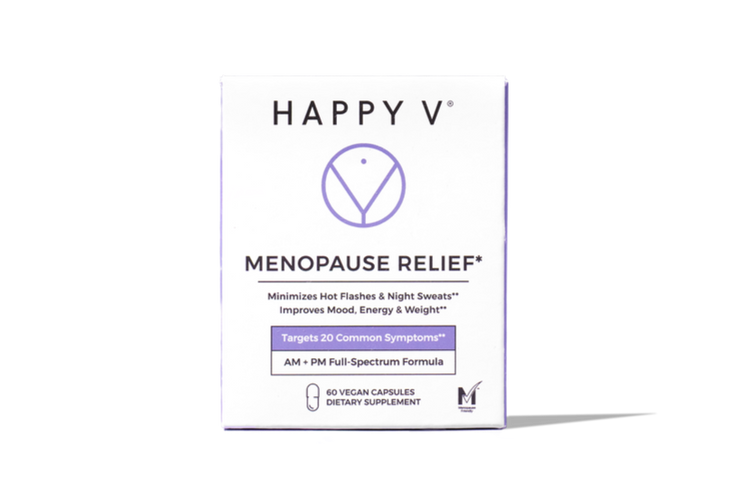
Menopause Relief AM + PM
Supports mood, energy and weight. Minimizes hot flashes and night sweats.
Taken daily (one capsule with breakfast and one about 30 minutes before bed), it's designed to give your body consistent support through the parts of the day (and night) when hormonal symptoms tend to hit hardest.
Rethink Your Hygiene Routine
Skip antibacterial soap and anything heavily fragranced when washing your vulva. Warm water is actually all your vulva actually needs. As for actual vagina, leave it alone. The vagina is self-cleaning, and douching in particular disrupts the vaginal microbiome and tends to make odor worse, not better.
If plain water doesn’t feel like enough after a workout or sex, a fragrance-free, pH-supporting feminine wash, like Happy V's Feminine Wash, is a good middle ground. Unlike scented body washes and soaps, which tend to be alkaline and can throw off your vagina's naturally acidic environment, a wash formulated specifically for intimate skin cleanses gently without stripping away the good bacteria you're trying to protect.
Address Dryness Directly
Vaginal moisturizers used regularly and vaginal lubricants used during sex can ease the dryness that comes with declining estrogen, which in turn reduces irritation and the odor that can come with it. Your gynecologist will likely have recommendations or be able to offer a prescription option if your symptoms warrant it.
Strengthen Your Pelvic Floor
Pelvic floor exercises can help with urine leakage, which is a meaningful but often overlooked contributor to changes in scent, especially later in menopause, and a pelvic floor PT can teach them to you during an appointment.
Dress for It
Cotton underwear and other breathable fabrics reduce the warm, damp environment where bacteria and yeast thrive, which helps with both vaginal and general body odor.
Support Your Microbiome from Within
Lactobacillus-based probiotics are one of the most direct ways to help replenish the good bacteria being affected by declining estrogen levels. When Lactobacillus levels are strong, lactic acid production stays high, your pH stays acidic, and anaerobic bacteria have a much harder time gaining ground, which means less odor and less risk of BV.
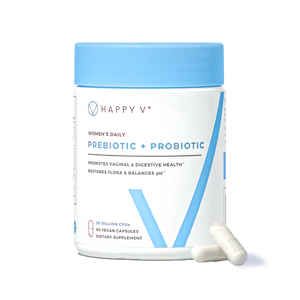
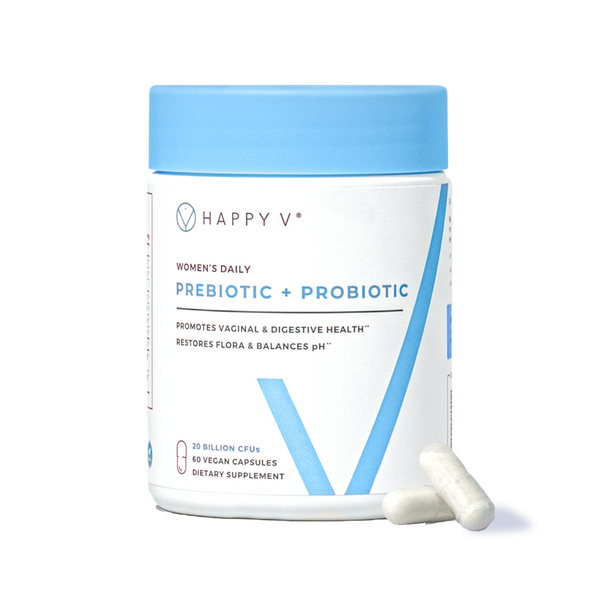
This is exactly what Happy V's Prebiotic + Probiotic is formulated to do. It combines seven clinically studied probiotic strains, including Lactobacillus acidophilus LA-14® and L. rhamnosus HN001™. In a clinical study, 83% of women taking LA-14® and HN001™ reported improved vaginal health over six months, with 71% noting fewer symptoms related to vaginal imbalance. Taken daily, our Prebiotic + Probiotic is designed to restore healthy vaginal flora, support a balanced pH, and ease occasional odor at the source, not just cover it up.
What you eat plays a role here too. A diet high in fiber supports the gut bacteria that influence your vaginal microbiome, since your gut and vaginal microbiomes are more connected than most people realize. Cutting back on excess sugar, which can feed less-friendly bacteria, is another simple diet-based lever worth pulling if odor changes are bothering you.
Get Tested
While the presence or absence of vaginal symptoms provides clues as to what's going on your microbiome, it can help to have concrete data to see where you're starting and monitor progress over time. Some providers now offer a vaginal microbiome test that can show the exact make-up of your vaginal microbiome and which bacteria are present. This can be especially useful if odor changes persist despite your best efforts at home, or if you and your gynecologist are trying to decide whether hormone replacement therapy (HRT) makes sense as a next step.
Don't Underestimate Self-Compassion
Managing odor changes isn't only physical. Education helps close the gap between what's actually happening in your body and how alone it can feel, and so does connection. Menopause support groups, whether in person or through an online support group, and communities on social media platforms built around this exact life stage, can remind you this is universal, not personal. Self-love practices, like giving yourself the same patience you'd offer a friend going through this, matter more than they might seem to. Supportive communities exist precisely because so many women need to hear that this is a transition, not a failing.
The Role of Hormone Therapy and Medical Treatments
Along with lifestyle changes at home, there's another option worth considering, especially when symptoms feel more disruptive than everyday hygiene and habit shifts can manage. Hormone replacement therapy (HRT) is one of the more effective tools available, though it isn't the right fit for everyone.
Some options to discuss with your gynecologist include:
- Local therapy: delivers estrogen directly to vaginal tissue through options like vaginal HRT rings, tablets, or a topical cream such as Premarin. Local therapy tends to improve vaginal dryness, tissue thinning, and pH-related odor changes with minimal systemic absorption.
- Systemic hormones: typically an estrogen progesterone/progestin hormone therapy combination, treat body-wide symptoms like hot flashes and night sweats in addition to vaginal ones, but come with more considerations, including breast cancer risk, that are worth a real conversation with your gynecologist.
- Ospemifene: a non-hormonal oral medication sometimes prescribed specifically for vaginal dryness and pain related to GSM, and can be an option for women who aren't candidates for estrogen therapy.
Now, none of these are one-size-fits-all, and the best way to determine which one is right for you is to talk with your gynecologist. They can help you weigh your symptoms, health history, and preferences against the topical treatments and systemic options available.
When to Seek Medical Advice
Most odor changes during menopause are hormonal, mild, and manageable at home. But your body is also giving you real information, and some signs are worth acting on rather than waiting out.
Reach out to your healthcare provider if you notice:
- A fishy or foul vaginal odor, particularly with abnormal vaginal discharge
- Vaginal itching, vulvar burning, or ongoing vaginal discomfort
- A persistent odor that doesn't improve with basic hygiene and dietary changes
- Any signs that could suggest a sexually transmitted infection (STI), including unusual discharge or discomfort after a new sexual partner
There's no need to try to self-diagnose or wait it out if something feels off. A provider can quickly distinguish between a hormonal shift, bacterial vaginosis (BV), or another infection, and can prescribe antibiotics, probiotics, or hormone replacement therapy as appropriate.
Final Thoughts
Odor changes are one of the more isolating parts of menopause, and that’s simply because so few people talk about them. When something feels unfamiliar, it’s normal to feel embarrassed or self-conscious, but your scent changing during menopause doesn't mean anything is wrong with you. It means your hormone levels are shifting, and your body, your microbiome, and your sweat glands are all adjusting right along with them.
Support your vaginal health, care for your skin, and don't hesitate to loop in a gynecologist or menopause specialist if something feels off rather than just hormonal. And if you're looking for support through the transition itself, that's exactly what Happy V's Menopause Relief AM +PM is here for.
Keep the Conversation Going
- Visit our blog for more women's health tips.
- Join our private Happy V Facebook group to hear from others who've been there.
- Explore supplements designed to support your vaginal health journey.
Disclaimer: This blog is for informational and educational purposes only and is not intended to diagnose, treat, cure, or prevent any disease. Statements about supplements have not been evaluated by the Food and Drug Administration. For more information about vaginal infections, visit the CDC or speak to a licensed healthcare provider.
FAQ
Does HRT help with menopause body odor?
Can perimenopause make your armpits smell worse?
Why does my sweat smell like ammonia during menopause?
What does a healthy vagina smell like after menopause?
Our experts continually monitor the health and wellness space, and we update our articles when new information becomes available.
- Published on: September 03, 2026
- Last updates: September 03, 2026
Written by Daniella Levy
Edited by Liz Breen