

- Fact Checked
- September 05, 2026
- 15 min read
Postmenopausal Skin & Vaginal Aging: Why They're More Connected Than You Think

- Written by Daniella Levy • Updated on September 05, 2026
- Updated on September 05, 2026

Table of Contents
Table of Contents
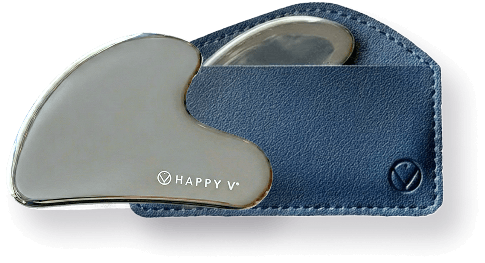
If you’re like many women in their mid-50s, your skincare routine has ballooned over the past few years, between serums, retinoids, and that jade roller you’re not really convinced does anything.
If you’re like many women in their mid-50s, you’re also dealing with another uncomfortable skin issue that’s made intimacy uncomfortable and you’ve never mentioned to anyone: vaginal dryness.
Odds are you've never thought of those two things as related, but they are, and all through a single hormone: estrogen.
Estrogen is one of your body's primary drivers of collagen production and tissue hydration throughout the body. When estrogen levels decline during perimenopause and menopause, your skin and your vaginal tissue respond in strikingly similar ways at the same time. Understanding that shared mechanism can change how you think about, and treat, both.
This post is for informational purposes only and does not constitute medical advice. See full disclaimer below.
What Estrogen Does for Skin and Vaginal Tissue
Estrogen is best known for its role in your menstrual cycle and reproductive health, but it's also one of the main hormones responsible for keeping tissue thick, elastic, and hydrated throughout your entire body. Skin and vaginal tissue actually depend on it in nearly identical ways, which is they both tend to change during perimenopause and menopause, when estrogen levels decline.
Estrogen's Role in Collagen Production and Skin Thickness
Estrogen stimulates fibroblasts (aka the cells responsible for producing the proteins that keep skin firm, elastic, and hydrated). Estrogen also supports the skin's ability to hold onto moisture.
Since fibroblasts rely on estrogen to keep doing this work, the more your estrogen levels shift during perimenopause and postmenopause, the more your skin's firmness, elasticity, and hydration shift right along with them.
Estrogen's Role in Vaginal Tissue Hydration and Elasticity
The same collagen-and-elastin relationship plays out inside the vaginal canal, just with a few extra jobs added on.
Estrogen keeps the vaginal walls thick and elastic the same way it does skin, but it also increases blood flow to the area and supports the vaginal flora that keep vaginal pH balanced and healthy. That combination of thicker tissue, better blood flow, and a stable microbiome is what keeps the vulva, labia, and cervix well supported and what allows for healthy vaginal lubrication during sexual activity. When estrogen drops, each one of those functions declines together.
What Happens to Both After Menopause
Once estrogen starts to decline, the changes to your skin and your vaginal tissue tend to show up on a similar timeline, even though they get treated as completely separate issues.
Postmenopausal Skin Changes: Thinning, Dryness, Sagging, and Increased Sensitivity
As estrogen declines, collagen production slows considerably. Studies suggest women can lose a meaningful percentage of their skin's collagen in just the first several years after menopause, and that loss doesn't stop there, it continues at a slower pace for years afterward. The result is skin that's thinner and less elastic than it used to be, which shows up as dryness, sagging, and sensitivity that can feel like it appeared out of nowhere.
Wound healing also tends to slow down, and skin often becomes more reactive to products it tolerated just fine a few years earlier.
Vaginal Aging and GSM: Atrophy, Dryness, Discomfort, and Microbiome Disruption
The vaginal version of this same process has a name: genitourinary syndrome of menopause, or GSM.
GSM is the umbrella clinical term doctors use to describe everything that happens to vaginal tissue, the vulva, and the urinary tract as estrogen declines. That includes vaginal atrophy, which is the thinning of the vaginal walls, along with:
- Vaginal dryness
- Reduced vaginal elasticity
- Vulvovaginal atrophy affecting the labia and other external genital tissue
Since estrogen indirectly supports the Lactobacillus bacteria that maintains a healthy vaginal pH, women can also notice shifts in their microbiome during this time.
Though you may not have heard the term GSM before, the truth is that GSM affects the majority of postmenopausal women to some degree, which makes it one of the most common menopausal symptoms and, at the same time, one of the least talked about.
Why Both Happen at the Same Time: The Shared Mechanism
Skin and vaginal tissue have more in common than you'd guess. Both are estrogen-dependent, both rely on collagen for their structure, and both are lined with epithelial cells that need steady hydration and blood flow to stay healthy.
When estrogen declines, all of that support declines for both tissue types on roughly the same timeline, not one after the other. That's why so many women notice their skincare routine and their vaginal comfort shifting around the same time, even though they've likely never connected the two. It’s the same underlying deficiency playing out in two different places in the body.
Other Changes Estrogen Decline Can Bring
Skin and vaginal tissue aren't the only places affected by declining estrogen. A few other changes are worth knowing about, since they're part of the same picture even if they don't get discussed as often as other menopause symptoms, like hot flashes and mood swings.
Pelvic Floor Health
Estrogen also supports the connective tissue and elastic tissue that make up your pelvic floor, or the muscular diaphragm that holds your bladder, uterus, and bowel in their proper place.
As estrogen declines, muscle tone in this area can weaken over time. For some women, that weakening leads to what’s called a prolapse, where the bladder or bowel bulges into the vaginal canal or the uterus descends lower than it should, or to urinary incontinence, where urine leaks when you jump, cough, or laugh.
Local vaginal oestrogen and pelvic floor physiotherapy are both well-supported ways to improve muscle tone and ease these symptoms, and a pelvic floor physiotherapist can teach you targeted exercises based on what's actually happening in your specific case, rather than a generic routine.
Urinary Health
The tissue lining your urinary tract is estrogen-dependent too, including the trigone, or the sensitive triangular area at the base of the bladder. As estrogen drops, this lining gets thinner, which is a big part of why postmenopausal women see more urinary tract infections, more urinary urgency, and more urge incontinence than they did earlier in life.
If it's not obvious what's causing your incontinence, your provider may suggest urodynamics, which is a test that evaluates how your bladder is functioning so they can pinpoint what's actually driving your symptoms rather than guessing. Local oestrogen and menopausal hormone therapy have also been shown to help restore healthier bladder function, and for more significant incontinence or prolapse, surgical procedures are sometimes the right next step. The best way to discover which path is right for you is to have a real, honest conversation with your doctor about what you’re experiencing during this life change.
Sexual Health and Libido
Thinning vaginal walls, reduced vaginal lubrication, and lower collagen and elastin in the labia and other external genital tissue can all make painful sexual intercourse more likely, and that discomfort naturally affects sex drive over time.
If you've noticed yourself pulling away from intimacy, that doesn't mean anything is wrong with you or your relationship. It’s completely natural to want to avoid something that is causing you discomfort. Addressing these physical symptoms, through lubricant, vaginal moisturizers, or vaginal estrogen, can meaningfully improve sexual response and comfort during sexual activity, which often improves libido as a result.
Changes in Pubic Hair
Estrogen and testosterone both influence hair follicles, including the ones responsible for pubic hair.
As oestrogen hormone production declines, some women notice their pubic hair getting noticeably thinner, growing in more sparsely, or gradually thinning out until there's real loss of pubic hair in places. Hair follicles can also lose pigment over time, which is why grey pubic hair shows up, too.
This is a normal, if rarely discussed, part of aging, and it isn't a sign that anything is wrong.
Inside-Out Strategies That Support Both Skin and Vaginal Health
Most conversations about skin aging and GSM revolve around topical fixes like moisturizers and lubricants. And while these can be helpful (and we’ll discuss them in detail next), it’s worth pairing this outside support with strategies that actually support what’s driving the change inside.
Estrogen Metabolism Support: DIM and BroccoRaphanin®
DIM (diindolylmethane) and BroccoRaphanin®, a stabilized source of the broccoli compound sulforaphane, have both been studied for their role in supporting healthy estrogen metabolism, or how efficiently your body processes and balances the estrogen it still produces.
That kind of support matters just as much during perimenopause and menopause as replacing estrogen directly, since how your body metabolizes hormones affects skin, vaginal tissue, and overall hormone balance alike.
Phytoestrogens: Genistein, Lignans, and Red Clover
Phytoestrogens are plant compounds that weakly mimic estrogen once inside the body, and they've been studied for their potential to ease a range of menopausal symptoms, including hot flashes, skin dryness, and vaginal dryness.
Genistein and lignans in particular are commonly studied for their role in supporting healthy estrogen metabolism and hormone balance through perimenopause and menopause, alongside ingredients like Graminex® pollen extract, which has been studied for easing night sweats and supporting vaginal comfort.
Adaptogens for Stress: Sensoril® Ashwagandha
Stress and hormone balance are more connected than they might seem. Cortisol (aka the hormone your body releases under stress) can make hot flashes and night sweats more intense. Adaptogens like Sensoril® Ashwagandha have been studied for their ability to help take the edge off cortisol, giving your body a better shot at resting and recalibrating overnight.
Bringing These Nutrients Together: Happy V’s Menopause AM + PM
Between estrogen metabolism support, phytoestrogens, and adaptogens for stress, that's a lot of separate nutrients to track down and take individually!
Happy V's Menopause Relief AM + PM was built to solve exactly that problem, combining all of them into a single, easy dual-capsule routine. One AM capsule with breakfast delivers DIM, Genistein, and BroccoRaphanin® to support estrogen metabolism during the day, while one PM capsule about 30 minutes before bed brings in HMRlignan™, Graminex® pollen extract, and Sensoril® Ashwagandha to ease night sweats, support vaginal comfort, and take the edge off cortisol overnight.
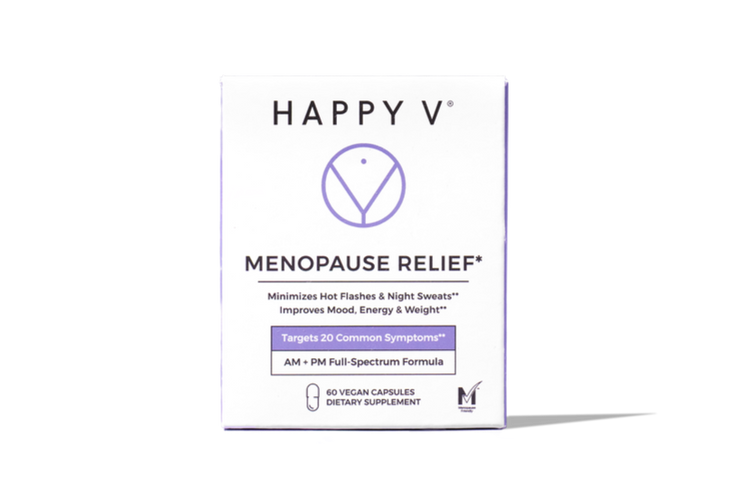
Menopause Relief AM + PM
Supports mood, energy and weight. Minimizes hot flashes and night sweats.
Instead of piecing together a handful of individual supplements, Menopause Relief is designed to give your body consistent, targeted support through the parts of the day, and night, when hormonal symptoms tend to hit hardest.
Diet and Hydration: Foods That Nourish Skin and Vaginal Tissue
No supplement, no matter how well formulated, can outrun a diet that's working against you. Staying well hydrated and eating a diet rich in colorful produce, healthy fats, and fermented foods supports collagen production and a balanced vaginal microbiome at the same time, since the two systems draw on a lot of the same nutritional building blocks.
Foods high in added sugar work against both, since sugar tends to feed less beneficial bacteria and contribute to inflammation that undermines tissue health generally, no matter what else you're taking to support it.
Think of diet as the foundation everything else builds on, not a box to check alongside it. For a deeper dive, Happy V has a full breakdown of the best and worst foods for vaginal wellness.
Topical and Medical Options Worth Knowing About
Everything we've covered so far addresses what's happening inside your body, the collagen, the hormones, the microbiome. That's the long game. But it doesn't do much for how you're feeling right now, in the moment, when dryness or discomfort is actually getting in the way of your day. That's where topical and medical options come in.
Management and care strategies for GSM range from simple daily habits to prescription treatment, and often work best in combination with the inside-out approach rather than instead of it. The most common include:
- Vaginal moisturizers. Used regularly rather than only around sex, they help maintain baseline hydration in vaginal tissue affected by GSM and support overall vaginal pH balance.
- Vaginal lubricants. Lubricants reduce friction and discomfort during sexual activity. Avoid oil-based options like coconut oil if you're using latex condoms, since oil can break down latex.
- Topical retinoids. They can help rebuild collagen in facial skin, though they should be introduced gradually, especially on skin that's already more sensitive postmenopause.
- Topical estrogen. Applied directly to vaginal tissue, it's one of the most effective treatments for GSM, and because it works locally rather than throughout the body, it carries a different risk profile than systemic hormone replacement therapy. Many women, including those with a history of breast cancer, are able to use local vaginal estrogen safely under a gynecologist's guidance, though this should always be an individual conversation with your provider.
- Hormone replacement therapy. (HRT) Whether local or systemic, HRT is worth discussing with your doctor if symptoms are affecting your quality of life. The North American Menopause Society considers hormone therapy, including local vaginal estrogen, a safe and effective option for most women with GSM when appropriate for their health history. Birth control and progesterone considerations may also factor into that conversation depending on your age and stage of the menopause transition.
- Pelvic floor exercises. Ideally taught by a pelvic floor physiotherapist, they help address urinary incontinence and support the muscle tone that keeps pelvic organs in place.
- Sexual health counseling. Counseling can help with the emotional and relational side of these changes, which often gets overlooked in a purely physical conversation about GSM.
- Regular gynecological exams. They give your provider a chance to track changes over time, catch anything that needs closer attention early, and adjust your management plan as your needs change.
When to See a Specialist
Although the changes that occur in the genital tract with aging are physiological and, in most cases, entirely normal, "normal" doesn't mean you have to just live with it, especially if symptoms are leading to issues with self-esteem or intimacy. A good provider will walk through both the causes of your specific signs and symptoms and the ways you can be assisted to alleviate distressing symptoms.
Along with symptoms that are interfering with daily life, it’s important to reach out to a health care provider for an assessment if you notice:
- Vaginal or vulvar bleeding that isn't related to your period
- Painful sex or vaginal dryness that isn't improving with moisturizers or lubricants
- Signs of a urinary tract infection or urinary incontinence
- Symptoms of prolapse, like a feeling of pressure or bulging in the vaginal canal
- Any skin or vulvar changes that look different from your usual GSM symptoms, including new lesions, sores, or persistent itching
While your gynecologist is a good first stop, there are other specialists you can call on for certain issues. Persistent skin changes on the vulva may call for a dermatologist alongside your gynecologist, since some vulvar conditions can look similar to ordinary GSM symptoms but need a different kind of treatment. Urinary incontinence or a suspected prolapse often benefits from a pelvic floor physiotherapist, who can assess muscle tone directly, or a urogynecologist, who can run additional testing like urodynamics if the cause isn't obvious. Ongoing pain during sex sometimes calls for sexual health counseling alongside the physical treatment, especially if discomfort has been going on long enough to affect your confidence or your relationship.
None of this is about diagnosing yourself before you make the call. A discussion with the right provider is how you and they confirm whether what you're noticing is a routine part of vaginal aging or something else that needs its own treatment, and how you land on treatment options suited to your health history, whether that's topical estrogen, hormone replacement therapy, pelvic floor physiotherapy, or a combination of approaches. There's no symptom too minor to bring up, and no need to sort out the cause yourself first.
Final Thoughts
Your skin and your vagina are having the same conversation with your hormones, even if you've never thought of it that way before. Both are responding to the same estrogen shift, just in different places.
Supporting collagen and hormone balance from the inside out gives both the foundation they need to hold up over time, and topical or medical treatment can pick up the rest when you need relief in the moment. There's no real reason to treat one as a beauty concern you can talk about openly and the other as something to quietly manage alone. Both deserve real attention, and both are far more treatable than you might think, especially once you understand what's actually driving the change.
Keep the Conversation Going
- Visit our blog for more women's health tips.
- Join our private Happy V Facebook group to hear from others who've been there.
- Explore supplements designed to support your vaginal health journey.
Disclaimer: This blog is for informational and educational purposes only and is not intended to diagnose, treat, cure, or prevent any disease. Statements about supplements have not been evaluated by the Food and Drug Administration. For more information about vaginal infections, visit the CDC or speak to a licensed healthcare provider.
FAQ
Why does skin get thinner after menopause?
Is vaginal dryness the same as vaginal atrophy?
Can collagen supplements help with vaginal aging?
What is Genitourinary Syndrome of Menopause (GSM)?
Are there supplements that support both skin and vaginal health after menopause?
Does vaginal estrogen cream help skin too?
Our experts continually monitor the health and wellness space, and we update our articles when new information becomes available.
- Published on: September 05, 2026
- Last updates: September 05, 2026
Written by Daniella Levy
Edited by Liz Breen