

- Fact Checked
- September 07, 2026
- 10 min read
Can Plan B Cause a Yeast Infection?

- Written by Daniella Levy • Updated on September 07, 2026
- Updated on September 07, 2026

Table of Contents
Table of Contents
You took Plan B to prevent unwanted pregnancy, and a few days later, you're experiencing the vaginal itching, discharge, and overall discomfort associated with a yeast infection. Because of the timing, it's natural to wonder if the two are connected. Could Plan B have actually caused a yeast infection?
It's a fair question to ask, and you're not the only one wondering. It's an easy dot to connect, but the reality isn't so straightforward. Here's what the actual connection is, what else might be going on, and what to do about it either way.
This post is for informational purposes only and does not constitute medical advice. See full disclaimer below.
How Emergency Contraception Works
Plan B is designed to prevent pregnancy after unprotected sex or a birth control failure, like a slipped or broken condom. It's considered an emergency contraceptive pill, which makes it different from other forms of hormonal contraception like IUDs, birth control pills, and the patch, which are used on an ongoing basis to prevent pregnancy.
Plan B is a single dose, taken after sex, and it's designed to delay or prevent ovulation, meaning your ovary doesn't release an egg for fertilizing that cycle. If ovulation has already happened, Plan B is less effective, which is why Plan B should be taken as soon as possible after unprotected sex, ideally within 72 hours.
Plan B prevents ovulation by temporarily interrupting your normal hormonal signals, which not only throws off ovulation, but your overall menstrual cycle for that month. After taking Plan B, your period might come early, come late, or show up with some irregular spotting in between. All of that is a normal (if annoying) response to a single large hormone dose, not a sign that anything is wrong. If you're not sure what to expect after taking Plan B, ask the pharmacist. They're there to help and can speak with you privately (not right there at the counter) about more sensitive matters.
Is There a Link Between Plan B and Yeast Infections?
The short answer is no. There isn't strong evidence that Plan B directly causes yeast infection. The longer answer is that there is an indirect connection between the two that's worth understanding, especially if you're noticing new symptoms.
Plan B works by delivering a single large hormone dose that hits your body all at once. That hormone is levonorgestrel, which is a synthetic progestin (aka a lab-made version of the hormone progesterone). Both estrogen and progestin play a role in maintaining a healthy vaginal pH, so a sudden shift, like the kind that happens when you take Plan B, can temporarily throw off the bacteria balance that keeps yeast like Candida albicans in check.
Now, Candida is actually present in small amounts in a healthy vagina the whole time. It only becomes a problem and leads to yeast infection symptoms, when something upsets that balance and lets it overgrow, and a big hormonal swing is exactly the kind of thing that can do it.
Plan B isn't the only contraceptive that can have this effect. Some women notice more vaginal yeast infections when starting birth control for the first time or switching their regular birth control method.
Other Common Causes of Yeast Infections
Even if you took Plan B in the days before developing yeast infection symptoms and there is an indirect link between Plan B and yeast infections, that timing alone doesn't make it the cause. There's a long list of everyday things that can tip the balance toward a yeast infection, and one of these might actually be the more likely culprit:
- Antibiotics, which kill off the good bacteria that normally keep candida in check
- A weakened immune system, whether from illness, poor sleep, or chronic stress
- Uncontrolled diabetes, since higher blood sugar creates an environment yeast thrives in
- Eating too much sugar, which can have a similar, if smaller, effect
- Hormonal imbalance, including the kind that comes with pregnancy, your menstrual cycle, or starting new hormonal birth control
- Tight clothes, hot baths, and lack of sleep, all of which create warm, damp, or run-down conditions that make yeast overgrowth more likely
- Douching and vaginal deodorants, which disrupt your natural vaginal pH and strip away protective bacteria in the process
- Lack of sleep and general stress, both of which affect immune function and hormone regulation more than people expect
Look at that list again next to the timing of when you took Plan B. If you were also stressed, sleep-deprived, on antibiotics, or due for your period around the same time, any one of those could just as easily explain what you're dealing with.
Especially if you're struggling with recurrent yeast infections, the cause might not be one single thing but a combination of lifestyle factors contributing to reinfection, and in this specific instance, Plan B was just one of them.
Active Ingredients and Possible Side Effects
Plan B and its active ingredient levonorgestrel are more commonly associated with symptoms like:
- Nausea
- Upset stomach
- Fatigue
- Dizziness
- Headache
- Tender breasts
Hormonal medications, like Plan B, can affect people differently, and vaginal disorders or infections following any hormonal shift aren't unheard of, they're just not the norm.
If you are noticing unusual itching, discharge, or irritation after using Plan B, it's also worth considering if it could be due to:
- An STI or STD you were already exposed to during the same unprotected sex that led you to take Plan B
- A yeast infection or bacterial vaginosis that was brewing beforehand and just became noticeable around the same time
- Irritation from a new condom, lubricant, or body wash used around the same encounter
- Simple stress, since the anxiety around unprotected sex or a birth control scare can affect your body too
These can also be in conjunction to some of the other common causes we mentioned above. If this is feeling like a lot of potential causes, don't stress. You don't have to sort it all out alone. Make an appointment with your doctor, discuss your symptoms and your health history openly and honestly, and they can help you pinpoint your trigger or triggers and help you build a plan around them.
Treatment Options for Yeast Infections
If it turns out you are dealing with a yeast infection, whatever the actual cause, treatment doesn't change just because Plan B happens to be in the picture. Your options still include:
- Over-the-counter antifungal medications, like Monistat. These treat most straightforward yeast infections effectively within a few days.
- Fluconazole (Diflucan). Available as a prescription oral tablet or, in some states, over the counter as generic fluconazole, is a one-dose option many women prefer for convenience.
- Clotrimazole. This is another topical antifungal, available in cream and suppository form for those who prefer not to take an oral medication.
And of course, treatment should only begin after having a conversation with your doctor. The symptoms of a yeast infection mimic symptoms of other common vaginal infections and even some STIs, but require a different treatment to resolve. Self-diagnose, and you might end up treating the wrong thing, leaving symptoms to get worse instead of better.
How Common Is This, Really?
Given how many other risk factors could be at play, it's hard to say how often Plan B leads to a yeast infection, and there's a chance we'll never have that data. What we do know is that vaginal yeast infections are extremely common regardless of birth control use. Most women will have at least one in their lifetime, and some deal with recurrent yeast infections that flare up around hormonal shifts, whether that's their period, pregnancy, or a new form of hormonal contraception.
That said, if you notice you get a yeast infection every single time you take Plan B or start a new form of hormonal birth control, that's a pattern worth mentioning to your provider or a family planning clinic. It doesn't necessarily mean you need to avoid any form of contraception going forward, but it may be worth discussing more targeted ways to support your body through it, some of which we get into next.
Preventing Future Yeast Infections
Treating the infection you have right now is one thing. Lowering your odds of dealing with this again, Plan B or no, is a separate conversation, and it's worth having.
Science-backed ways to prevent future yeast infections include:
- Checking in with your provider early, especially if this is your first yeast infection, if symptoms don't improve within a few days of treatment, or if you're not fully sure it's a yeast infection and not something like an STI or STD that needs different treatment. Getting a clear answer now makes it easier to catch a pattern later.
- Using condoms. Condoms don't just reduce your risk of STIs. They can also reduce your risk of more common vaginal infections, like BV and yeast infections, by preventing bacterial transfer and vaginal pH imbalances.
- Not douching or using vaginal deodorants. Both strip away the protective bacteria your body relies on to keep candida in check.
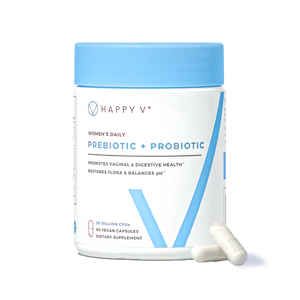
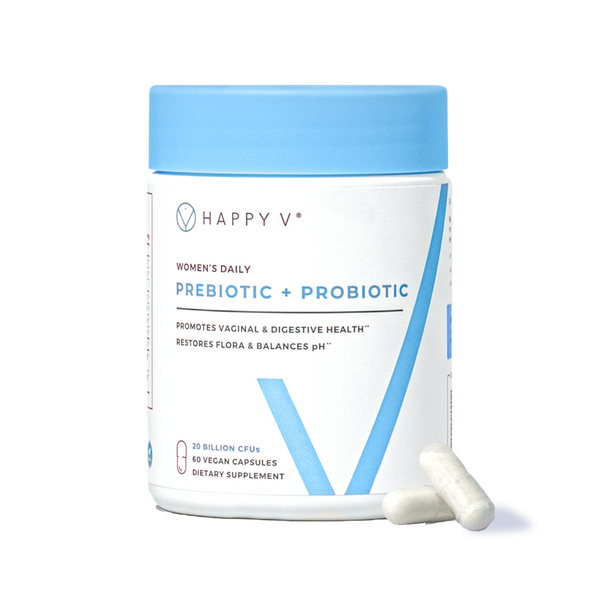
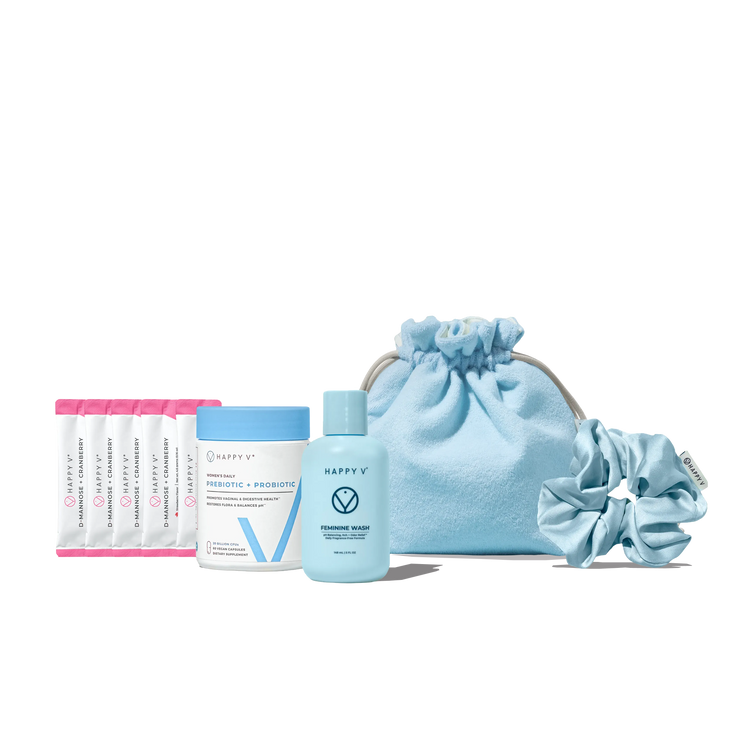
- Supporting your vaginal pH from both sides. Antifungal medication clears what's active right now, but it doesn't do much to restore the balance that helps prevent the next one. And whether or not Plan B was actually the trigger this time, any kind of hormonal disruption, emergency contraception, a new birth control pill, even just a stressful cycle, can leave your vaginal pH a little more vulnerable than usual going forward. The Happy V pH Balance Kit pairs Prebiotic + Probiotic with Feminine Wash to support you from both angles. The probiotic works internally with clinically studied Lactobacillus strains to help repopulate and maintain a healthy vaginal microbiome, while the fragrance-free Feminine Wash cleanses externally with lactic acid, aloe, and beta-glucan to support your skin barrier without the stripping, dry, or tight feeling that regular soap can leave behind.
 WHILE SUPPLIES LAST
The pH Balance Kit
Balance your microbiome from within, support your skin barrier from without.
Final Thoughts
Developing a yeast infection after taking Plan B can feel unfair for sure. You made a smart call in a stressful moment, and you are still left to deal with unwanted and uncomfortable symptoms.
Just remember, this isn't a punishment, and in most cases, it's a temporary, treatable reaction to a hormonal shift. Despite the timing, it may have nothing to do with Plan B at all! So don't dwell on it, treat the infection, keep an eye on your body, and if this kind of hormonal disruption tends to throw you off balance, consider giving your vaginal pH some support from both the inside and outside with the Happy V pH Balance Kit, so your body can bounce back more easily through these shifts.
Keep the Conversation Going
-
Visit our blog for more women's health tips.
-
Join our private Happy V Facebook group to hear from others who've been there.
- Explore the Happy V pH Balance Kit and other products designed to support your vaginal health journey.
Disclaimer: This blog is for informational and educational purposes only and is not intended to diagnose, treat, cure, or prevent any disease. Statements about supplements have not been evaluated by the Food and Drug Administration. For more information about vaginal infections, visit the CDC or speak to a licensed healthcare provider.
FAQ
Can Plan B cause vaginal itching even without a yeast infection?
How soon after taking Plan B would a yeast infection show up?
Is it safe to take fluconazole with Plan B?
Does hormonal birth control cause more yeast infections than Plan B?
When should I see a doctor instead of treating a yeast infection myself?
Our experts continually monitor the health and wellness space, and we update our articles when new information becomes available.
- Published on: September 07, 2026
- Last updates: September 07, 2026
Written by Daniella Levy
Edited by Liz Breen