

- Fact Checked
- February 03, 2026
- 8 min read
Can Infections Delay Your Period? What You Need to Know

- Written by Daniella Levy • Updated on May 30, 2026
- Updated on May 30, 2026

Table of Contents
Table of Contents

When your period is late, it’s easy for your mind to jump straight to worst-case scenarios. And if you’ve recently dealt with a UTI, yeast infection, or even a bad cold, it’s natural to wonder whether being sick could be the reason your cycle feels off. The short answer is yes, infections can delay your period due to how your body responds to stress, inflammation, and healing.
Your menstrual cycle is closely tied to your overall health, so when your immune system goes into overdrive, your hormones can temporarily take a backseat. The keyword being “temporary.” While a delay in period is usually nothing to worry about, multiple months without a period is a sign to check in. Luckily, we’re going to dive into what’s normal and what’s not, so you will know exactly the right next step to take.
This post is for informational purposes only and does not constitute medical advice. See full disclaimer below.
How Infections Can Actually Affect Your Menstrual Cycle

Here's the thing: most infections—even those that affect you “down there”—don't directly stop your period from coming1. Infections cannot physically block menstruation. Instead, what they can do is indirectly mess with your cycle through stress, inflammation, and your body's immune system response.
When you're fighting any infection, whether it's a common cold or a UTI, your body shifts into healing mode2. Your immune system goes full throttle to get rid of whatever virus or bacteria is involved (which is its job, after all), and that can temporarily throw off the delicate hormonal balance that keeps your menstrual cycle running smoothly.
The Stress Response Connection
When you’re sick, your body treats it like a stress event. And it responds accordingly3. It releases cortisol (often called “the stress hormone”) to help you fight off illness and conserve energy.
Research published in Frontiers in Global Women’s Health shows that elevated cortisol and ongoing stress can interfere with the hypothalamic-pituitary-ovarian (HPO) axis, which is the communication system that tells your body when to ovulate and when to menstruate4. If that messaging gets disrupted, ovulation can happen later than usual, which naturally pushes your period back and can cause irregular timing.
Inflammation and Immune Response
Whenever you have any sort of infection, your immune system is working overtime to clear it as quickly as possible5. Studies in the American Journal of Obstetrics and Gynecology have found that higher levels of inflammation—measured by markers like C-reactive protein (CRP)—are associated with longer menstrual cycles.
During active infections, your body releases cytokines, which are inflammatory proteins that help with healing6. While they’re doing an important job, they can also interfere with reproductive hormones, making ovulation less predictable and contributing to a delayed period.
Can a UTI Delay Period Timing?
UTIs are incredibly common. A majority of women experience at least one in their lifetime7. If you’re experiencing one in conjunction with a late period, you may be wondering if the two are connected. Well, like any other infection, a urinary tract infection can indirectly impact your cycle and ovulation timing thanks to the physical stress on your body and the inflammation it creates, but it does not physically prevent menstruation from happening altogether. Delays in period due to UTIs last a few days or even a week, but longer than that, something else is likely at play.
Can Yeast Infections or Other Vaginal Infections Delay Your Period?

One-off yeast infections typically don't delay your menstrual period, but recurrent vaginal infections like yeast infections and (you guessed it) the stress they put on your body can potentially contribute to menstrual irregularities, among other uncomfortable symptoms like itching and discharge8.
Now, more serious reproductive system infections like pelvic inflammatory disease or PID, which is often caused by untreated sexually transmitted infections (STIs) like chlamydia or gonorrhea, can definitely impact your menstrual cycle9. PID causes inflammation in your reproductive organs and may lead to irregular periods, delayed periods, heavier bleeding, increased cramping, or spotting between cycles. You might also experience pelvic pain or unusual vaginal discharge.
If you suspect you might have PID or STIs, getting medical care ASAP is essential for protecting your reproductive health and sexual health10. You can read more about the signs of PID to look for and what to expect from your doctor’s visit in our separate article here.
Can an Infection Stop Menstruation for Two Months?

No. A mild infection like a cold, flu, or UTI typically delays your period by a few days, maybe a week at most11.
If your period has ghosted you for two months or more and you're experiencing regular or recurring missed periods, something else is likely at play, with the most common culprits being:
- Pregnancy (always rule this out first with a pregnancy test!)
- Significant weight changes or weight loss
- Chronic stress or anxiety
- Hormonal imbalances like PCOS (polycystic ovary syndrome) or thyroid disorders
- Changes in your exercise routine or excessive exercise
- Birth control pills or other contraceptive changes
- Perimenopause or menopause
- Other underlying conditions or health issues
If you have missed two or more periods, take a pregnancy test and make an appointment with your doctor, whatever the result12. While you wait for the appointment, you can read our separate article that breaks down non-pregnancy causes of missed periods.
Do Antibiotics Delay Your Period?
Generally speaking, antibiotics don't directly delay menstruation. It’s usually the underlying infection that’s messing with your cycle. The only antibiotic that's been documented to potentially affect menstruation is rifampin, which is used to treat tuberculosis.
That said, some antibiotics may indirectly affect your cycle by:
- Disrupting gut bacteria (which can influence how your body metabolizes hormones and maintains hormonal balance)13
- Causing stress, side effects, or physical stress on your body
- Interacting with birth control pills or other hormonal contraceptives in rare cases
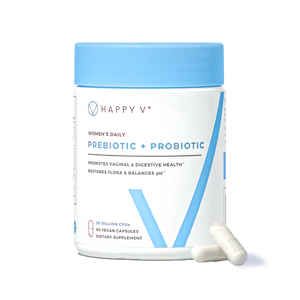
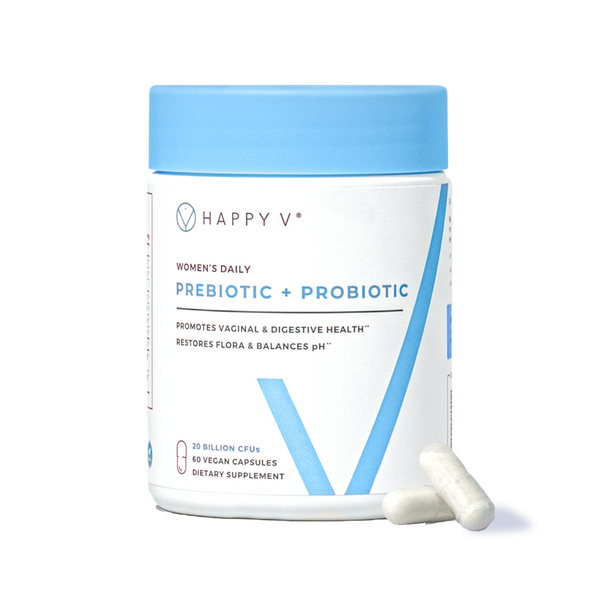
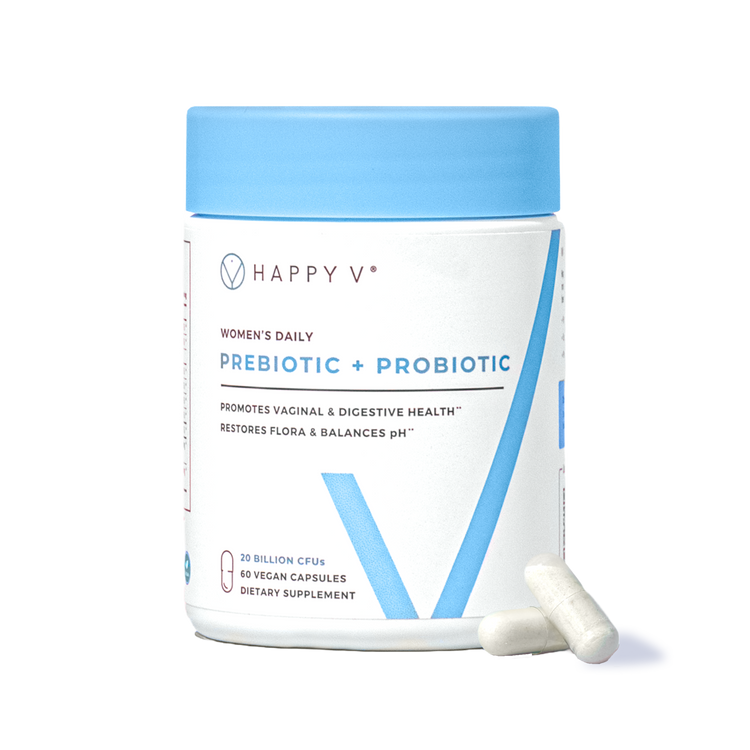
The good news is that you can mitigate the effects of antibiotics on your vaginal and gut microbiomes—and your cycles—by taking a daily probiotic like Happy V's Prebiotic + Probiotic during and for the few weeks following your course. This will ensure you are replenishing the levels of healthy bacteria that the antibiotics are killing off, so you aren’t left with a microbiome that’s completely out of whack (and prone to uncomfortable symptoms).
 Bestseller
Prebiotic + Probiotic
Maintains vaginal pH and restores gut health.
When to See a Doctor
While occasional menstrual irregularities are totally normal, there are times that deserve a call to your healthcare provider14.
Reach out if you experience:
- Delayed periods longer than one week beyond your normal cycle
- Two or more missed periods
- UTI symptoms that aren't improving within 2-3 days of treatment
- Fever, back pain, a burning sensation, or nausea with a UTI (possible kidney infection)
- Unusual vaginal discharge or pelvic pain
- Heavy bleeding or severe cramping
- Signs of hormonal imbalances or hormonal changes that concern you
Though most people see their period as a nuisance, the truth is, your menstrual cycle is actually an important indicator of your overall health. Paying attention to patterns and changes in your menstrual health helps you understand what's normal for your body and identify when something might be off15.
Menstrual Cycle Tracking
How Do You Track Your Menstrual Cycle And Why Does It Matter for Your Health?
Supporting Your Body During Infections

When you're dealing with an infection, supporting your body's healing process not only helps resolve infection symptoms quicker but also can help prevent things like delayed periods. Even if you are “just” dealing with the common cold or a case of BV, be mindful to:
- Stay hydrated by drinking plenty of water
- Get adequate rest and sleep (your body is working hard!)
- Eat nourishing, balanced meals to support hormone levels and energy
- Take medications as exactly as prescribed by your doctor (don’t reuse old medications or stop medications before you should just because symptoms resolves)
- Incorporate daily probiotics into your wellness routine to boost your microbiomes’ natural defenses and prevent recurrence
- Manage stress levels through relaxation techniques or gentle movement
The good news? Minor menstrual irregularities while fighting an infection are usually temporary. Once you recover, your period should return to its regular pattern within a cycle or two as your hormonal balance stabilizes.
Final Thoughts
Your body is incredibly resilient, but it will let you know when it needs a little extra support. While infections can temporarily throw your menstrual cycle off track, understanding the connection between your immune system and reproductive health empowers you to take better care of yourself.
Whether you're dealing with UTIs, yeast infections, irregular periods, or hormonal shifts, listen to your body, support it with the right nutrients and rest, and don't hesitate to reach out to your doctor when something doesn't feel right. Your wellness journey is uniquely yours, and being informed is one of the best ways to advocate for your health.
Keep the Conversation Going
- Visit our blog for more women's health tips.
- Join our private Happy V Facebook group to hear from others who've been there.
- Explore supplements designed to support your vaginal health journey.
Disclaimer: This blog is for informational and educational purposes only and is not intended to diagnose, treat, cure, or prevent any disease. Statements about supplements have not been evaluated by the Food and Drug Administration. For more information about vaginal infections, visit the CDC or speak to a licensed healthcare provider.