





- Fact Checked
- May 06, 2026
- 12 min read
Can a Yeast Infection Cause a UTI?

- Written by Daniella Levy • Updated on May 29, 2026
- Updated on May 29, 2026

Table of Contents
Table of Contents
If you've ever dealt with a yeast infection and a UTI in the same month, the same week, or even the same day, you know how demoralizing (and uncomfortable!) that combo can feel.
Is the timing a coincidence or can one actually be causing the other? The short answer: no. A yeast infection cannot directly cause a UTI, and vice versa. Yeast infections are fungal infections, while UTIs are bacterial.
That being said, they are connected in ways you should know about: through shared risk factors, anatomical proximity, and a treatment loop that can make you vulnerable to a vicious cycle.
This post is for informational purposes only and does not constitute medical advice. See full disclaimer below.
Yeast Infection vs. UTI: What's the Difference?
Yeast infections and UTIs are fundamentally different infections.
Vaginal yeast infections are fungal infections caused by an overgrowth of Candida (most often Candida albicans).1 Candida exists in even healthy vaginal microbiomes, but when something disrupts the microbiome and particularly the protective Lactobacillus living inside it, Candida can multiply unchecked, causing intense vulvar itching, redness and swelling of the vulva, and thick white vaginal discharge often described as cottage cheese-like. Some women also experience burning during sex or urination when inflamed tissue is irritated.
UTIs, on the other hand, are bacterial infections affecting the urinary system, typically the bladder and urethra.2 The most common culprit is E. coli, a bacterium that can migrate from the gut to the urethra through sex or improper wiping. UTI symptoms involve burning or pain with urination, a frequent urge to go with little output, cloudy or bloody urine, and internal pain in the bladder or lower abdomen.
Causes and Risk Factors
Just like symptoms between these two infections overlap, so do their causes and risk factors, which is why they often coexist.
The most common causes and risk factors for yeast infections are:
- Antibiotics (including those prescribed for UTIs). This is actually the leading trigger for yeast infections. Any antibiotic course can knock out protective Lactobacillus bacteria along with its target bacteria, giving Candida an opening to overgrow.3
- High blood sugar levels and diabetes. Candida and yeast in general love sugar, and high blood sugar can fuel their growth. Recurrent yeast infections are sometimes the first sign of uncontrolled blood sugar.
- Pregnancy. Pregnancy changes vaginal pH and hormonal balance significantly, increasing susceptibility to yeast overgrowth. For some women, hormonal birth control can have the same effect on the vaginal environment.
- A weakened immune system. Illness, stress, or immune-suppressing medications reduce the body's ability to keep Candida populations in check.
- Scented feminine hygiene products and douches. These disrupt vaginal pH and strip out protective bacteria.
- Tight underwear and synthetic fabrics. These trap heat and moisture, creating the warm, damp environment Candida thrives in.
- Sexual activity. Sexual activity of any kind (including oral sex) can introduce bacteria or alter vaginal flora, and products like spermicides and diaphragms are further associated with increased yeast infection risk.
And the most common causes and risk factors for UTI include:
- Anatomy. Unfortunately, anatomy is the primary driver here. Women's shorter urethra means bacteria have less distance to travel to reach the bladder, which is why UTIs are far more common in people with vaginas.
- Sexual activity. Sex can push bacteria from the anus toward the urethra or introduce new bacteria to the urinary tract.
- Not emptying the bladder completely. This allows bacteria to sit in the urinary tract and multiply. Holding it too long carries the same risk, so when you gotta go, go.
- Vesicoureteral reflux. This is a structural condition where urine flows backward from the bladder into the ureters, significantly increasing recurrent UTI risk.
- Pregnancy. Pregnancy alters the urinary system both physically and hormonally, making UTIs both more likely. Because of the growing life inside you, they’re also more serious if left untreated.
- Diabetes and high blood sugar. These impair immune function and create a favorable environment for bacteria in the urinary tract, not just Candida in the vagina.
- A weakened immune system. Like with yeast infections, it reduces the body's defenses against bacterial infections at every level of the urinary tract.
As you can see, things like a weakened immune system, pregnancy, and sexual activity cause underlying imbalances in the vaginal and urinary microbiomes, which ultimately give way to the bacterial and fungal overgrowths responsible for yeast infections and UTIs. This is why it’s not only possible to have a yeast infection and UTI at the same time, even though they don’t directly cause each other. And it happens more than most people realize!
How to Tell Them Apart: Symptom Comparison
We truly believe that information is power, so we want to give you the information you need to help distinguish a UTI from a yeast infection. That being said, the information here (or anywhere on the internet, really) is not a substitute or a pathway to diagnosis. Only your doctor can do that.
The most useful distinction to know when making the appointment is that yeast infection symptoms are primarily external and centered on the vulva and vaginal area, while UTI symptoms are primarily internal, centered on the urinary tract, bladder, and lower abdomen.4
| Yeast Infection | UTI | |
| Location of symptoms | Vaginal area, vulva (external) | Bladder, urethra, lower abdomen (internal) |
| Discharge | Thick, white, cottage cheese-like | Little to none |
| Vulvar itching | Intense | Rare |
| Burning during urination | External, on contact with urine | Internal, throughout urination |
| Frequent, painful urination | Uncommon | Very common |
| Cloudy or bloody urine | No | Possible |
| Redness and swelling of the vulva | Yes | No |
| External irritation and soreness | Yes | Minimal |
| Pain during sex | Common | Less common |
Red Flags That Need Same-Day Attention
While the symptoms described above call for you to be seen within a few days, there are symptoms that need same-day attention from your doctor or an urgent care provider. These include:
- Fever or chills alongside urinary symptoms
- Nausea or vomiting
- Back or flank pain (which are potential signs of a kidney infection)
- Visible blood in urine
- Symptoms that don't improve after completing a full treatment course
- Recurring infections, which are defined as three or more UTIs per year, or yeast infections that keep returning, deserve a thorough workup rather than repeated short-term treatment cycles5
How They're Diagnosed
The only reliable way to know which infection you have (or whether you have both) is proper diagnostic testing at a doctor’s office. Self-diagnosis is notoriously unreliable for both conditions, and treating the wrong thing can delay recovery and make things worse. There are also no accurate home tests for either infection.
To test for a yeast infection, a healthcare professional will typically do a physical examination (similar to your annual gynecology appointment) and take a swab of vaginal discharge for laboratory analysis. Confirming the presence of Candida under a microscope also rules out bacterial vaginosis, which has similar symptoms but requires a completely different treatment.6
For a UTI, diagnosis involves a urinalysis checking for the presence of bacteria and white blood cells, often followed by a urine culture to identify the specific bacteria and confirm which antibiotic will be most effective, since not all UTI-causing bacteria respond to the same treatments.7
If you suspect you have both a UTI and a yeast infection, don’t be shy. Tell your provider upfront. They can run a swab and urine culture at the same visit, which is far more efficient than treating one and waiting to see if the other resolves on its own.8
Could It Be Something Else?
It’s possible that during your appointment, you test negative for both UTI and yeast infection. That’s because, believe it or not, there are several other conditions that present similar symptoms, including:
- Bacterial vaginosis (BV). BV is the infection most frequently confused with a yeast infection. Both involve vaginal discharge and discomfort, but BV typically produces a thin, gray-white discharge with a strong fishy odor, very different from the thick, white discharge of a yeast infection. BV is bacterial, not fungal, so antifungal treatments won't work.
- Sexually transmitted infections. STIs like chlamydia, gonorrhea, and trichomoniasis can produce discharge, burning, and pelvic discomfort that overlaps with UTIs and yeast infections. If you're sexually active and experiencing these symptoms, STI testing is worth including in the workup.
- Contact dermatitis. Contact dermatitis from vaginal sprays, scented products, or laundry detergent can cause vulvar itching, redness, and soreness without any actual infection. A weakened immune system or skin sensitivity can amplify this reaction.
- Interstitial cystitis. This is a chronic bladder condition causing urinary urgency and frequent, painful urination that’s nearly identical to UTI symptoms, but with a negative urine culture (meaning no bacteria present). If you're repeatedly testing negative for UTIs while experiencing recurring UTI-like symptoms, bring this up with your OB/GYN or midwife.
- Kidney infection. Pyelonephritis is a very serious infection that develops when a UTI travels up from the bladder into the kidneys. It shares UTI symptoms but adds fever, chills, nausea or vomiting, and back pain. It's considered extremely urgent and warrants same-day care by a doctor, urgent care, or ER.
Treatment Options
Why are we harping so much on getting your diagnosis confirmed by a doctor before getting treatment, especially given that yeast infections can often be treated with a simple over-the-counter antifungal? Because yeast infections and UTIs require different treatments, so treating the wrong one isn’t just ineffective, but can further disrupt vaginal flora and delay recovery.9
For yeast infections:
Over-the-counter antifungal medications are effective for most uncomplicated cases. Miconazole (which is available as antifungal creams and suppositories in 1-, 3-, and 7-day formulas) and clotrimazole are both widely available over-the-counter (OTC) options.10
For more severe or recurrent infections, a healthcare provider may prescribe fluconazole (an oral antifungal), terconazole (a prescription vaginal cream or suppository), or, less commonly, ketoconazole.
For UTIs:
UTIs require antibiotics. There's no effective OTC cure, no matter what health influencers may say.11 The most commonly prescribed options are nitrofurantoin, trimethoprim-sulfamethoxazole, and fosfomycin. Your provider will recommend one based on your urine culture results and local resistance patterns. Always complete the full course, even if you start feeling better early. Don’t stop taking antibiotics just because symptoms have improved, as this increases your chances of recurrence and resistance.
Supportive home remedies:
These home remedies don't replace treatment for an active infection, but can support recovery and reduce recurrence risk:
- Staying hydrated helps flush bacteria from the urinary tract
- Cranberry supplements may reduce UTI recurrence by interfering with bacterial adhesion, especially those like Happy V’s that contain D-Mannose
The Antibiotic Loop: Why Treating a UTI Often Leads to a Yeast Infection
We’ve told you a lot about how these two infections overlap, despite different root causes, but if you should take away one piece of understanding from this guide, it’s this: when you're prescribed antibiotics for a UTI, those antibiotics kill the bacteria causing your infection, but they also wipe out the beneficial Lactobacillus bacteria that keep microbes like Candida in check.12 With that protection gone, Candida has an opening to overgrow. The result: a yeast infection that shows up right as your UTI is clearing.
This is a well-documented, predictable consequence of antibiotic use, and it's one of the main drivers of the recurring-infection cycle. If you always seem to get a yeast infection after antibiotics, you're not imagining it, and it's worth proactively supporting your vaginal flora during any antibiotic course.13
Prevention: Breaking the Cycle
If you’re caught in this UTI-antibiotic-yeast infection cycle, what do you do? After all, you not only have to worry about preventing one infection, but two.
Fortunately, the prevention strategies that reduce yeast infection risk also reduce UTI risk. Those with the best research behind them include:
Probiotics for Vaginal and Urinary Health
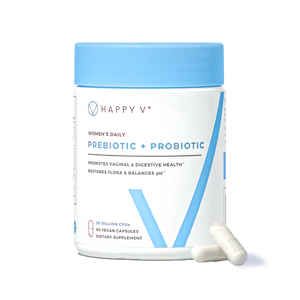
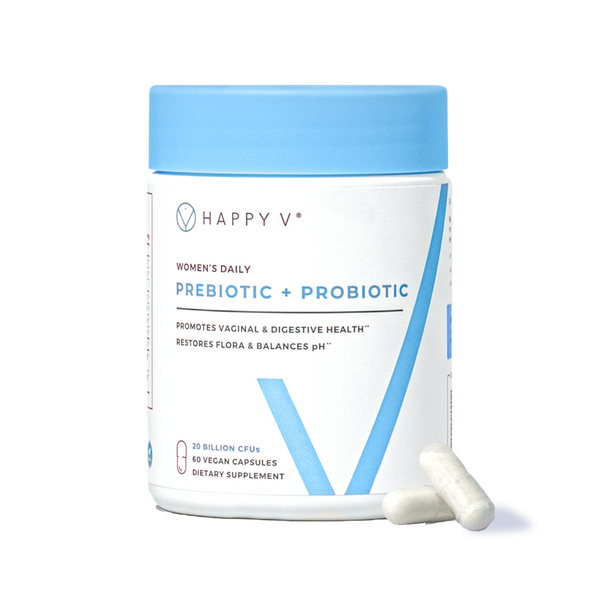
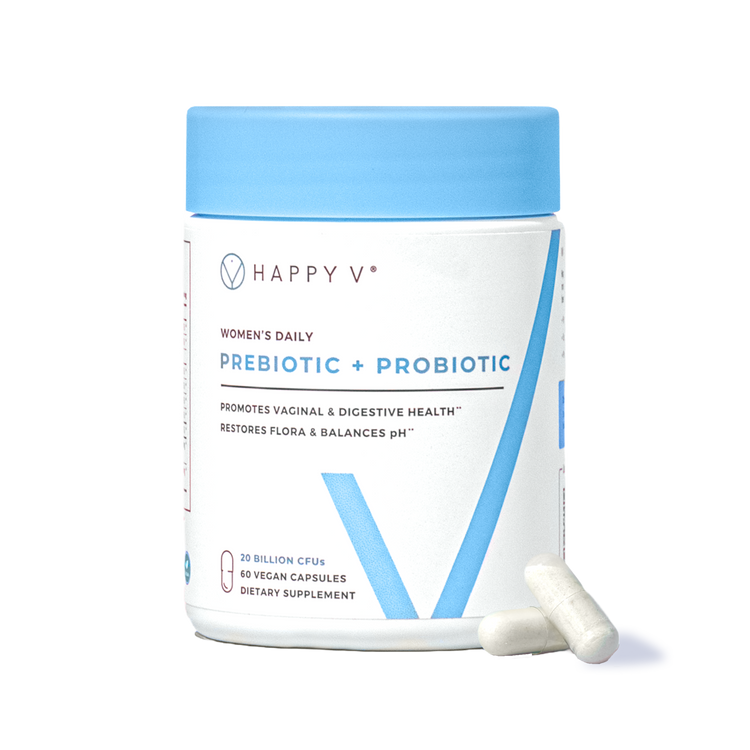
This is especially important during and after any antibiotic course you may be prescribed. A daily probiotic (particularly one that contains Lactobacillus strains that have been clinically studied for vaginal and urinary health) can help maintain the protective flora that keeps both infections at bay. Happy V's Prebiotic + Probiotic is formulated with these targeted strains to support the vaginal microbiome and urinary health year-round, not just as a reactive measure.
 Bestseller
Prebiotic + Probiotic
Maintains vaginal pH and restores gut health.
Proper Hygiene Techniques
Little practices go a long way here. Always wipe front to back to prevent gut bacteria from traveling toward the urethra. Urinate after sex to flush any bacteria that may have migrated toward the urinary tract. Avoid douches and scented feminine hygiene products, which disrupt vaginal pH and deplete protective Lactobacillus, and always stay hydrated and urinate frequently. Holding it allows bacteria to multiply in the bladder.
Breathable Cotton Underwear
Tight underwear and synthetic fabrics trap moisture and heat, creating the environment Candida thrives in. Breathable cotton underwear reduces that risk by allowing airflow, as does loose bottoms whenever possible.
Watch Blood Sugar Levels
High blood sugar feeds Candida and impairs immune function. If you have diabetes or experience recurring yeast infections without another clear cause, blood sugar management is worth a conversation with your healthcare provider.
Keep the Conversation Going
- Visit our blog for more women's health tips.
- Join our private Happy V Facebook group to hear from others who've been there.
- Explore supplements designed to support your vaginal health journey.
Disclaimer: This blog is for informational and educational purposes only and is not intended to diagnose, treat, cure, or prevent any disease. Statements about supplements have not been evaluated by the Food and Drug Administration. For more information about vaginal infections, visit the CDC or speak to a licensed healthcare provider.