


- Fact Checked
- March 09, 2026
- 15 min read
Why Do I Get Bacterial Vaginosis After Sex?

-
Written by
Hans Graubard
• Updated on April 02, 2026

Dietary supplement manufacturing, regulatory and product development, and DTCt; leadership experience...
- Updated on April 02, 2026
Table of Contents
Table of Contents
Nothing kills a sex life quite like dreading what comes after. If you've noticed a pattern, where itching, odor, and discharge seem to flare up within a few days of having sex, you're not imagining it. And you are far from alone.
Yes, there is a link between recurrent BV and sexual activity. But this link can be broken, especially when you understand why sex is triggering your symptoms and how to get ahead of them.
This post is for informational purposes only and does not constitute medical advice. See full disclaimer below.
What Is Bacterial Vaginosis?
Before we can understand how to best prevent BV, we have to understand what it is and what’s happening in your body.
Bacterial vaginosis (or BV for short) is one of the most common vaginal infections, and it’s caused by an imbalance of good and bad bacteria in the vagina.1 More specifically, it’s caused by a drop in protective Lactobacilli bacteria and an overgrowth of harmful anaerobes and other vaginal bacteria.
While being sexually active is definitely a risk factor for getting BV, BV is not exclusively a sexually transmitted infection (STI). In fact, you can get BV without any sexual contact at all.
BV falls under the broader category of vaginitis, or inflammation of the vagina that can be caused by infection, irritation, or changes in vaginal flora.2 According to the CDC, bacterial vaginosis is the most common cause of vaginitis in women of reproductive age (so anywhere from 14 to 50-ish).
Symptoms of BV
The symptoms of bacterial vaginosis can range from obvious to nonexistent, and that huge range is part of what makes this infection so easy to miss or misidentify, despite how common it is.3
Vaginal discharge is usually the most telling sign of BV. This is discharge that’s typically thin and watery, gray in color, and often has a distinctive fishy smell or vaginal odor that's most noticeable after sex.4
Beyond discharge, symptoms of BV can include:
- Vaginal itching or irritation around the outside of the vagina
- Vaginal soreness or swelling
- Burning when peeing or pain and discomfort when you urinate
- Pain or discomfort when you have sex
Though these are the most common symptoms of BV, what’s even more common is not having any symptoms at all.5 By some estimates, more than 85% of people with bacterial vaginosis are completely asymptomatic, meaning no discharge, no odor, no discomfort.
But even without symptoms, untreated BV can still lead to complications (which we’ll get into later). That’s just another reason why it’s important to keep up with annual gynecology visits, even if everything is feeling fine.
Causes and Risk Factors
At its core, BV occurs when the levels of protective Lactobacilli in the vaginal microbiome drop, allowing infection-causing bacteria like Gardnerella vaginalis to enter and multiply.6 As for what causes these Lactobacilli levels to drop, there are many possible triggers. Several are related to sex, but others aren’t.
The most common sex-related risk factors for BV include:
- Not using condoms. Semen has a higher pH than the vagina, which can temporarily reduce vaginal acidity and disrupt the natural balance of bacteria.7 Unprotected anal, oral, and vaginal sex can also introduce new vaginal bacteria and vaginal fluid from another person's microbiome, some of which can lead to BV.
- A new partner or multiple sexual partners. New sex partners expose you to new bacteria from their microbiome. This is why the more sexual partners you have, the higher your risk of BV.8
- Sex with female partners. BV-associated bacteria can be transmitted between female partners, which is why women who have sex with women are at increased risk.9 Using dental dams during oral sex and cleaning sex toys between uses can bring this risk down.
- Sex toys. Sharing or improperly cleaning sex toys can introduce harmful vaginal bacteria, which can lead to BV.
- A previous history of STIs, which can compromise the vaginal environment's natural defenses.
But there are plenty of non-sex-related factors, too, like:
- Douching. Rinsing the inside of the vagina (even just with water) disrupts the natural balance of vaginal bacteria and is one of the most common BV triggers.10 This is why the CDC and most healthcare professionals advise against it.
- Scented soaps, deodorants, and perfumed products in or near the vagina. These often get their scents from chemicals that can disrupt the Lactobacilli levels in your vaginal.11
- IUD use. IUDs are associated with a higher risk of BV, likely due to the device's effect on the vaginal environment.12
- Heavy menstrual bleeding, which can temporarily raise vaginal pH.
- Tampon use during an active infection. This can worsen irritation and disrupt the vaginal environment.
- Recent antibiotic use, which wipes out good bacteria along with bad.
- Hormonal changes during natural life shifts like puberty, pregnancy, or menopause.13
Why Do I Keep Getting BV After Sex?
Unfortunately, there is no one reason. As you just read above, there are lots of ways sex can contribute to BV symptoms.14 One of the most common, though, is semen exposure.
The job of semen is to temporarily raise your vaginal pH and make it easier for sperm to swim.15 When you have frequent unprotected sex, this temporary thing may become not-so-temporary, especially if you have other risk factors like IUD use or recent antibiotic use. A new partner or partners compounds this further by introducing an entirely unfamiliar microbiome to your vaginal environment.
Basically, if your vaginal flora is already on the sensitive side due to certain lifestyle factors, sex can be enough to tip the balance toward bad bacterial overgrowth and a BV infection.
How Is BV Different From Other Vaginal Infections?
Part of the reason BV can be so difficult to diagnose (and especially self-diagnose) is that when symptoms do occur, they often overlap with symptoms of other common infections, particularly yeast infections and STIs.16 But there are key differences, too, that give each of these infections away.
BV vs. Yeast Infections
BV is caused by bacterial overgrowth, while a yeast infection is caused by (you guessed it) yeast, which is a fungus.17 Both are associated with unusual discharge, but the discharge looks and smells different: BV produces thin, watery, grayish-white or off-white discharge with a fishy or foul-smelling vaginal odor, while yeast infection discharge is thick, white, and cottage cheese-like with little to no odor.
Both cause vaginal itching and irritation, but the cause (and the treatment) are completely different.18 Never assume your vaginal symptoms are a yeast infection without a proper diagnosis.
BV vs. STIs and STDs
Some sexually transmitted infections and sexually transmitted diseases like chlamydia and trichomoniasis can cause similar vaginal discharge and discomfort to BV.19 A proper lab test is the only way to tell them apart. Co-infections are also possible, meaning you can have BV and another STI at the same time, which is why healthcare providers often test for both when you come in with symptoms.
How Is BV Diagnosed?
As informative and accurate as we strive to make our learning resources, the truth is, you can’t diagnose BV through a blog post. It can only be accurately diagnosed by a healthcare provider. When you try to self-diagnose, you may get it wrong, which means you might end up treating the wrong thing and never get to the root of your symptoms.
The rule of thumb when it comes to vaginal health is that when you have any kind of symptoms, make an appointment.
What to Expect at Your Appointment
When you go to see your provider, they will typically start by asking you about your symptoms, your medical history, and your sex life.20 It can be uncomfortable to talk about these things with someone you don’t know all that well, but it’s important to be honest. The more information they have, the better they will be able to help.
From there, your doctor will likely perform a pelvic exam and use a speculum to examine your vaginal discharge and collect a vaginal fluid sample using a swab or cotton bud.
Diagnostics & Tests for BV
Once your doctor has a sample of your vaginal fluid, there are many tests they can use to confirm BV, including:
- Wet mount. The swab is examined under a microscope to look for "clue cells," or vaginal epithelial cells so heavily coated in vaginal bacteria that their edges appear stippled or fuzzy. Clue cells are a definitive sign of bacterial vaginosis.
- Whiff test. A small amount of potassium hydroxide solution is added to the sample. A positive fishy smell confirms the presence of BV-associated amines.
- Vaginal pH test. A pH reading above 4.5 indicates a disrupted vaginal flora. Healthy vaginal pH is below 4.5, and BV almost always elevates it.
- Amsel criteria. Many providers use this clinical framework, which diagnoses BV when at least three of four criteria are met: abnormal vaginal discharge, a positive whiff test, a vaginal pH above 4.5, and clue cells on the wet mount.
- Nugent score. In lab settings, a Gram stain of the vaginal sample is scored based on the ratio of Lactobacilli to harmful vaginal bacteria. This is considered the research gold standard but is less commonly used in routine gynecology visits.21
Can you test for BV at home?
Over-the-counter vaginal pH test kits can detect a higher pH, which may suggest bacterial vaginosis, but they can't confirm a BV diagnosis.22 They're a useful early signal, telling you it’s time to make an appointment with your healthcare provider, but they don't replace a proper lab evaluation.
Treatment Options
Sometimes, BV resolves on its own. This is particularly common in the case of asymptomatic BV.23 But other times, it doesn’t. If your symptoms last for more than a few days, that’s a sign your body needs some help fighting the infection, and your doctor is the best person to determine what that help looks like based on your symptoms, health history, and whether this is a first-time or recurrent BV infection.
One of the most common treatments for BV is a course of antibiotics, with the most common being:
- Metronidazole (oral). This is the most commonly prescribed option to treat BV, typically taken as a 500mg tablet twice daily for 7 days. It’s effective and widely available, though some people experience nausea or a metallic taste. Avoid alcohol during treatment and for 24 hours after, as the combination can cause a strong reaction.
- Metronidazole vaginal gel. This gel is applied directly inside the vagina once daily for 5 days and is a good option if you want to minimize systemic side effects, since very little is absorbed into the bloodstream.
- Clindamycin vaginal cream. This cream is applied inside the vagina at bedtime for 7 days. It can weaken latex condoms and diaphragms, so use alternative contraception during treatment.
- Tinidazole (oral). This is a newer antibiotic option taken as a single dose or over 2 days. It’s generally well-tolerated and effective for those who don't respond well to metronidazole.
Please note that all treatments for an active BV infection are prescription only. There are no effective over-the-counter methods for treating an active BV infection (though there are some OTC prevention strategies, which we’ll get into later). Also if you are prescribed antibiotics for BV, it’s important to take them exactly as prescribed and continue to take them even if you are feeling better. Stopping a course of antibiotics early only increases your risk of recurrence.
Speaking of recurrent BV, If you have had two or more infections within the year, your healthcare provider may recommend a treatment plan that goes beyond a single round of antibiotics,24 like:
- Extended or suppressive metronidazole therapy, which is a longer course of oral metronidazole or vaginal gel used over several months to suppress recurrence
- Boric acid vaginal suppositories. Some women find these helpful alongside or after antibiotic treatment, though they work best as a complementary measure rather than a standalone solution. There is also a risk of adding to irritation so they are best discussed with your healthcare provider before beginning.
- Partner treatment. For female partners, treating both partners simultaneously can reduce the cycle of reinfection. Evidence for treating a male partner is less clear, but it's worth discussing with your provider if BV keeps recurring with the same partner
- Switching birth control. If you use an IUD, your provider may suggest alternative birth control options to see whether it reduces BV frequency
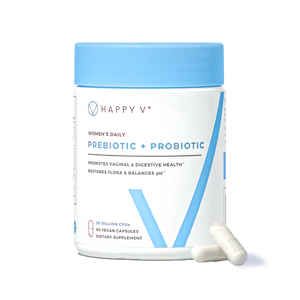
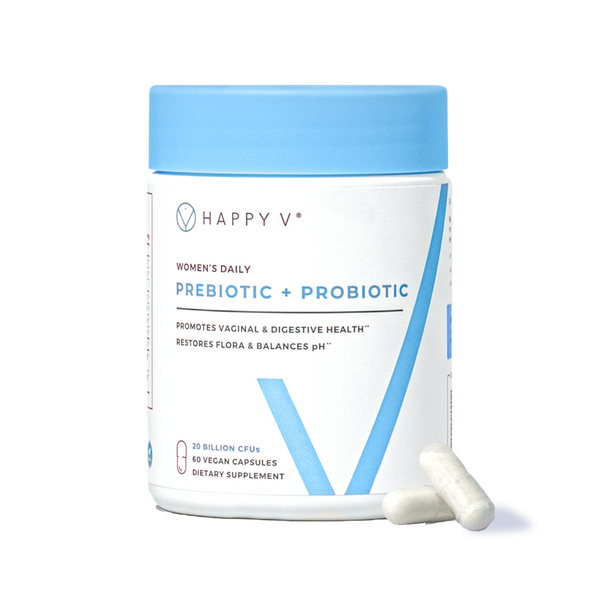
- Taking probiotics alongside treatment. Taking probiotics containing clinically studied Lactobacilli strains during and after antibiotic treatment can help restore the good bacteria your vaginal microbiome needs to stay balanced. Happy V's Prebiotic + Probiotic is doctor-formulated with Lactobacilli strains specifically chosen to support vaginal health and restore healthy vaginal acidity.
Complications and Recurrence
BV itself isn't considered a dangerous condition, but leaving it can lead to real health consequences, which include:
- Increased risk of sexually transmitted infections and STDs, including chlamydia, gonorrhea, HPV, and herpes
- Increased susceptibility to HIV
- Increased risk of bacterial infection following procedures like hysterectomy or abortion
For those who are pregnant, untreated bacterial vaginosis carries more serious risks like:
- Premature birth or preterm labor
- Low birth weight
- Miscarriage
- Chorioamnionitis — a serious infection of the membranes surrounding the fetus that increases the risk of preterm birth and cerebral palsy in newborns
If you’re not pregnant but trying to be, chronic or untreated BV is linked to:
- Difficulty conceiving due to blockage in the fallopian tubes
- Pelvic inflammatory disease (PID), which causes inflammation of the upper
- reproductive tract and can lead to infertility
- Reduced IVF success rates
And even after successful treatment, recurrent BV is common. Up to 50% of women experience another infection within 12 months. This is why treatment alone isn't enough. Prevention has to be part of the plan, and it’s exactly what we’re diving into next.
Prevention and Risk Reduction
The good news is, even if your BV is triggered by sex, you don’t have to swear off sex to stop the symptoms.25 There are lots of ways to reduce your risk while still maintaining intimacy. The prevention strategies with the most evidence behind them include:
- Use condoms consistently. This is one of the most reliable ways to maintain vaginal acidity and limit exposure to new bacteria from sex partners.
- Use dental dams during oral sex with female partners to reduce the risk of transmitting BV-associated bacteria.
- Don't douche. Douching is one of the most evidence-backed risk factors for BV. Skip it entirely. If you ever want to wash your vulva (that’s the outside part!), use warm water and mild, unscented soap only.
- Clean sex toys between uses. Like, every time. This prevents bad bacteria from being reintroduced after antibiotics.
- Limit your number of sex partners when possible, and give your microbiome time to stabilize after a new partner.
- Avoid scented soaps, deodorants, and perfumed products near the vagina. Even if they’re marketed for vaginal use, they likely contain chemicals that can do more harm than good.
- Switch your detergent. Along with rethinking your hygiene products, you may want to consider switching your laundry detergent to a gentle, dye-free option.
- Wear breathable cotton underwear and avoid tight synthetic fabrics.
- Avoid sex during an active infection to allow your microbiome to recover and reduce the risk of further disruption during treatment.
- Support your Lactobacilli with probiotics. If you've recently taken antibiotics or struggle with recurrent BV, daily supplements containing clinically studied Lactobacilli strains can help replenish the good bacteria your vaginal microbiome needs to maintain healthy vaginal flora and acidity. Happy V's Prebiotic + Probiotic is doctor-formulated to support vaginal health from the inside out, with clinically studied strains of Lactobacillus at their clinically effective doses. More than that, in preclinical studies, our unique formula was shown to be effective in limiting the growth of Gardnerella vaginalis (aka the bad bacteria most commonly associated with BV).
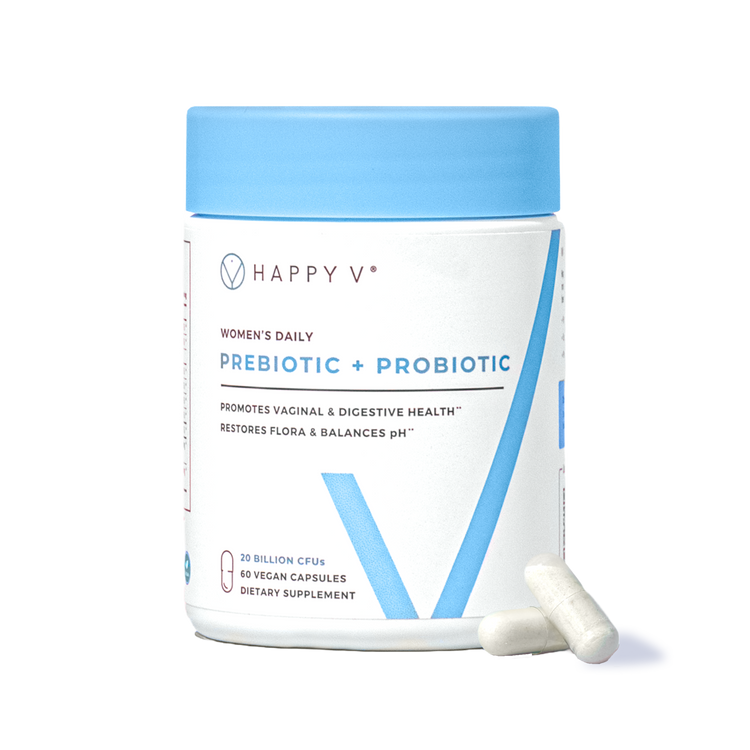 Bestseller
Prebiotic + Probiotic
Maintains vaginal pH and restores gut health.
Remember that even with all the possible risk factors addressed, sometimes infections happen, and your doctor is always your go-to person for addressing them.
When to See a Professional
While it’s empowering to know how to take care of your vaginal health, there are some times when professional help is needed, and knowing when to seek help can prevent more serious complications and protect your long-term health.
Make an appointment with your healthcare provider or OB/GYN if:
- You have any unusual vaginal discharge, odor, or itching that lasts more than a few days
- Your symptoms keep coming back, especially after sex
- You've tried over-the-counter treatments, and they haven't worked
- You're pregnant or trying to conceive
- You've had a recent new sexual partner and are experiencing symptoms for the first time
- You’re immunocompromised or have a history of PID or STIs
- You're due for an annual gynecology visit. Even without symptoms, BV can be present and is often caught during routine screening
Final Thoughts
Recurrent BV after sex is frustrating, but it doesn’t have to be your new normal. Now that you understand what's actually happening in your body when symptoms flare, you're in a much better position to do something about it. Whether that means using condoms more consistently, switching up your hygiene routine, or adding a daily probiotic to support your vaginal microbiome, small changes can make a real difference. And when in doubt, your doctor is always your best resource. You deserve a sex life that doesn't come with a side of dread.
Keep the Conversation Going
- Visit our blog for more women's health tips.
- Join our private Happy V Facebook group to hear from others who've been there.
- Explore supplements designed to support your vaginal health journey.
Disclaimer: This blog is for informational and educational purposes only and is not intended to diagnose, treat, cure, or prevent any disease. Statements about supplements have not been evaluated by the Food and Drug Administration. For more information about vaginal infections, visit the CDC or speak to a licensed healthcare provider.