








- Fact Checked
- June 26, 2026
- 10 min read
What to Do if You Get a UTI While Traveling

- Written by Daniella Levy • Updated on August 28, 2026
- Updated on August 28, 2026

Table of Contents
Table of Contents
You planned the flights, booked the hotels, and packed the right shoes for every occasion. What you didn't plan for? That familiar burn the second morning of your trip.

UTIs have a knack for showing up at the worst possible moments, and travel is basically a UTI risk factor in itself. Between holding your bladder through airport security, long flights, dehydration, disrupted sleep patterns, and the general stress of being somewhere new, your urinary tract is working a lot harder than usual and without the routines that offer it its usual support.
While getting a UTI while traveling is definitely not ideal, it doesn’t have to completely derail your trip, either. Here's what to know, what to do, and how to be prepared before you go.
This post is for informational purposes only and does not constitute medical advice. See full disclaimer below.
Why Travel Raises Your UTI Risk

Prevention will always be the best treatment, whether that’s a UTI or some other kind of infection, and understanding why UTIs happen more often during travel (instead of just crossing your fingers and hoping the best) is actually the first step in helping you achieve this.1
Travel is fun for us because it’s a chance to get out of our normal routine. But our bodies (and our urinary tract) don’t exactly see those changes in the same way.2 In fact, it’s all these changes coming together at once that makes UTIs a greater risk on the road, particularly:
- Dehydration. Dry air on planes, heat, and the general chaos of being on the move all contribute to dehydration, which is one of the most direct UTI risk factors. When you're not drinking enough water, urine becomes more concentrated, bacteria adhere more easily to bladder walls, and you urinate less frequently, giving bacteria more time to multiply.
- Holding urine. Limited restroom access on trains, long drives, or during sightseeing means many travelers routinely hold their bladder longer than they should. Holding urine gives bacteria a chance to grow and makes it harder for your body to flush out anything that shouldn't be there.
- Sex. Travel often means a change in sexual activity patterns, whether that's more frequent sex, a new partner, or simply less access to your normal post-sex hygiene routine. Sex is one of the most well-established UTI triggers (hence "honeymoon cystitis"), and skipping the post-sex bathroom trip because you're in an unfamiliar place or sharing a single bathroom is an easy way to set yourself up for an infection.
- Disrupted sleep patterns and travel stress. Jet lag, poor sleep, and the physical demands of travel all weaken immune function, making your body less equipped to fight off the bacteria that cause UTIs before they take hold.
- Hormonal changes. For women in perimenopause or menopause, hormonal changes that thin the urethral lining and disrupt vaginal pH are an ongoing backdrop, and travel stress can make the underlying sensitivity worse.
- Anatomical differences. Women are significantly more prone to UTIs due to the shorter female urethra, which makes it easier for bacteria to reach the bladder.3 (Of course, this is true at home too, but travel amplifies every contributing factor.)
Recognizing UTI Symptoms on the Road
UTI symptoms are pretty much the same, no matter what time zone you find yourself in. They often include:
- A burning feeling when you pee
- Frequent urination or a persistent urge to urinate, even when little comes out
- Cloudy, strong-smelling, or dark urine
- Lower abdominal or pelvic pain and pressure or cramping in the groin
- Back or side pain, fever and chills, nausea or vomiting
That last cluster (back or side pain, fever, chills, nausea) is actually not the sign of a simple bladder infection. It points to a possible kidney infection (pyelonephritis), which is more serious and requires prompt medical attention, which we know can be intimidating if you’re far from home, but keep reading because we offer some tips on how to access healthcare in a foreign country.
UTIs vs. Similar Conditions: How to Tell the Difference
Though burning during urination and pelvic discomfort are most often associated with UTIs, those symptoms aren’t exclusive to UTIs. Before you treat any infection, make sure you’re treating the right one, since treating the wrong thing can only prolong symptoms and even make things worse (not ideal when traveling).
A few distinctions worth knowing:
UTI vs. Yeast Infection

Both can cause discomfort in the same general area, but yeast infections typically involve itching, cottage-cheese-like discharge, and external irritation around the vulva, rather than the internal burning with urination and urgency that characterize a bladder infection (cystitis).4
UTI vs. STI
Some sexually transmitted infections (STIs) can mimic UTI symptoms, including burning urination and discharge.5 If you've had unprotected sex recently or are unsure, ask for an STI test alongside a urine test. Don't assume it's a UTI.
UTI vs. Kidney Infection
A lower UTI (also called acute simple cystitis or, more simply, a bladder infection) causes symptoms localized to the lower abdomen and urethra.6 When the infection travels upward to the kidneys (causing an infection known as pyelonephritis), you'll typically feel it in your back or flank, along with fever and systemic symptoms. Kidney infections require more aggressive treatment and faster medical attention.
Immediate Steps if You Think You Have a UTI
Besides “don’t panic,” here are three immediate steps to take if you ever suspect you have a UTI while traveling:
- Hydrate aggressively. Start drinking water immediately, and don’t hold it when you feel the urge to go. Frequent urination helps flush bacteria from the bladder, and diluted urine is less hospitable to bacterial growth.7 Avoid caffeine and alcohol, which can be difficult while traveling, but both irritate the bladder and worsen dehydration.
- Start your supplements. If you packed D-Mannose and cranberry (more on this below), now is the time to use them. D-Mannose works by binding to the bacteria responsible for most UTIs (E. coli) and preventing them from adhering to bladder walls. Cranberry's proanthocyanidins (PACs) work through a similar anti-adhesion mechanism. Neither is a substitute for antibiotics in a confirmed infection, but both support bladder comfort and can help while you're figuring out your next step.8
- Seek medical attention. A urine test is the only way to confirm a UTI and determine whether antibiotics are needed. Don't try to tough it out, especially if symptoms are worsening or you develop fever or back pain.9
Accessing Healthcare Abroad
We know that the idea of finding a doctor in a foreign country sounds and often feels daunting, but it's usually more manageable than it first appears.
Some little-known resources include:
- Your hotel staff. Concierge teams at hotels deal with sick guests regularly and can usually point you to a nearby trusted clinic, English-speaking doctor, or urgent care services. If you're in an Airbnb or hostel, a quick search for "walk-in clinic near me" in the local language (a translation app helps here) will help bring up some options.
- Telehealth. Many telehealth platforms operate internationally and can connect you with a provider who can assess your symptoms, recommend whether you need to be seen in person, and in some cases issue an e-prescription. This is often the fastest route, especially in destinations where finding an English-speaking doctor is difficult.
- Your travel health insurance. If you have travel insurance, your policy likely includes a 24-hour healthcare provider helpline. They can help locate an urgent care clinic, connect you with a certified medical interpreter if needed, and advise on coverage for prescriptions.
- Pharmacists. In many countries, pharmacists can assess mild UTI symptoms and recommend over-the-counter medication or let you know if a prescription is needed. This isn't true everywhere, but in much of Europe, Latin America, and parts of Asia, a pharmacist is a legitimate first stop for uncomplicated UTIs.10
And when in doubt, you can always contact your embassy or consulate. They maintain lists of local healthcare providers that can help in these situations.
Recovery and Monitoring Your Progress
If you are prescribed antibiotics while away, follow the doctor’s order exactly and finish the full course. Don’t just stop taking them because your symptoms have improved. Stopping early is one of the most common reasons UTIs recur or become antibiotic-resistant.11
Signs of improvement usually show up within 24-48 hours of starting antibiotics and include decreasing urgency and frequency, less pain or burning while urinating, and clearing urine. If symptoms aren't improving within 24-48 hours of starting antibiotics, or if fever, back or side pain, or bloody urine develop, seek further evaluation using the resources listed above. This may signal the infection has spread or the antibiotic isn't the right match.12
How to Prevent UTIs While Traveling

Prevention is always the better strategy, especially when accessing healthcare requires extra effort, and the best way to prevent UTIs while traveling is to mitigate the main risk factors: dehydration, sex, and holding your urine.13
- Stay hydrated. Bring a reusable water bottle and set reminders to drink if you know you're bad at hydrating on the move. On flights, aim for at least 8 oz per hour to counteract dry cabin air.
- Plan for bathroom access. Scope out restroom locations at airports, train stations, and sightseeing spots, and don't wait until you're desperate. Holding urine is one of the most avoidable UTI triggers.
- Urinate after sex. This is true at home and even more important when travel disrupts normal hygiene routines.
- Pack smart. Antibacterial wipes, hand sanitizer, and a change of clothes if you're heading somewhere warm and wet all reduce your exposure to UTI-triggering bacteria. Avoid tight underwear on long travel days, and change out of wet clothes (like swimsuits and workout gear) promptly.
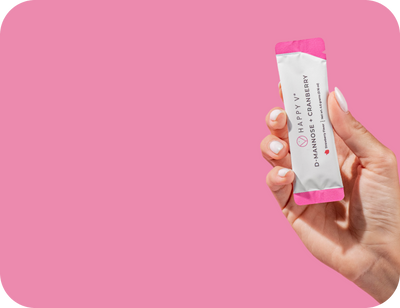
- Bonus tip (especially for those with a history of UTIs): Bring D-Mannose + Cranberry Sticks. This is the easiest upgrade to your travel health kit. Happy V's Happy V's D-Mannose + Cranberry Sticks are single-serve, dissolvable, and take up almost no space in your bag. Stir one into your water bottle daily while you're traveling to keep your urinary tract defenses up, or reach for one at the first hint of symptoms to help your body push back before things escalate. They're basically the UTI version of sunscreen: much easier to deal with before the burn than after.

D-Mannose + Cranberry Stick Packs
Helps support everyday urinary comfort.
Keep the Conversation Going
- Visit our blog for more women's health tips.
- Join our private Happy V Facebook group to hear from others who've been there.
- Explore supplements designed to support your vaginal health journey.
Disclaimer: This blog is for informational and educational purposes only and is not intended to diagnose, treat, cure, or prevent any disease. Statements about supplements have not been evaluated by the Food and Drug Administration. For more information about vaginal infections, visit the CDC or speak to a licensed healthcare provider.