

- Fact Checked
- January 09, 2026
- 11 min read
Wellness Unfiltered with Mariah Caudillo: An Honest Conversation on Vaginal Health, Pleasure, and Starting Fresh

- Written by Daniella Levy • Updated on June 07, 2026
- Updated on June 07, 2026

Table of Contents
Table of Contents
There’s no shortage of wellness advice online, but knowing what’s accurate and what’s just internet fluff isn’t always easy. From viral morning routines to “must-have” products, the wellness space is loud, crowded, and often confusing, especially when it comes to important topics like vaginal health, sexual wellness, and body literacy.
That’s why we created Wellness Unfiltered, a monthly interview series that cuts through that noise by amplifying honest, science-informed conversations with real experts in wellness, education, and healthcare.
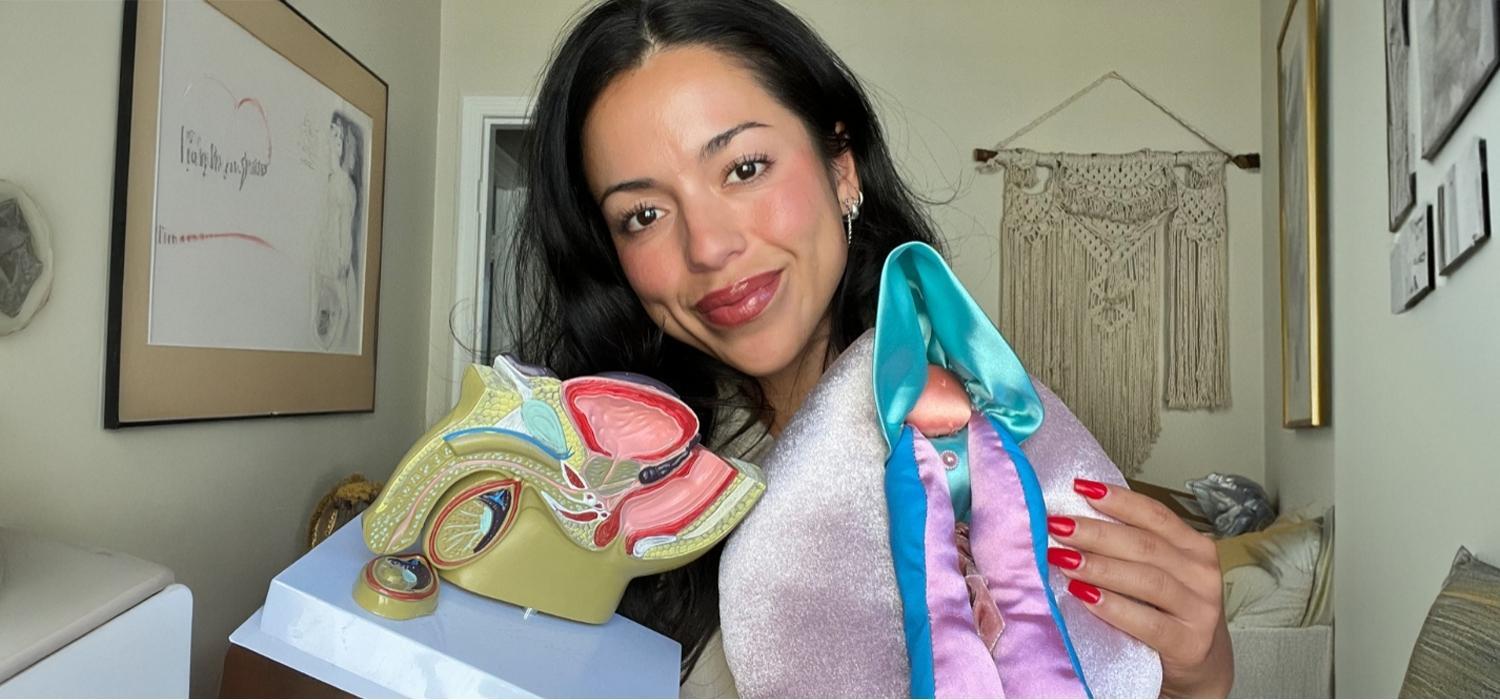
And here, in our first edition (!!), we’re featuring Mariah Caudillo (@sexedfiles), a Planned Parenthood educator and sexual health content creator known for her stigma-breaking approach to topics like vaginal odor, body diversity, sexual communication, and pleasure.
In speaking with us, Mariah shares the vaginal health misconceptions she wishes more people would unlearn, why shame-free education is essential for long-term wellness, and how daily rituals, body awareness, and consistency have shaped her own health journey. We hope you find it as refreshing as we did, and that it helps you ditch any unrealistic expectations that may be holding you back.
This post is for informational purposes only and does not constitute medical advice. See full disclaimer below.
9 Questions for Mariah Caudillo of @sexedfiles
What does “a fresh start” look like for you right now, personally or in your wellness journey?
MC: A fresh start for me looks like slowing down and being more intentional with my time and energy. I’m really trying to prioritize more sleep, more phone-free moments, and more quality time both alone, with my partner and with my community.
Who knows, maybe I’ll reactivate my pilates membership. I’m just craving movement and connection lately. I’m also being more mindful about what brings me pleasure. And not just sexual pleasure, but rest, joy, and anything that helps me feel more alive and grounded in my body. I think the theme for me is being more present and connected to myself and others physically and emotionally.
From your professional perspective, what’s one misconception about vaginal or sexual health you wish every woman could unlearn?
MC: I wish people could unlearn the idea that vulvas are supposed to be completely odorless, or worse, smell like flowers. A healthy vulva has a natural scent, just like any other part of our body. As Bedsider’s Robin Watkins explains, “body smells are a part of being human and come from bacteria breaking down sweat on your skin.” (Kernan, 2019).
Vulvar and vaginal scent can vary from person to person and shift throughout the day or across the menstrual cycle. You can’t shower your way into a candy-scented vulva, and it’s frustrating how many people are shamed into believing theirs “stinks.” In reality, most smells are normal. What matters most is getting familiar with your normal. Like how your vulva looks, smells, feels, and what your discharge is typically like. That body awareness is so, so important. Because yeah, if you notice a strong, fishy, rotten, or suddenly very different odor paired with other symptoms, that’s worth paying attention to. Otherwise, your vulva should smell like you, because you are human, and humans have smells.
As a sex health educator, what do you say to people who struggle with talking about vaginal health with their partner? Can you share a moment or a lesson from your career that reshaped how you think about women’s wellness?

MC: As a sex educator, I see time and time again how shame impacts women’s wellness, especially at a young age. Before many people even have the language to understand their bodies, they’re already worried that something is “wrong” with them. For example, a lot of the questions I get from middle and high school students aren’t really about anatomy or health at all, they're more concerned about whether they’re normal. These are the kinds of questions I hear regularly:
- “How do I know if my vagina is normal?”
- “Is it okay if your lips are different colors?”
- “Is it bad to have a lot of discharge every day?”
- “Why does my vagina still smell even when I shower?”
- “Can other people tell if something is wrong with my vagina?”
- “Is it gross if I have hair down there?”
-
“What if my partner thinks my vagina is weird?”
The thing is, many adults carry these same fears into their relationships, healthcare visits, and sex lives. I know I did. Shame doesn’t magically disappear with age, we just internalize it more. That’s why normalizing body diversity and providing accurate, affirming information early on can be life-changing. I love seeing the immediate relief people feel when they learn that what they’re experiencing is common and worthy of care. That’s shaped how I approach education. It’s through a shame-free lens that hopefully helps people feel understood and seen.
Because of this, when someone struggles to talk about vaginal health with a partner, I encourage them to be honest and understand that there is nothing to be embarrassed about.
These conversations don’t need to be perfect or overly clinical, just name your concerns and ask for what you need. Saying something as simple as, “I’ve noticed some changes in my body, and I want to talk about it,” or “I’m feeling a little insecure and could use some reassurance,” can open the door without putting pressure on yourself to have all the answers. I also want to remind people that a partner who respects you will want to understand what’s going on and support you, not judge or shame you. Vaginal health is part of overall health, and being able to talk about it is normal and necessary.
What does your daily wellness routine look like from morning rituals to nighttime wind-downs? Are there any non-negotiables that keep you feeling grounded?
MC: I’m very much a creature of habit, so I really love having a routine. Getting ready every morning is important to me, even though I mostly work from home. That looks like making the bed, doing my skincare, and putting something on my lips. It tells my brain that the day has started and it’s time to get to work! But first (and I know this is very millennial of me), I need a coffee before I do anything work-related. Getting in the car and driving to my local coffee shop for an iced whole milk latte has become a ritual I genuinely look forward to and one that kick-starts my productivity.
Outdoor time is also non-negotiable for me. Whether it’s going for a short run, taking a walk while editing a video, spending time outside with my cats, or playing golf with my partner, being in the sun and fresh air helps me feel like a real human and a bit more regulated. At night, my routine depends on how my body feels, but a hot shower is always part of the equation. Then I take my vitamins, enjoy several sweet treats, and wind down with a movie or show. And sometimes, if the mood is right, sexual intimacy becomes part of that wind-down too.
What has helped you feel more empowered in your own sexual or vaginal health journey?
MC: My relationship to my body and sexuality has been deeply shaped by surviving sexual trauma. For a long time, the shame and guilt that followed made me feel very disconnected from my body. That disconnection showed up during sex, making it really hard to stay present both emotionally and physically. This experience is incredibly common for survivors and it can make accessing pleasure feel distant and even confusing, especially when the body is holding tension or constantly worrying about safety.
So, what’s been empowering for me throughout my healing journey is learning to slow down and become intimate with my own body again. Even just allowing myself to welcome pleasure is a big deal. I’ve learned to ask for what I need, name my limits, and give myself permission to stop or change course without judgment. And then practices like cycle tracking, paying attention to my body’s responses, and intentionally reconnecting with my vulva has helped me rebuild trust with myself and feel more at home in my body. I’m a big fan of taking a mirror down there and just looking at it. Our bodies offer us so much information when we’re willing to pay attention.
Is there a Happy V product that has become part of your routine? How does it support your approach to wellness from the inside out?
MC: There was a time in my life when I was shoving boric acid up my pussy at least once a week. I’ve also had BV more times than I can count. I have a very sensitive vaginal microbiome, even something like finishing my period could throw my balance off. So for me, consistency and prevention matter much more to me than reactive, quick-fix solutions.
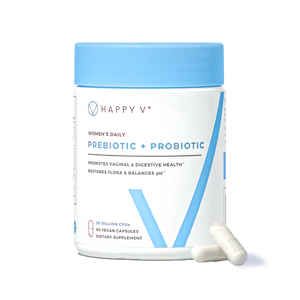
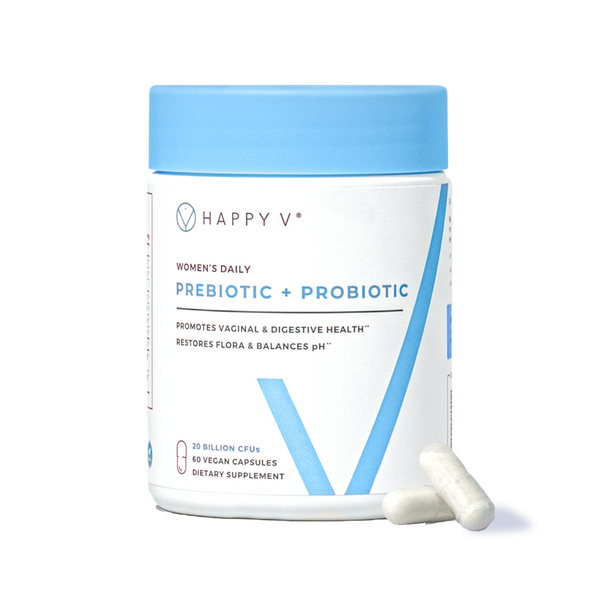
Over time, switching to an unscented bar of soap, drinking more water, and consistently taking Happy V’s Prebiotic +Probiotic has made a noticeable difference in a way that actually feels sustainable. It’s been years since I’ve experienced anything unusual or concerning, which still feels wild to say because I was so used to dealing with anxiety about my vagina. Not having to constantly think about it has freed up so much mental space and allowed me to feel more relaxed in my body and more present during intimacy. That’s why for me, wellness is really about creating a sense of safety and ease from the inside out. That mind-body connection matters a lot to me.
I also recently had the opportunity to learn more about how Happy V formulates their products and the science and transparency behind them, including touring their factory. My first thought was, “Ohhhhhhhh… no wonder this works so well.” That experience made me trust the brand and value their products even more. I’ve even shared the prebiotic + probiotic with family members who’ve had similar struggles to mine.
If you could give one essential piece of advice to women experiencing recurring vaginal health issues (like BV or yeast infections), what would it be?

MC: My biggest piece of advice is to see a healthcare provider, especially if the issue is recurring. Getting professional guidance helps you understand what’s actually going on and get to the root cause, rather than playing a guessing game and wasting your time. From there, you can follow medical advice while also making supportive changes in your daily life, like avoiding scented products, wearing breathable underwear, staying hydrated, taking a supplement and being consistent with habits that support your vaginal microbiome.
How do you maintain balance physically, mentally, or emotionally during busy or stressful seasons?
MC: I’m all about indulging in life’s pleasures and not feeling bad about it. And even though I love a routine, I try to stay flexible and tend to myself in whatever way makes sense at the moment. I usually pause and ask myself, “What do you need right now?”. Sometimes the answer is rest or movement, other times it’s doomscrolling or pulling out my vibrator. While that isn’t always easy in a productivity-driven world, I’ve learned that being honest about my capacity is sometimes all I can do, and that’s okay. When I name where I’m at, the people around me, like coworkers, friends, and partners, are usually understanding and able to support me better.
With the start of the new year, what intention or habit are you committing to that you think other women might find inspiring?
MC: This year, I’m committing to taking the pressure off pleasure. That means letting go of the idea that pleasure has to look a certain way, lead to a specific outcome, or happen on a specific timeline. You get to decide what pleasure looks like for you, and I think a lot of people would benefit from giving themselves permission to experience pleasure without performance or expectation. So it’s okay if you don’t orgasm during sex, or if you’re not in the mood after date night. It’s okay if you tried something that didn’t end up feeling good. Less pressure creates more space for curiosity, and that curiosity often leads to more authentic pleasure over time.
Keep the Conversation Going
- Follow Mariah on Instagram and TikTok at @sexedfiles.
- Support your vaginal health with Mariah’s go-to daily probiotic.
-
Visit our blog for more interviews and women's health tips.
- Join our private Happy V Facebook group to hear from others who've been there.
Disclaimer: This blog is for informational and educational purposes only and is not intended to diagnose, treat, cure, or prevent any disease. Statements about supplements have not been evaluated by the Food and Drug Administration. For more information about vaginal infections, visit the CDC or speak to a licensed healthcare provider.
FAQ
How can body awareness support vaginal health?
What is a common misconception about vulvar odor?
When should someone be concerned about changes in vaginal odor?
Why is shame-free education important in women’s wellness?
How can daily rituals contribute to personal wellness?
What’s the practical link between prebiotics and vaginal flora?
Does Happy V® Prebiotic + Probiotic really work?
Does Happy V® Prebiotic + Probiotic really work for BV and yeast infections?
Our experts continually monitor the health and wellness space, and we update our articles when new information becomes available.
- Published on: January 09, 2026
- Last updates: June 07, 2026
Written by Daniella Levy
Edited by Liz Breen