

- Fact Checked
- January 13, 2026
- 14 min read
Probiotics vs Prebiotics: What's the Difference and Do You Need Both?


- Written by Lenia Lopez • Updated on July 23, 2026
-
Medically Reviewed by Dr. Jessica A. Younes

Biotics (probiotics/prebiotics) specialist with focus on women’s health; PhD in Medical...
- Updated on July 23, 2026

Table of Contents
Table of Contents
Probiotics have been having a moment. A pretty long moment now, actually, with everyone from WebMD to random TikTokkers singing their praises when it comes to supporting gut health, immune system function, and overall mood.
And now, just when you've gotten on board and started taking probiotics (or at least you know you SHOULD take probiotics), you're hearing about prebiotics.
So what are prebiotics? Are prebiotics meant to replace your probiotics? Do they really work?
These are all questions we're going to dive into here. We'll help you cut through the noise when it comes to prebiotics, so you can decide if they're right for you.
This post is for informational purposes only and does not constitute medical advice. See full disclaimer below.
What Are Prebiotics?

To understand prebiotics and how they function in your body, we have to take a step back and look at the gut and the significance of gut health for overall well-being.1
When we refer to your "gut," we're referring to the organs that make up your overall digestive tract, which include your large and small intestine.2 But gut health isn’t about these organs, exactly. It’s about the bacteria and microbes that live within the digestive tract and make up the gut microbiome.
These gut bacteria are responsible for digesting your food efficiently and maintaining digestive comfort, but they're responsible for so much more than that, too.3 In fact, the gut is often referred to as your "second brain" because of how crucial it is to other systems within your body, including the immune system, central nervous system, and cardiovascular system. A healthy gut microbiota can help fight infection, improve mood, and even reduce your risk of chronic disease.
Prebiotics play a crucial role in maintaining this gut microbiota. According to the International Scientific Association for Probiotics and Prebiotics (ISAPP), prebiotics are defined as "a substrate that is selectively utilized by host microorganisms conferring a health benefit."4
In simpler terms? Prebiotics are specialized fibers that your body can't digest, so they pass through to your gut where they're selectively utilized by beneficial bacteria, which can include the microorganisms naturally living in your body and any probiotics you're taking.5
Prebiotics are not synonymous with fiber, though, meaning not all fiber is prebiotic. True prebiotics must demonstrate that they specifically feed beneficial bacteria and result in a measurable health benefit.
What Are Some Foods Containing Prebiotics?
Some of the most common food sources of prebiotics include:
- Chicory Root
- Garlic
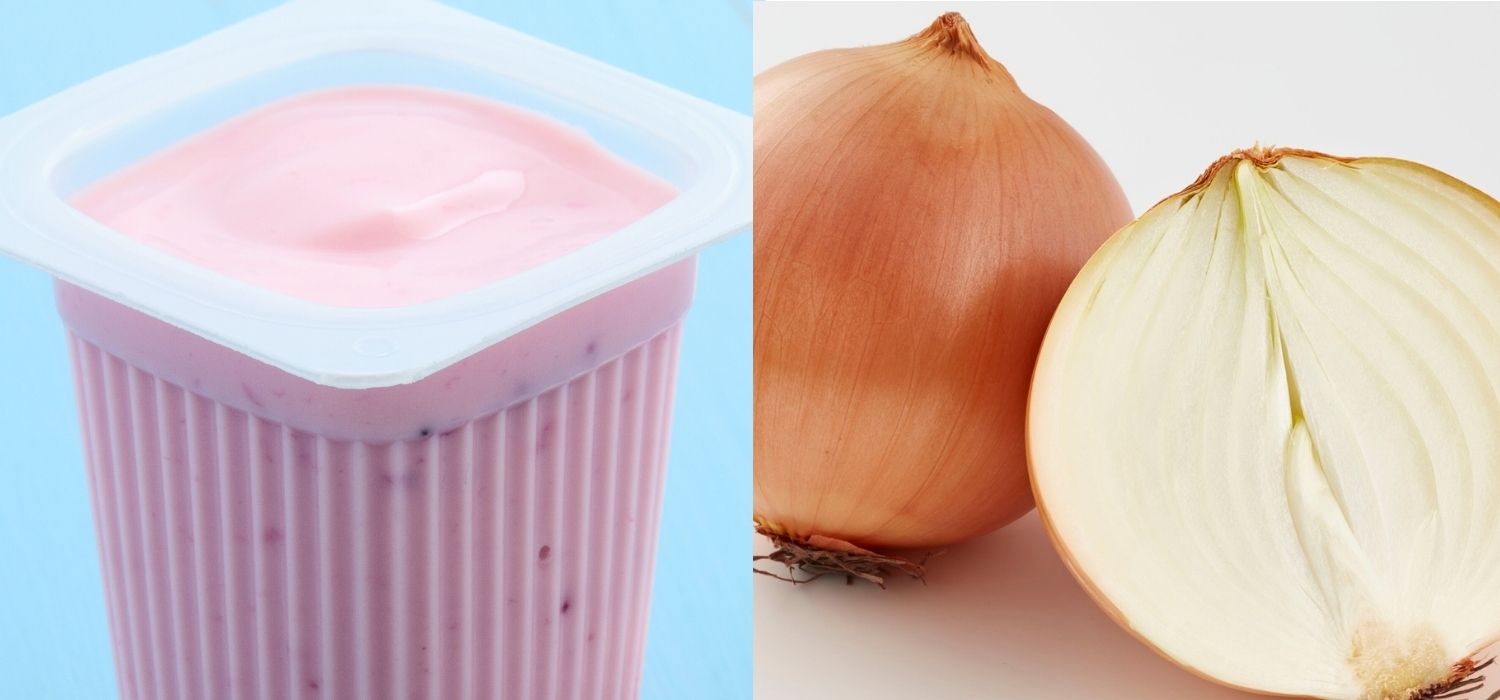
- Onions
- Leeks
- Asparagus
- Bananas (especially slightly green ones)
- Jerusalem Artichoke
- Dandelion Greens
- Barley
- Oats
- Apples
- Legumes
- Soybeans
- Whole Grains
What Are the Benefits of Prebiotics?

Essentially, prebiotics help the beneficial bacteria in your gut—including any probiotics you're taking—to thrive and do all the awesome things they're known to do.6
The benefits of taking prebiotics, according to science, include:
Improved Digestion
When you consume prebiotic-rich foods, like beans, oats, and barley, you're essentially creating a buffet for all the healthy bacteria in your gut.7 And when healthy bacteria flourish in the gut, they can help the gut to function more efficiently. Therefore, prebiotics can aid in overall digestion, particularly with the breaking down of complex carbohydrates.
Enhanced Nutrient Absorption
Digestion involves not only the breakdown of the food itself but also the extraction of the vitamins and nutrients within that food.8 So, when you consume prebiotics and support the flourishing of good bacteria within your gut, you can also enhance overall nutrient absorption. This helps you get the most out of your foods and reap the maximum benefits of a healthy diet.
Immune System Support
Believe it or not, your gut health is directly linked to the health of your immune system.9 That's because when healthy bacteria thrive in your gut, they crowd out the resources that infection-causing bacteria would need to grow. Not only that, but studies have shown that prebiotics influence cells directly responsible for your body's immune response, including TREG cells, effector T cells, and B cells.
Reduced Inflammation
Prebiotics help stimulate bacteria in your gut that produce short-chain fatty acids, like butyrate, which have been shown to have powerful anti-inflammatory effects, not just within the gut microbiome but throughout the body.10
More than that, one double-blind, placebo-controlled study found that people who took 5.5 grams of prebiotics a day saw an increase in IL-10 levels, a protein known for its anti-inflammatory properties.
Mental Health and Mood

Your gut is directly connected to your brain through what's called the "gut-brain axis."11 This direct line of communication not only allows your body to signal to your brain that you're full, but studies have shown that better gut health has been linked to better overall mental health, too.
In fact, when it comes to prebiotics, research has shown that prebiotics influence your gut microbiota in such a way that it improves mood, memory, learning, and the presentation of certain psychiatric disorders.
What Are Probiotics?
We've been talking a lot about how prebiotics benefit the growth and function of probiotics, and if you've found yourself thinking, "Shoot, I don't actually remember what probiotics are," don't worry, we've got you covered.
According to the World Health Organization (WHO) and Food and Agriculture Organization (FAO), probiotics are defined as "live microorganisms which when administered in adequate amounts confer a health benefit on the host."12
Basically, probiotics are beneficial bacteria that, when taken in sufficient quantities, provide health benefits.13 When it comes to the gut, a healthy probiotic population helps the gut to better digest food, for example. And a healthy probiotic population within the vagina helps fight off bad bacteria that lead to vaginal infections like bacterial vaginosis and vaginal yeast infections.
How Can I Get Probiotics?
This is where we’re going to clear up some misconceptions (along with the help of Dr. Jessica Younes, the Scientific Director of the International Probiotics Association).
While beneficial microbes can be found naturally in traditionally fermented foods like kimchi, sauerkraut, and kombucha, Dr. Younes says it's important to understand that these beneficial microbes are not the same as probiotics, even though many other sites confuse the two.14 Probiotics require specific strain identification and clinical evidence of health benefits.
This means that most foods, including fermented ones, do not contain probiotics unless specific strains have been intentionally added. This includes foods like:
- Probiotic yogurt (with added probiotic strains)
- Probiotic kefir (with added probiotic strains)
- Other foods fortified with specific probiotic strains
For this reason, Dr. Younes says that those experiencing certain health issues or looking for targeted support often find that the most effective way to consume probiotics is through a high-quality probiotic supplement.15 Some probiotic supplements are available as a powder, which can be added to foods like smoothies, but many find that the traditional probiotic capsule is the easiest form to remember to take.

What Are the Benefits of a Probiotic Supplement?
By taking a high-quality probiotic supplement, you're ensuring you're getting clinically studied strains at adequate dosages every day.16 Especially for those who are concerned with gut health or vaginal health, this can lead to tremendous benefits, including:
Restoring Gut Microbiome Balance
By taking daily probiotics, you're actively working to support the beneficial bacteria that live within your gut.17 Restoring the balance in your overall gut microbiome will help alleviate common digestive issues like bloating, gas, and constipation while also inhibiting the growth of pathogens inside the body, which could lead to more serious infections.
Alleviating Digestive Issues
Daily probiotic supplements can help anyone support their overall gut health, but they're especially helpful for those who suffer from irritable bowel syndrome (IBS) and diarrhea.18
That's because intestinal illnesses like IBS and even celiac disease are associated with microbial imbalances in the gut, and by taking probiotic supplements, you're actively supporting your body's beneficial bacteria levels each and every day.
Managing Lactose Intolerance
If you suffer from lactose intolerance, your body struggles to break down lactose within the gut.19 Probiotics have been shown to aid in lactose digestion, making it easier for those with lactose intolerance to enjoy dairy without all the usual discomfort.
Bolstering Women's Health
Vaginal health is closely related to probiotics from the Lactobacillus species, which help maintain the vagina's slightly acidic pH by secreting both lactic acid and hydrogen peroxide.20 With a slightly acidic pH level, the vagina can inhibit the harmful bacteria known to cause vaginal infections like yeast infections and bacterial vaginosis.
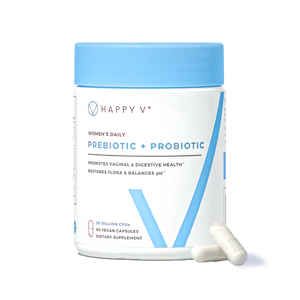
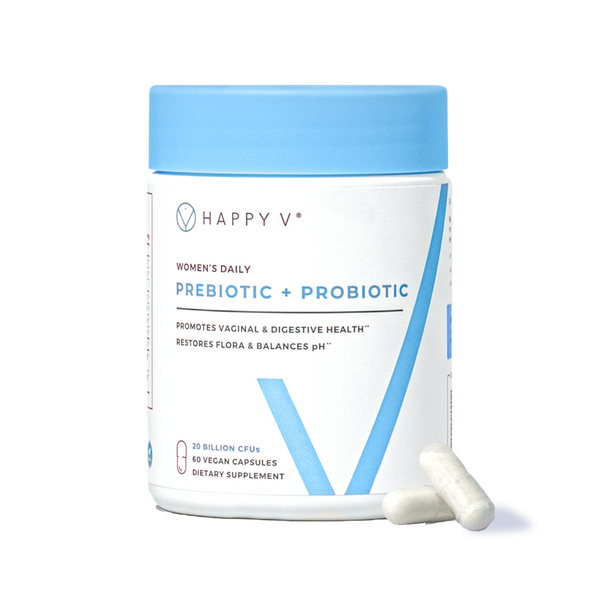
So while not all probiotics have an impact on vaginal health, those that contain clinically studied strains of Lactobacillus, like Happy V's Prebiotics + Probiotics, most certainly will.
If you want to read more about the connection between probiotics and overall vaginal health, you can find that here.
Are Prebiotics and Probiotics Safe?
For most people, prebiotics and probiotics are considered safe and well-tolerated, but like any supplement, there are some important considerations to keep in mind.
General Safety of Prebiotics
Prebiotics are generally recognized as safe since they're essentially dietary fibers found naturally in many foods.21 However, some people may experience mild digestive discomfort when first introducing prebiotics into their diet, particularly if they consume large amounts quickly. This can include symptoms like gas, bloating, or mild abdominal discomfort. These symptoms typically subside as your body adjusts, and starting with smaller amounts and gradually increasing your intake can help minimize any initial discomfort.
General Safety of Probiotics
Probiotics are also considered safe for most healthy individuals.22 In fact, they've been studied extensively and have a long track record of use. That said, when you first start taking a probiotic supplement, you might experience some temporary digestive changes as your gut microbiome adjusts to the influx of beneficial bacteria. This is usually a good sign that the probiotics are working, and any mild symptoms should resolve within a few days to a week.
Who Should Be Cautious?
While prebiotics and probiotics are safe for most people, certain individuals should consult with their healthcare provider before starting supplementation, especially:
- People with compromised immune systems (such as those undergoing chemotherapy, living with HIV/AIDS, or taking immunosuppressant medications)
- Individuals with severe illness or who are critically ill
- Those with central venous catheters
- People with short bowel syndrome
- Anyone with a history of probiotic-related infections
If you fall into any of these categories, your healthcare provider can help determine whether probiotics are appropriate for you and, if so, which strains and dosages would be safest.23
Quality Matters
When it comes to probiotic supplements, not all products are created equal. To ensure safety and effectiveness, look for supplements that:
- Are third-party tested for quality and purity
- Clearly list the specific probiotic strains with full genus, species, and strain designations (for example, Lactobacillus acidophilus LA-14®, not just "Lactobacillus")
- List CFU (colony-forming units) counts for each individual strain
- Come from reputable manufacturers who follow Good Manufacturing Practices (GMP)
- Provide transparency about storage requirements and expiration dates
At Happy V, we hold our Prebiotic + Probiotic to the highest standards in quality and science. In fact, unlike most supplement brands, we manufacture everything right in house, so we can ensure the quality of every single batch.
How Do I Make Sure I'm Getting the Right Level of Prebiotics and Probiotics Daily?
Prebiotics and probiotics have a symbiotic relationship, meaning they can work together to support your health. However, it's important to note that this relationship is strain-specific and compound-specific. Not all probiotics require prebiotics to be effective, and not all prebiotic-probiotic combinations have been scientifically validated.24
That said, if you are or have considered taking a daily probiotic to support gut health or vaginal health, a product that combines evidence-based prebiotic and probiotic combinations can help you achieve better results.
Certainly, you can get your daily prebiotics through prebiotic-rich foods we mentioned earlier, or you could take separate prebiotic and probiotic supplements. But if you really want to make things easy and ensure you're getting clinically studied combinations at effective dosages, consider a daily supplement that contains both, like Happy V's Prebiotic + Probiotic. It's one convenient doctor-formulated capsule that only uses strains with published evidence supporting their use for women's vaginal, urinary, and digestive health.
What Else Can I Do to Support Gut Health?

The gut microbiome is incredible. And incredibly complex. If you want to support your overall gut health, a daily prebiotic + probiotic is a great place to start. But you can also look at certain lifestyle choices, like:
Limiting Artificial Sweeteners
Eating a balanced diet full of prebiotic- and probiotic-rich foods will actively help support the levels of healthy bacteria within your gut microbiome.25 And limiting your sugar intake will actively help diminish the levels of bad bacteria within your gut by cutting off a favorite food supply.
Bad bacteria love sugar, and it can accelerate their growth. In fact, studies have shown that excessive sugar or starch consumption can lead to Candida dysbiosis, the most common culprit in vaginal yeast infections.
Bad bacteria don't just love natural sugars, like cane sugar, but artificial sweeteners like saccharine, aspartame, sucralose, neotame, acesulfame-K, and stevia. So check the labels of your favorite foods, especially if you're experiencing recurring yeast infections. You might be surprised by what you find on the label!
Limiting Processed Foods
Like sugar, consuming excess carbohydrates, especially refined starches and grains, can negatively impact the gut microbiota by feeding the bad bacteria living there. Opt for a diet rich in fruits, vegetables, legumes, and whole grains instead.
Avoiding Overuse of Antibiotics
Antibiotics don't just kill the bad bacteria in your body; they kill ALL the bacteria in your body, including beneficial bacteria.26 So while the occasional antibiotic prescription may be necessary to fight off a nasty infection, if you feel like you're being prescribed antibiotics frequently and for recurring infections, talk to your healthcare provider about alternatives that may not have such an effect on your overall microbiome.
Managing Stress
Stress is just bad news for the body. It affects not only the brain but the functioning of that brain-gut axis we mentioned earlier, which can alter digestive function and immune function.27
So, self-care is not just a social media buzzword. It's a really important healthcare practice, and your stress-relieving tools might differ from someone else's. Some people love to run, others love to meditate, and others find relief by losing themselves in a hobby. Play around and see what works best for you, and if you still feel like your stress is an issue, talk to a therapist or other healthcare provider to see how they might be able to help.
Staying Hydrated
When in doubt, drink more water. Especially if you're looking to support your overall gut health, one study conducted in 2022 found that water plays an important role in shaping the human gut microbiome.
One hack that we use at Happy V to up our water intake is to buy water bottles that measure using time instead of fluid ounces; that way, we know if we're on track for the day!
Final Thoughts
Prebiotics are a proven way to support the function of beneficial bacteria within your body, which can help promote gut health, vaginal health, mental health, and overall wellness. Especially if you're already incorporating probiotics into your daily routine, evidence-based prebiotic combinations can help you get closer to your health goals.
Prebiotics are available naturally through foods like oats, barley, and soybeans, but many find it easiest to use a probiotic supplement that also contains prebiotics. But of course, before incorporating any new supplement into your routine, even one as well-studied as probiotics, it's best to consult a healthcare provider. They'll help you choose the exact supplement that's right for you.
Keep the Conversation Going
- Visit our blog for more women's health tips.
- Join our private Happy V Facebook group to hear from others who've been there.
- Explore supplements designed to support your vaginal health journey.
Disclaimer: This blog is for informational and educational purposes only and is not intended to diagnose, treat, cure, or prevent any disease. Statements about supplements have not been evaluated by the Food and Drug Administration. For more information about vaginal infections, visit the CDC or speak to a licensed healthcare provider.