

- Fact Checked
- August 10, 2026
- 12 min read
How to Stop Hormonal Breakouts Before Your Period

- Written by Daniella Levy • Updated on September 09, 2026
- Updated on September 09, 2026

Table of Contents
Table of Contents
Every month, it’s the same story. About a week before your period, the same deep, painful bumps show up along your jawline or chin. You have tried every cleanser, every spot treatment, every trick the internet has offered… but nothing sticks. By the time you treat one breakout, the next cycle is already bringing another round.
If these breakouts feel like clockwork, it’s because they basically are. Hormonal acne is not random, and it is not a skincare problem you can solve with a better face wash. It is driven by the hormonal shifts happening inside your body in the days leading up to your period, and understanding that is the first step toward actually doing something about it.
Though attempts thus far may have felt unsuccessful, there are real, evidence-based ways to reduce hormonal breakouts naturally, without birth control and without harsh prescriptions. We’ll share those with you (and a whole lot more) so you can get a handle on hormonal acne, once and for all.
This post is for informational purposes only and does not constitute medical advice. See full disclaimer below.
Why You Break Out Before Your Period Every Month
Your menstrual cycle, which begins with menstruation, is exactly that: a cycle. It moves through four distinct phases, and each one changes what is happening with your skin.1 During the first half of your cycle (aka the follicular phase), estrogen is on the rise, and estrogen is basically your skin's best friend. It keeps oil production in check, strengthens your skin barrier, and calms inflammation. That’s why most women notice their skin looks its clearest around ovulation, when estrogen is at its highest.
Then… well… things shift. After ovulation, estrogen drops and progesterone takes over. Progesterone stimulates the sebaceous glands in your skin, which means more sebum sitting in your pores.2 And here is where it really gets tricky: as both estrogen and progesterone fall in the days before your period, androgens (like testosterone) become the loudest hormone in the room. Androgens are the main drivers behind acne. They crank up sebum production, encourage clogged pores, and ramp up inflammation. That excess oil and buildup also creates a welcoming environment for Cutibacterium acnes (aka the skin bacteria that thrives in clogged, oily pores and drives much of the redness and swelling you see in a breakout). These hormonal changes are sometimes lumped together under the umbrella of PMS, or premenstrual syndrome, but the skin-specific version has its own name: hormonal acne, or period acne. Your skin is essentially caught in the crossfire of a hormonal handoff gone wrong.
More oil, clogged pores, more inflammation. That trifecta is why you end up with those deep, painful bumps along your jawline, chin, and lower cheeks, exactly where your hormone-sensitive sebaceous glands are most concentrated.3 And though it can feel frustrating and isolating, you are far from the only one dealing with it. Studies suggest that 60 to 70 percent of women experience some form of premenstrual acne flare. So if you break out before your period every month, you are firmly in the majority.
How to Tell If Your Acne Is Hormonal
Not every pimple is hormonal, and knowing the difference saves you from throwing money at products that were never going to work.4
Unlike other forms of acne, hormonal acne tends to have these characteristics:
- It follows your cycle. The strongest sign is timing. If your breakouts consistently appear in the week or so before your period and improve after it starts, that pattern points to hormones.5
Menstrual Cycle Tracking
How Do You Track Your Menstrual Cycle And Why Does It Matter for Your Health?
- It shows up in specific areas. Hormonal acne tends to concentrate on the lower face, especially the jawline, chin, and sometimes the neck and lower cheeks. Forehead and nose breakouts are more commonly linked to other factors.6
- The bumps look and feel different. Hormonal breakouts often present as cystic or nodular acne: deep, tender cysts and nodules that sit under the skin and do not come to a head easily.7 You might also notice inflamed papules and pustules mixed in. Surface-level whiteheads and blackheads are more typical of bacterial or product-related acne, though they can show up alongside hormonal breakouts too.
- Topical products alone do not clear it. If you have tried every serum and spot treatment without lasting results, that is a clue that the issue is coming from inside your body, not the surface of your skin.
What Makes Hormonal Breakouts Worse
While hormones may set the stage for your breakouts, there are several everyday factors that can make the flare-up significantly worse.8 These include:
Blood Sugar and Insulin Spikes
That afternoon cookie or sugary iced coffee might feel harmless, but here is what is happening behind the scenes: high-glycemic foods (think: white bread, sweets, and processed carbs) spike your blood sugar, which triggers a rush of insulin. And insulin tells your body to produce more androgens, which means more oil, which means more breakouts. The diet-acne connection is not just internet folklore. It is a real hormonal pathway, and it hits hardest in the week before your period when your skin is already on the edge.9
Chronic Stress
Stress raises cortisol, and cortisol amplifies androgen production while increasing skin inflammation.10 If you have noticed that your pre-period breakouts are worse during stressful months, that is not a coincidence. Your stress hormones and your reproductive hormones are in constant conversation, and when one is off, the other feels it.
Poor Sleep
Running on low sleep? Your skin knows. Poor sleep throws off hormone regulation and pushes cortisol higher, which makes everything we just talked about worse.11 Your skin also does most of its repair work while you are sleeping, so cutting that short weakens your skin's barrier, keeps inflammation around longer, and makes breakouts both more likely to show up and slower to fade.
Dairy and Highly Processed Foods
This one is tough to hear if you love cheese (and who doesn’t?), but dairy has been connected to acne in multiple studies, likely because of the hormones and growth factors naturally present in milk.12 Processed foods are another culprit. They drive inflammation throughout your body, which can turn a mild pre-period flare into something much more noticeable. Of course, you don’t need to swear off everything you enjoy, but being a little more intentional about your diet during the second half of your cycle can go a long way.
Cycle-Aware Skincare: Working With Each Phase, Not Against It
Your skin's needs shift as your hormones do, so a one-size-fits-all skincare routine will always feel like it is fighting an uphill battle. A personalized, cycle-aware approach adjusts to what your skin actually needs in each of the four phases:
- Menstrual phase. Estrogen and progesterone are both at their lowest, and your skin can feel more reactive and dehydrated. Lean on hydrating ingredients, a gentle cleanser, and lightweight moisturizers rather than anything stripping.
- Follicular phase. As estrogen rises, your skin barrier strengthens and oil production evens out. This is a good window for gentle exfoliation, which helps clear away dead skin cells, along with antioxidants like vitamin C, which support collagen and help fade any lingering marks from the last flare.
- Ovulatory phase. Estrogen peaks and your skin is typically at its clearest and most resilient. Consistent, acne-friendly skincare here (rather than switching things up) helps maintain that.
- Luteal phase. Progesterone and then androgens take over, oil production ramps up, and this is when flare-ups are most likely. Shift toward oil-regulating treatments, keep exfoliation gentle rather than aggressive, and protect your skin's barrier instead of over-treating it.
And whatever phase you’re in, remember that sunscreen stays non-negotiable, especially if you're using exfoliating acids or retinoids, since both increase your skin's sensitivity to sun.
Natural Hormonal Acne Treatment for Women
If topical treatments alone have not cut it, that is because the problem was never on the surface to begin with.13 The most effective hormonal acne treatment for women naturally starts from the inside, by supporting the hormonal and metabolic systems that are driving the breakouts in the first place.
Proven practices include:
Stabilize Your Blood Sugar
Like we said above, you do not need to overhaul your entire diet. Small shifts make a real difference, like choosing sweet potatoes over white bread, pairing your carbs with protein or healthy fats, and cutting back on added sugar, especially in the week before your period. A low-glycemic diet keeps insulin steady, which keeps androgens quieter and gives your skin less to react to.14
Support Your Gut Health
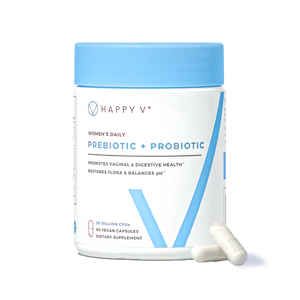
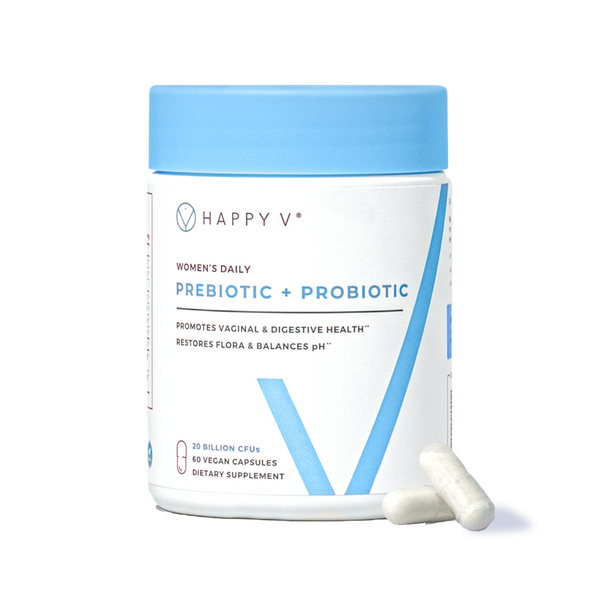
Your gut microbiome houses a group of bacteria called the estrobolome that helps regulate how your body processes and clears estrogen.15 When that gut balance is off, excess hormones can recirculate instead of being cleared out, and the result often shows up on your face. A daily Prebiotic + Probiotic with clinically studied Lactobacillus strains, like Happy V’s, supports the microbial balance your body needs to metabolize hormones efficiently. Pair it with a fiber-rich diet, and you are giving your system the best shot at processing those hormones before they wreak havoc on your skin.
Manage Stress Before Your Luteal Phase
You can’t always avoid stress (though it would be nice), but you can get ahead of it. Since cortisol directly amplifies the hormonal shifts behind pre-period breakouts, building even a small stress management habit into your routine before the luteal phase hits can change how your skin responds.16 A daily walk, ten minutes of deep breathing, yoga, journaling, whatever genuinely brings your nervous system down a notch. It doesn’t need to be fancy. It just needs to be consistent.
Prioritize Sleep and Hydration
We know "get more sleep" is advice you have heard a thousand times. But when it comes to your skin, it really does matter. Seven to nine hours of adequate sleep gives your body the time it needs to balance hormones, calm inflammation, and actually repair your skin. Staying on top of hydration, both what you drink and the products you use, supports that same barrier repair.17
Consider Targeted Supplements
If you’re looking for the best supplements for hormonal acne, the key is choosing ingredients that go after the root cause: hormonal imbalance.
Ingredients with clinical evidence behind them include:
-
Myo-inositol and D-chiro-inositol. Inositols help improve insulin sensitivity and reduce androgen levels, both of which directly influence sebum production and hormonal acne.18 The clinically studied 40:1 ratio is considered the gold standard for hormonal balance support. For a deeper look at how inositols work, our guide on Myo-Inositol and D-Chiro-Inositol covers the science in detail.
- DIM (diindolylmethane). DIM helps your body break down estrogen into its more beneficial forms rather than the forms that promote inflammation and hormone imbalance. Think of it as helping your body take out the hormonal trash more efficiently.
- Zinc. Zinc has anti-inflammatory and anti-androgenic properties, and lower zinc levels have been associated with more severe acne. It supports skin healing and helps regulate the immune response that drives inflamed breakouts.
- Vitamin D. Low vitamin D has been linked to worse acne outcomes, and the frustrating part is that many women are deficient without knowing it. It plays a role in immune regulation and skin health, too, so if you have not had your levels checked recently, it’s worth asking your provider about.19
Happy V's Ovarian Support combines these clinically studied ingredients into one daily supplement. It delivers the 40:1 inositol ratio along with DIM, zinc, selenium, CoQ10, folate, and BroccoRaphanin® broccoli extract, all working together to support hormonal balance, cycle regularity, and healthier skin from the inside out.

Ovarian Support
Promotes cycle regularity, hormone balance, and reproductive wellness.
Alongside these strategies, some women also lean on topical options like benzoyl peroxide or azelaic acid to manage active breakouts, or glycolic acid (an AHA) to smooth texture between flares. A dermatologist can also prescribe topical retinoids like tretinoin or adapalene, which help prevent clogged pores from forming in the first place.
When to Talk to Your Healthcare Provider
These natural strategies work for a lot of women, but sometimes you need a professional in your corner. It is worth booking time with a dermatologist or OB/GYN if:
- Your acne is cystic, severe, or starting to leave scarring behind.
- You have been consistent with lifestyle changes and supplements for three to four months without improvement.
- You are also dealing with irregular periods, excess facial hair, or unexplained weight changes, which can point to an underlying endocrine condition like PMOS (formerly PCOS or polycystic ovary syndrome).
- You want a clearer picture of what is actually driving your breakouts. A provider can run blood tests to check your androgen levels, sex-hormone binding globulin (SHBG), and other markers of hormonal imbalance, which takes the guesswork out of treatment.
- You are curious about prescription-strength options. A dermatologist or OB/GYN can walk you through anti-androgens like spironolactone, oral antibiotics, isotretinoin for more severe cases, or birth control pills (oral contraceptives), and help you weigh the benefits and tradeoffs against your specific hormone panel and health history.
- The breakouts are genuinely affecting how you feel about yourself. You deserve to feel comfortable and confident in your own skin.
A dermatologist or gynecologist can dig deeper with hormone panels, check for underlying endocrine conditions, and help you build a plan that works alongside everything you are already doing. You aren’t alone in this. There are professionals with experience helping women just like you get control of their hormonal acne.
Keep the Conversation Going
- Visit our blog for more women's health tips.
- Join our private Happy V Facebook group to hear from others who've been there.
- Explore supplements designed to support your vaginal health journey.
Disclaimer: This blog is for informational and educational purposes only and is not intended to diagnose, treat, cure, or prevent any disease. Statements about supplements have not been evaluated by the Food and Drug Administration. For more information about vaginal infections, visit the CDC or speak to a licensed healthcare provider.