

- Fact Checked
- May 05, 2026
- 10 min read
How To Stop Facial Hair Growth In Women Naturally: PCOS Hirsutism Guide 2026

- Written by Daniella Levy • Updated on June 04, 2026
- Updated on June 04, 2026

Table of Contents
Table of Contents
If you have PCOS (polycystic ovary syndrome), you already know the condition comes with a long list of frustrating symptoms. Think: irregular periods, weight gain, hair loss on your scalp, and unwanted hair on your face. Added together, the symptoms of PCOS can feel relentless, and they affect so much more than your physical health.
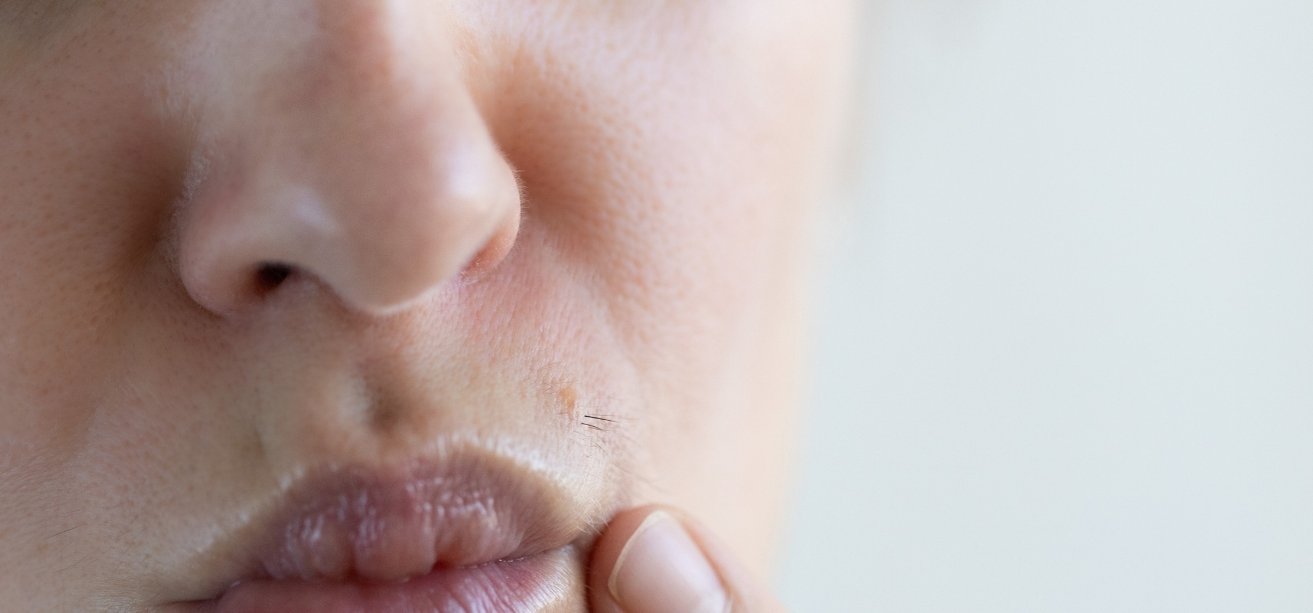
Facial hair growth is one of the most visible signs of the condition, and it’s also one of the most emotionally difficult to navigate. The clinical term is hirsutism, and its prevalence is striking, affecting an estimated 65-75% (!) of women with PCOS. So if you are feeling alone in this issue, you’re not! And the good news is that excess hair growth driven by PCOS is manageable, and the same lifestyle changes that reduce facial hair also protect your long-term health in meaningful ways. That’s what this guide is dedicated to.
This post is for informational purposes only and does not constitute medical advice. See full disclaimer below.
What Causes Facial Hair Growth In Women With PCOS?
Understanding the cause of PCOS-related hirsutism starts with understanding what PCOS actually does to your hormones.1
While there is no one exact cause of PCOS (it’s of genetic, metabolic, and environmental factors), one thing we do know for sure is its effects on levels of androgen (or stereotypically “male” hormones like testosterone and DHEA-S).
Women with PCOS experience hyperandrogenemia, meaning those androgen levels are high.2 When androgen levels rise, they tell hair follicles in areas like the chin, upper lip, jawline, chest, to produce coarse, dark hair instead of the fine vellus hair that's normally found there. This leads to body and facial hair that follows a more male-pattern distribution.
Because hirsutism is connected to the underlying driver of all PCOS symptoms, it commonly occurs alongside:
- Acne (another androgen-driven symptom)
- Hair loss, particularly scalp thinning or alopecia at the crown
- Irregular periods or absent menstrual cycles, a hallmark of disrupted ovulation
- Weight gain, particularly around the abdomen
- Acanthosis nigricans, or darkened skin at the neck or underarms that’s associated with insulin resistance
If you ever experience hirsutism alongside elongation of the clitoris or rapid voice changes, see your doctor for evaluation right away to rule out androgen-secreting tumors and health conditions beyond PCOS.
Diagnosis and Evaluation: What To Expect
Hirsutism is so common that it can actually be rated on what’s called the Ferriman-Gallwey (mFG) scale.3 This system rates excess hair growth across nine body areas on a scale of 0 to 4. A total score of 8 or above is considered clinically significant in most populations.
This rating is done by a doctor, and their evaluation will typically also include asking about your medical history (including family history of PCOS or androgen excess), performing a physical exam, and taking some blood tests.
Blood hormone levels your healthcare provider may check include:
- Early morning testosterone level and DHEA-S
- 17-hydroxyprogesterone (to screen for adrenal hyperplasia)
- Glucose and insulin levels (to assess insulin resistance)
- Thyroid function tests (since thyroid dysfunction can contribute to hair and menstrual changes)
- Urine-free cortisol or a dexamethasone suppression test if Cushing's syndrome is suspected
- A corticotropin stimulation test to evaluate adrenal function when NCAH is a possibility
If all this feels a little confusing, don’t worry. Your doctor will order the tests they feel are necessary based on your health history and physical exam, and will be there to answer any questions you may have.
They may also perform an ultrasound to check for ovarian cysts and assess your ovaries more broadly. Androgen-secreting tumors are rare but need to be ruled out, especially when hormone levels are significantly elevated, and an ultrasound can help doctors do that.
While a PCOS diagnosis comes with a variety of routine check-ups and check-ins with your doctor, if you're experiencing facial hair that appears suddenly, worsens rapidly, or comes with voice changes or clitoromegaly, call your provider to be seen between regular appointments.4
Long-Term Health Considerations
Most people view hirsutism as just a cosmetic concern, but it’s not. It’s a signal that something larger is happening hormonally, and the underlying health conditions driving it carry real long-term risk factors worth knowing about.5
Women with PCOS and androgen excess are at increased risk for:
- Type 2 diabetes and pre-diabetes, with chronic insulin resistance being the common thread
- Gestational diabetes, since PCOS increases the risk during pregnancy
- Cardiovascular disease and high blood pressure, as elevated androgens and metabolic dysfunction both contribute
- Cholesterol abnormalities, particularly low HDL and elevated triglycerides
-
Metabolic syndrome, which is a cluster of health problems (think: high blood pressure, high blood sugar, abnormal cholesterol, and excess abdominal weight) that significantly raises cardiovascular disease risk.
You can read more about metabolic syndrome in out separate blog post, Metabolic Syndrome Diet: What to Eat, What to Avoid, and How to Start
- Endometrial cancer. Irregular ovulation means the uterine lining isn't shed regularly, increasing risk over time
- Sleep apnea, which more common in women with PCOS, particularly those with obesity or insulin resistance
- Bone health concerns, since hormonal imbalances can affect bone density long-term
- Mental health challenges, especially depression and anxiety
This means that managing hirsutism through hormone-balancing strategies isn't just about how you look or feel today. It's also a form of long-term health protection.
The Psychological and Emotional Impact of Hirsutism
Wanting to look your best is often seen as vanity, which means the psychosocial effects of hirsutism are too often minimized, despite their impact on daily life.6
Research consistently shows that women with PCOS and unwanted hair growth report higher rates of anxiety, depression, and reduced quality of life compared to those without visible androgen-driven symptoms. The emotional stress of managing something as visible as facial hair compounds the already real burden of living with a chronic condition.7
Never forget that mental health is part of overall women's health. If hirsutism is affecting your quality of life, that's a clinically relevant piece of information. Telling your healthcare provider about the emotional difficulty you're experiencing, not just the physical symptoms, helps them see the full picture to help you better manage all aspects of your PCOS.
7 Natural Ways To Reduce Facial Hair Growth In Women With PCOS
Because hirsutism is driven by hormonal imbalance and insulin resistance, the most effective natural strategies target those root causes directly.8
Not all natural strategies have been proven effective, though. Here are seven lifestyle changes supported by research.
1. Prioritize Low-Glycemic, Anti-Inflammatory Eating
Stabilizing your blood sugar is one of the most direct levers you have for reducing the hyperinsulinemia that drives ovarian androgen production.9 A diet built around low-glycemic foods (think: vegetables, legumes, whole grains, lean proteins, and healthy fats) reduces insulin spikes and improves glucose metabolism.
Limiting refined carbohydrates and added sugars also supports healthy cholesterol levels and lowers cardiovascular disease risk over time.10 A 2025 systematic review in Nutrients confirmed that low-glycemic eating improves insulin sensitivity and hormone levels in women with PCOS, with downstream effects on acne and hirsutism.
2. Support Insulin Sensitivity With Inositol
Inositol (specifically myo-inositol and D-chiro-inositol in a 40:1 ratio) is one of the most studied natural options in PCOS healthcare. A 2024 systematic review and meta-analysis in the Journal of Clinical Endocrinology & Metabolism found that inositol may improve metabolic markers and support ovulation in women with PCOS. By improving how cells respond to insulin, inositol can reduce the hormonal cascade driving androgen excess and unwanted hair growth.11
Happy V Ovarian Support includes myo-inositol and D-chiro-inositol at that clinically studied 40:1 ratio, along with zinc (for androgen balance) and chromium (for blood sugar and glucose support). It’s doctor-formulated specifically with PCOS and long-term hormonal health in mind.
 New
New
Ovarian Support
Promotes cycle regularity, hormone balance, and reproductive wellness.
3. Add Spearmint Tea To Your Daily Routine
Spearmint tea has demonstrated anti-androgenic properties in clinical research.12 A randomized controlled trial found that women with PCOS who drank spearmint tea twice daily for 30 days had significant reductions in free and total testosterone compared to a placebo group. Notably, though, while that study noted that hormone levels improved within a month, another found that visible changes in hirsutism took longer, typically three months or more. A 2024 narrative review of herbal remedies for hirsutism noted that a three-month trial combining spearmint and green tea capsules resulted in a 25 to 50% reduction in hair growth scores.
4. Switch To Strength Training Over High-Intensity Cardio
Exercise improves insulin sensitivity and can reduce androgen levels, but the type of exercise matters.13 While all forms of exercise can improve your health in some way, for hormonal balance specifically, resistance training and moderate-intensity movement are better choices than extreme HIIT workouts, which can spike cortisol and worsen the hormonal picture.
A Cochrane review found that lifestyle changes, including exercise, significantly reduced both testosterone and Ferriman-Gallwey hirsutism scores in women with polycystic ovary syndrome, while also supporting weight loss that further improved insulin resistance.14 Aim for 150 minutes of moderate activity per week, including two to three strength sessions.
5. Manage Cortisol Through Stress Reduction
Chronic stress raises cortisol, which worsens insulin resistance and increases androgen production from the adrenal glands.15 A 2023 review in BMC Endocrine Disorders highlighted stress management as a core component of PCOS care, noting that poor mental health outcomes can blunt the effectiveness of diet and exercise changes. Yoga, meditation, deep breathing, and consistent daily routines are all evidence-informed tools for cortisol regulation.
6. Prioritize 7 To 9 Hours Of Sleep
Poor or insufficient sleep disrupts insulin signaling, raises cortisol, and is associated with worsening metabolic and hormonal symptoms in PCOS, including sleep apnea, which is already more common.16 Keeping a consistent sleep schedule supports the hormonal rhythms that keep symptoms in check.
7. Reduce Exposure To Endocrine Disruptors
Endocrine-disrupting chemicals (or EDCs) like BPA, phthalates, and parabens, which are found in plastics, personal care products, non-stick cookware, and scented household items, can interfere with hormone signaling and contribute to the hormonal imbalances behind PCOS symptoms.17
Switching to glass or stainless steel containers for water bottles and work lunches, choosing fragrance-free personal care products, and reading ingredient labels are practical steps that support your broader hormonal environment.
Medical Treatment Options: What's Available
If lifestyle changes aren't enough to improve hormonal balance and symptoms like hirsutism, several medical treatments have been shown to be effective, though all come with a range of side effects, which makes discussing with your healthcare provider critical.18
These treatment options include:
- Oral contraceptives (aka birth control pills). They reduce ovarian androgen production and increase SHBG, lowering free testosterone, making them one of the most commonly prescribed first-line options
- Spironolactone, an anti-androgen that blocks androgen receptors and reduces 5-alpha-reductase activity. It’s frequently used alongside an oral contraceptive
- Antiandrogens like flutamide and finasteride, which are additional options in more resistant cases
- Metformin, an insulin-lowering medication that addresses the hyperinsulinemia driving ovarian androgen production. It also reduces the risk of type 2 diabetes and gestational diabetes in women with PCOS
- GnRH agonists. These are used in more severe cases to suppress ovarian hormone production
- Eflornithine, a topical prescription cream that slows facial hair growth directly at the hair follicle level
- Laser hair removal and electrolysis, which is effective for reducing visible unwanted hair. Without underlying hormone management, though, hair may regrow
Keep the Conversation Going
- Visit our blog for more women's health tips.
- Join our private Happy V Facebook group to hear from others who've been there.
- Explore supplements designed to support your vaginal health journey.
Disclaimer: This blog is for informational and educational purposes only and is not intended to diagnose, treat, cure, or prevent any disease. Statements about supplements have not been evaluated by the Food and Drug Administration. For more information about vaginal infections, visit the CDC or speak to a licensed healthcare provider.