

- Fact Checked
- September 23, 2026
- 14 min read
How to Get Rid of BV Biofilm: Breaking Down the Barrier

- Written by Daniella Levy • Updated on September 23, 2026
- Updated on September 23, 2026

Table of Contents
Table of Contents
If you've ever finished a full course of antibiotics for BV only to see symptoms return a few weeks later, you're not alone and you didn't do anything wrong. There is actually a biological reason recurrent BV is so common (as high as 80%!), and it comes down to something called a biofilm.
Biofilm is basically bacteria going into survival mode. Instead of floating around as individual, exposed cells, microorganisms link up, build a shared shelter, and settle in for the long haul. That shelter is remarkably good at blocking out anything trying to get rid of it, including those antibiotics you took. While biofilms are tricky to break, they're not impenetrable, and science has shown us how.
This post is for informational purposes only and does not constitute medical advice. See full disclaimer below.
What Is a Vaginal Biofilm?
A biofilm forms when bacterial cells stop drifting around on their own (a state scientists call planktonic) and instead attach themselves to a surface, in this case, the vaginal wall. Once they are anchored, those bacterial cells start producing a sticky, slime-like substance known as EPS, or extracellular polymeric substances. This EPS layer is made up of polysaccharides, proteins, and even fragments of extracellular DNA, and it hardens into a kind of shield around the whole colony.
While we're focusing on biofilms in the vagina, biofilms form elsewhere in the body, too. In fact, biofilm formation is one of the most common survival strategies in microbiology, and it shows up almost everywhere microorganisms live, from both gram-positive bacteria and gram-negative bacteria alike. You know the tooth plaque (also called dental plaque) your dentist scrapes off your teeth every 6 months? That's actually a biofilm! It's linked to the same bacterial process behind conditions like periodontitis and tooth decay. Contact lenses and urinary catheters can develop a similar coating if they aren't cleaned properly, and it's the same defense strategy behind stubborn infections like otitis media and osteomyelitis elsewhere in the body.
Inside a biofilm, bacteria don't act the same way they do when they're free-floating (or "planktonic"). Their phenotype (aka their behavior and characteristics), actually shifts once they're embedded in this three-dimensional structure and settle into a fixed, sessile lifestyle. They form microcolonies, communicate through a chemical signaling process called quorum sensing, and even share genetic material through gene transfer, which can spread antimicrobial resistance from one bacterial cell to the next. All of this is kind of cool and kind of freaky at the same time, right?
Why Gardnerella Biofilm Causes Recurrent BV
Bacterial vaginosis happens when the vagina's naturally protective bacteria (which are mainly different strains of Lactobacillus) get crowded out by an overgrowth of other bacteria, most commonly Gardnerella vaginalis.
Gardnerella is considered the architect of the BV biofilm. It's usually the first to attach to the vaginal wall, and once it's there, it lays the groundwork for other bacteria to move in and build onto that same structure. This is very different from a typical infection caused by a single type of bacteria. A BV biofilm is more like a mixed community, with several species living together inside the same protective matrix, which makes it more resilient and harder to treat than an infection from just one type of pathogen.
This is also why standard antibiotics can feel like they work at first and then fail a few weeks later. Antibiotics are highly effective against planktonic cells, or the loose, unprotected bacteria floating in the vaginal environment. But once bacteria are sealed inside a biofilm matrix, the antibiotic often can't penetrate deep enough to reach them, even if taken correctly for the prescribed length of time. The infection appears to clear because the exposed, planktonic bacteria die off, but the fortified colony underneath survives and starts to regrow once treatment stops. That's the recurrence cycle in a nutshell.
Biofilms are stubborn by design. Rather than bacteria simply floating around in the vagina, a BV biofilm allows Gardnerella and other BV-associated bacteria to stick together along the vaginal wall within a protective matrix. That can make them harder to eliminate completely, and may be one reason BV is so notorious for coming back.
How to Get Rid of Vaginal Biofilm
So, what can you actually do about vaginal biofilm? For recurrent BV, your provider may recommend a strategy that tackles both the current overgrowth and the vaginal environment that allows BV-associated bacteria to keep taking over. That may look something like this:
- Talk to your provider about whether boric acid has a role. Boric acid vaginal suppositories have a long history of use for certain recurrent vaginal infections, and emerging research suggests they may also have activity against BV-associated biofilms. Rather than thinking of boric acid as something that simply "breaks open" a biofilm, think of it as a tool that may make the vaginal environment less hospitable to the bacteria involved in BV and potentially interfere with the biofilm itself. It's sometimes incorporated into treatment plans for recurrent BV, but it isn't a replacement for antibiotics when antibiotics are needed.
- Treat the BV itself. If you have an active infection, your provider may prescribe an antibiotic such as metronidazole or clindamycin. With recurrent BV, treatment may look different from a one-time infection, so resist the urge to keep repeating the same at-home routine every time symptoms return.
- Finish the full treatment plan, even if you feel better. That fishy odor or unusual discharge may disappear before treatment is finished, but feeling better doesn't necessarily mean the underlying bacterial imbalance has been fully addressed. Follow the entire course your provider recommends rather than stopping as soon as symptoms improve.
- Focus on rebuilding a Lactobacillus-friendly microbiome. A healthy vaginal microbiome is typically dominated by protective Lactobacillus bacteria, which produce lactic acid and help maintain the acidic vaginal environment that makes it harder for BV-associated bacteria to take over. Supporting that environment may be an important piece of the recurrence puzzle.
And that last piece matters because treating BV and supporting the microbiome aren't quite the same thing. Antibiotics target the bacterial overgrowth behind the current infection; microbiome support is about helping restore the balance you want afterward.
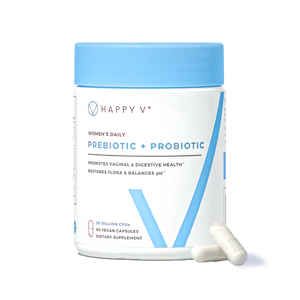
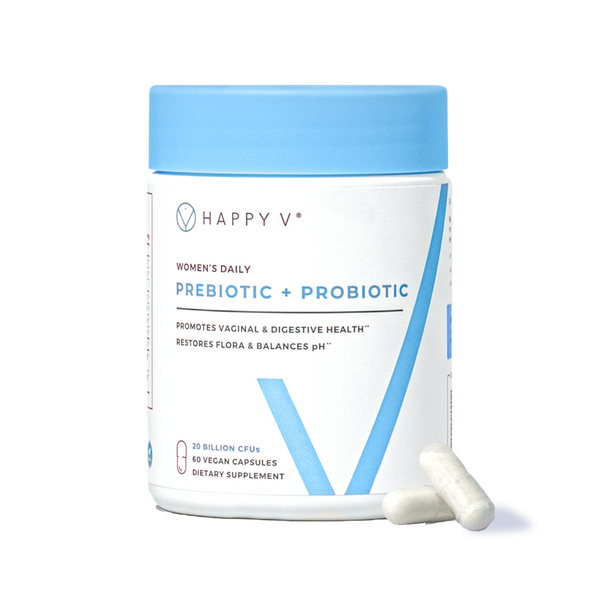
That's where Happy V Prebiotic + Probiotic comes in. It combines seven clinically studied probiotic strains selected to support vaginal health with prebiotic support to help beneficial bacteria thrive. Rather than simply focusing on the infection you have today, it's designed to support a Lactobacillus-friendly vaginal microbiome and help maintain healthy vaginal flora over time.
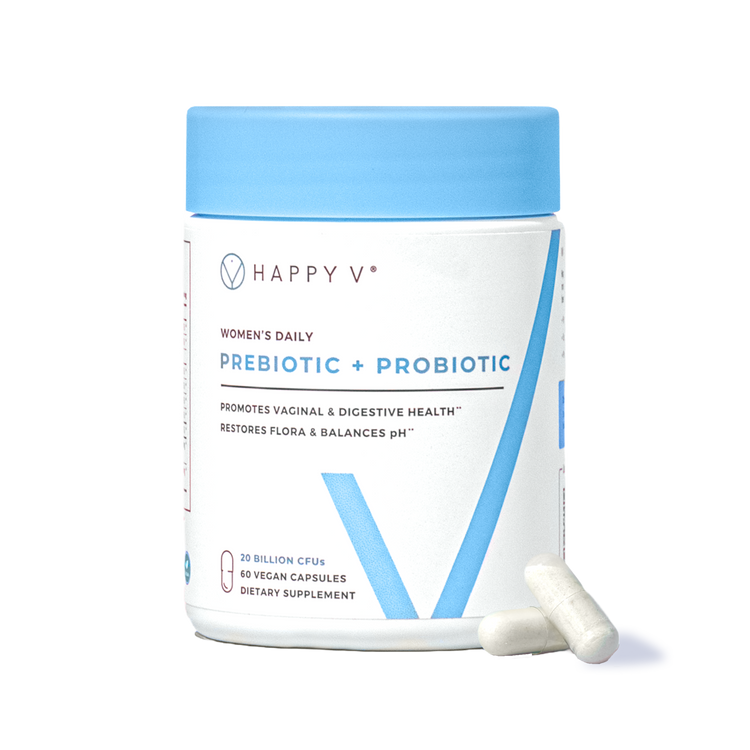 Bestseller
Prebiotic + Probiotic
Maintains vaginal pH and restores gut health.
Deep Dive: How Biofilms Actually Work
You already have what you need to act on. But if you're the kind of person who likes to fully understand what's happening in your own body, or you want to walk into your next doctor's appointment able to actually explain why standard antibiotics haven't been cutting it, it helps to know the science behind biofilms.
It's also worth knowing this isn't some strange quirk unique to BV. Like we said, biofilms are one of the most common survival strategies in the entire microbial world, showing up in medicine, nature, and everyday life far beyond the vagina.
None of this changes what you need to do about BV, it's simply the deeper explanation for why biofilms are such a formidable opponent.
Built Layer by Layer
Biofilm formation happens in stages, and each one has a name:
- Initial attachment: a few free-floating, planktonic cells settle onto a surface
- Irreversible attachment: if conditions are favorable, those cells lock in and stop drifting away
- Maturation: the colony grows through cell-to-cell signaling, forming a microcolony and eventually a full biofilm matrix
- Dispersion and detachment: parts of the mature biofilm eventually release cells, which travel elsewhere and can start the whole cycle over again
Two mechanisms drive a lot of this: quorum sensing, where bacteria essentially count their own numbers through chemical signals so they know when there are enough of them to start acting as a coordinated group, and horizontal gene transfer, where bacteria pass along useful traits, like resistance to a treatment, directly to their neighbors instead of only to their own offspring. Together, that's how a biofilm can adapt so quickly once it takes hold.
What's Actually Inside the Matrix
The slime holding a biofilm together, the EPS, is more like a woven structure than a simple coating. It's built from a polysaccharide matrix, proteins, lipids, and extracellular DNA, all reinforced by fimbriae and flagella, which act like tiny anchors and paddles. Water channels run through the structure so nutrients can reach cells buried deeper inside. Even small differences in cell surface hydrophobicity (or how much a bacterial cell "sticks" to a given surface) and the presence of conjugative plasmids (which are small loops of shareable DNA) affect how sturdy the whole thing becomes.
Broken down piece by piece, a mature biofilm's extracellular polymeric substances (EPS) matrix is really a combination of several building blocks working together:
- Polysaccharide matrix: the exopolysaccharides that make up the bulk of the sticky scaffolding
- Proteins: help cells adhere to each other and to the surface underneath
- Lipids: contribute to the matrix's structure and help protect it from moisture loss
- Extracellular DNA and nucleic acids: strengthen the matrix and can be shared between bacterial cells
- Fimbriae, pili, and flagella: hairlike and whiplike structures bacteria use to anchor themselves and move before they settle in
- Water channels: microscopic channels that shuttle nutrients to microcolonies buried deep inside the structure
Together, these components are what make a biofilm matrix so much sturdier than any single bacterial cell could be on its own.
The Conditions That Help Biofilms Take Hold
Biofilms don't form everywhere equally. They tend to thrive when pH, temperature, nutrient levels, and oxygen levels line up in their favor. Oxygen limitation in particular can trigger higher EPS production, pushing bacteria toward biofilm formation as a survival strategy rather than staying planktonic.
Physical factors matter, too. Flow velocity, surface roughness, ionic strength, existing cell surface structures, and even a microscopic layer called a conditioning film that forms on a surface before bacteria ever arrive can all make a surface more or less inviting to biofilm formation. The vaginal environment, with its own pH, temperature, and surface characteristics, is simply one more setting where these conditions can line up in favor of biofilm growth.
How Bacteria "Talk" and Adapt Inside a Biofilm
Bacteria inside a biofilm communicate and adapt in several distinct ways:
- Quorum sensing: cells release and detect signaling molecules, including autoinducers like N-acyl homoserine lactones (AHLs) and competence stimulating peptides (CSPs), that let the whole colony coordinate behavior once enough cells are present
- Horizontal and lateral gene transfer: bacteria swap genetic material using structures like conjugative F-pili or by releasing membrane vesicles
- Intercellular communication: signals travel between cells partly through nutrient gradients within the biofilm
- Plasmids: small loops of shareable DNA that move traits, including resistance, from one bacterial cell to another
This kind of communication and gene sharing is a major reason biofilm bacteria can adapt so quickly.
Why Biofilms Are So Resistant to Treatment
A few different mechanisms stack up to make biofilms tough to clear:
- Persister cells: some bacteria go dormant, essentially waiting out an antibiotic attack instead of actively resisting it
- Resistance plasmids and gene transfer: genetic material, sometimes carried by bacteriophages or involving CRISPR-Cas systems, can spread antimicrobial tolerance through the colony
- Antimicrobial peptides: bacteria may produce their own defensive compounds
- Exopolysaccharides and the extracellular matrix: physically block many treatments from reaching their target
- Medical device colonization: biofilms forming on antibiotic-impregnated materials or implants are a persistent problem in healthcare settings, which is part of why researchers are increasingly interested in enzyme-based biofilm degradation as a way to break the matrix down rather than relying on antibiotics alone
Biofilms Beyond the Vagina
Biofilms are one of the oldest and most widespread survival strategies in microbiology, and they show up far outside the context of BV. Biofilms turn up in far more places than the vagina, in settings ranging from pristine wilderness to plumbing, with some of the most common being:
- Riverbeds and soil: natural surfaces where biofilm-coated rocks are common, and where beneficial soil bacteria like Rhizobium leguminosarum and Sinorhizobium meliloti form root-nodule biofilms that help fix nitrogen for plants
- Hot springs: including the geothermal pools of Yellowstone National Park, where heat-tolerant microorganisms build some of the most extreme biofilms known
- Water systems: potable and industrial water system piping and slow sand filters, where polyphosphate accumulating organisms are often part of the biofilm community
- Medical devices: indwelling catheters, urinary tract devices, and other catheters and implants, which are common sites for biofilm-related complications
- Everyday objects: even a contact lens storage case can develop a biofilm if it isn't cleaned regularly
Biofilms are also linked to a range of infections beyond BV. Pseudomonas aeruginosa biofilm and Staphylococcus aureus biofilm are two of the most studied examples, and both are notorious for their antibiotic resistance.
Biofilms are also implicated in a long list of biofilm-associated chronic infections, including chronic sinusitis, chronic wound infections, dental plaque, catheter-associated urinary tract infections, and infections on implants and indwelling medical devices, largely because of their incredible talent for immune system evasion and their resistance to biofilm dispersal by the body's own defenses. The same biofilm strategy, from Escherichia coli to Staphylococcus epidermidis, also shows up in cystic fibrosis-related lung infections and beyond.
Outside of health entirely, biofilms play a role across industry and the environment, some of which are actually positive:
- Beneficial uses: bacteria like Azospirillum, Bacillus, and Pseudomonas can be harnessed as anti-biofilm agents, or used deliberately for nitrogen cycling and nutrient cycling
- Industrial problems: unwanted biofilms contribute to corrosion problems and clog systems with food residue
- Specialized applications: biofilms show up in the bioleaching industry and in microbial fuel cells
- Environmental cleanup: biofilms are also enlisted for the detoxification of environmental pollutants and in wastewater treatments
How Scientists Detect and Remove Biofilms
Because biofilms are so widespread, researchers have developed specific ways to find and eliminate them. These include:
- Detection: environmental sampling programs, internal microbial testing, a luminometer for a quick readout, or scanning electron microscopy (SEM), which lets scientists actually see the structure of a biofilm up close
- Removal: cleaning and sanitizing agents, antimicrobial coatings, mechanical activity like scrubbing, or more specialized approaches like dry ice blast cleaning and surgical debridement in medical contexts
- Prevention: sanitary design of equipment, controlled exposure time, and ongoing research into novel agents, all aimed at stopping biofilms before they get a foothold in the first place
Now, were these last sections required reading to help you get rid of BV biofilm? No. But understanding how biofilms form, communicate, and defend themselves does change how you think about prevention. It's easier to stay consistent with something like a daily probiotic when you understand it's not just a nice-to-have, it's what keeps a new biofilm from ever gaining a foothold in the first place. And the next time BV comes up with a doctor, a partner, or a friend going through the same thing, you'll be working from a real understanding of what's happening in your body instead of just a list of symptoms to manage.
Keep the Conversation Going
- Visit our blog for more women's health tips.
- Join our private Happy V Facebook group to hear from others who've been there.
- Explore supplements designed to support your vaginal health journey.
Disclaimer: This blog is for informational and educational purposes only and is not intended to diagnose, treat, cure, or prevent any disease. Statements about supplements have not been evaluated by the Food and Drug Administration. For more information about vaginal infections, visit the CDC or speak to a licensed healthcare provider.
FAQ
What is a BV biofilm and why can it cause recurrent infections?
How do you get rid of a BV biofilm naturally?
Why is Gardnerella biofilm so hard to treat?
How long does it take to break down a vaginal biofilm?
Can probiotics alone destroy an existing BV biofilm?
Our experts continually monitor the health and wellness space, and we update our articles when new information becomes available.
- Published on: September 23, 2026
- Last updates: September 23, 2026
Written by Daniella Levy
Edited by Liz Breen