

- Fact Checked
- September 25, 2026
- 10 min read
Best Foods for UTI Relief: What to Eat (and Avoid) When You Have a UTI

- Written by Daniella Levy • Updated on September 25, 2026
- Updated on September 25, 2026

Table of Contents
Table of Contents
If you’ve ever dealt with the burning, urgency, and general misery of a urinary tract infection (UTI), you already know you would try almost anything for relief. While diet alone will not cure a UTI, what you eat and drink can genuinely support your urinary system while your body fights off the infection, and it can also help you feel more comfortable while you wait for prescription antibiotics to kick in.
Here is what the research and traditional wisdom say about eating your way toward a healthier urinary tract, plus the foods you’ll want to steer clear of until you’re feeling better.
This post is for informational purposes only and does not constitute medical advice. See full disclaimer below.
Understanding UTIs: Symptoms and Causes
A UTI, or urinary tract infection, happens when bacteria (most often E. coli) make their way into your urinary system and multiply faster than your body can clear them out. Because of female anatomy, women experience UTIs far more often than men, and certain life stages and circumstances raise your risk even further. Sexual activity, menopause, a compromised immune system, urinary tract abnormalities, blockages, catheter use, and poor hygiene practices can all make you more susceptible to a UTI.
When it comes to symptoms, UTIs are pretty hard to miss, with:
- A persistent urge to “go”
- A burning sensation during urination
- Cloudy or strong-smelling urine
- Pelvic discomfort
While certainly not a medical emergency, UTIs aren’t anything to ignore, either. Left unaddressed, a UTI can progress from a common bladder infection like cystitis to a more serious kidney infection, known as pyelonephritis.
Why are we telling you all this? Because you need to understand how diet fits into the UTI picture. Food will not eliminate UTI-causing bacteria the way antibiotics can, but it can make your urinary environment less hospitable to them and support your body's natural defenses in fighting off current and future infections. In fact, one case-control study found that women eating a diet rich in fruits, vegetables, whole grains, and lean protein had a 16 percent lower risk of developing a UTI than women whose diets were not as well balanced. So while food is not a treatment plan, a urinary tract-supporting diet is a meaningful part of both a recovery plan and a prevention plan.
Hydration and Beneficial Drinks
If you take away one thing from this article, let it be this: drink more water.
Fluid consumption is one of the simplest and most effective ways to support urinary health, because water helps dilute your urine and encourages frequent urination, which physically flushes bacteria out of your urinary tract before it can take hold. The research backs this up in a big way. One clinical trial found that premenopausal women who increased their daily water intake saw a meaningfully shorter duration of UTI symptoms, and separate research has linked higher water intake to as much as a 48 percent lower risk of developing a UTI in the first place. Women with a urine output of at least 2.5 liters a day have also been shown to cut their UTI risk roughly in half(!) compared to women outputting less than 1.5 liters.
Aim for a steady stream of clear fluids throughout the day rather than a few big gulps here and there. Water-rich foods like cucumber, watermelon, and celery count toward your hydration goals too, and they bring electrolytes along with the water itself. If plain water feels “boring”, infused water with lemon or berries can make it easier to hit your targets, and diluted herbal teas are another gentle option.
Cranberry juice deserves a mention here, too, since most of us have heard that cranberry juice can help with UTIs. That’s true… with a catch. Cranberries contain compounds called proanthocyanidins that may help prevent bacteria, particularly E. coli, from sticking to the walls of your urinary tract. The trick is that most commercial cranberry juices contain very few of these compounds and are loaded with added sugar, which can work against you. Look for unsweetened or low-sugar cranberry juice, or consider cranberry extract capsules for a more concentrated, sugar-free option.
Foods to Include During a UTI
Beyond hydration, certain foods can actively support your urinary tract while you recover, and luckily, those with the most science behind them are generally easy to incorporate into your day. These include:
- Berries. Blueberries and cranberries are rich in antioxidants and the same proanthocyanidins found in cranberry juice. A diet high in flavonoids (or the antioxidant compounds found in blueberries) has been associated with a lower risk of UTIs.
- Vitamin C sources. Oranges, lemons, grapefruit, raspberries, and leafy greens can help acidify your urine slightly, which may make it harder for bacteria to thrive, while also supporting your immune system more broadly. Research has specifically linked adequate vitamin C intake to a reduced incidence of UTIs in women.
- Fiber-rich foods. Whole-grain breads, whole grains, and green leafy vegetables support digestion and overall gut health, which is closely tied to your urinary and vaginal microbiome.
- Yogurt and fermented foods. Yogurt and foods like sauerkraut introduce healthy bacteria, helping to maintain the bacterial balance your body relies on to keep harmful bacteria in check.
- Bananas and other gentle, low-acid foods. These can be easy on your system if spicy or acidic foods usually bother your bladder.
- Lean proteins. Eggs, fish, and chicken are generally a better choice than red meat when it comes to urinary tract health, and getting enough protein alongside whole grains has been tied to a meaningfully lower risk of UTIs.
- Anti-inflammatory foods. Foods like leafy greens and fatty fish appear to support urinary tract health, since calming inflammation elsewhere in the body seems to make it harder for infections to take hold.
Foods and Drinks to Avoid
Just as some foods help, others can irritate an already inflamed bladder or feed the wrong kind of bacteria. During a UTI, it’s worth scaling these back until your symptoms subside:
- Caffeine. Coffee, tea, and energy drinks are bladder irritants and diuretics, which can increase urgency and discomfort without meaningfully improving hydration.
- Alcohol. Alcohol and cocktails have a similar irritating effect and can dehydrate you at a time when your body needs fluids most.
- Sugary and sweetened drinks. Mixed juices and carbonated sodas can feed unwanted bacteria and worsen bladder irritation, especially when they contain corn syrup or artificial sweeteners.
- Spicy foods. These are another common trigger, as they can irritate the bladder lining in people who are already dealing with inflammation.
Herbal Remedies for UTIs
Herbal traditions have long used certain plants to support urinary health, and some of that traditional wisdom holds up under modern scrutiny. The most common herbal remedies associated with UTIs are:
- Uva ursi. It contains arbutin, which converts to hydroquinone in the body and has been studied for its antimicrobial properties, though it is generally recommended only for short-term use. A clinical trial testing a specific herbal tea blend of uva ursi, birch leaf, horsetail, goldenrod, and lovage root found it helped lower the rate of recurrent UTIs when women drank it regularly, so a well-formulated herbal tea can be more than just a comfort ritual.
- Dandelion tea. Dandelion tea is valued for its diuretic properties, which can support the flushing effect that plain water also provides.
- Garlic. Garlic contains allicin, a compound with natural antibiotic-like properties that may help your body resist bacterial overgrowth. One study found that women who took garlic extract capsules had a 63 percent lower incidence of UTIs compared to a placebo group.
- Coriander seeds and honey and lemon. Both of these have a long history of use for urinary discomfort.
As with any herbal approach, more is not always better, and some herbs can interact with medications or are not well studied for effectiveness or long-term safety. Treat these as complementary, not primary, and check with a healthcare provider before starting anything new.
Supplements for Urinary Tract Health
Three of the most well-researched nutrients for urinary tract health are D-mannose, cranberry, and vitamin C.
D-mannose is a simple sugar that works differently than antibiotics. Instead of killing bacteria, it is thought to bind to E. coli in your urinary tract so the bacteria cannot latch onto your bladder wall, making it easier for your body to flush them out naturally.
Cranberry works alongside D-mannose in a similar way. It contains proanthocyanidins, compounds that help prevent bacteria from sticking to your bladder wall in the first place. Cranberry juice can offer some of this benefit, but it often comes with added sugar, so a concentrated cranberry extract or cranberry capsule gives you the same support without it.
Vitamin C helps acidify your urine slightly, which may make it harder for bacteria to thrive, while also supporting your immune system as it works to clear the infection.
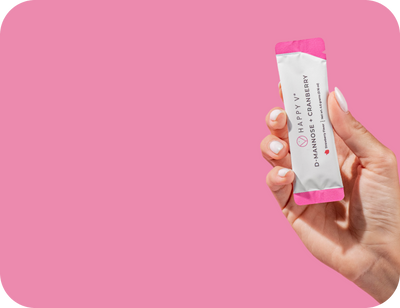
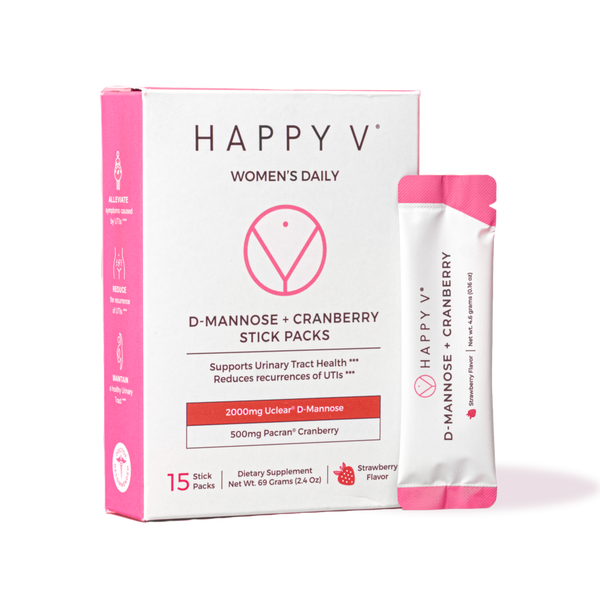
This is exactly why Happy V's D-Mannose + Cranberry capsules were designed the way they were. Instead of asking you to track down and take three separate supplements, this capsule combines D-mannose, concentrated cranberry extract, and vitamin C, giving you three complementary lines of support without the added sugar you would get from juice. It is a simple way to build ongoing urinary tract support into your routine, whether you are trying to ease a current UTI or trying to stay ahead of the next one.

D-Mannose + Cranberry
Supports urinary tract health and promotes long-term wellness.
Lifestyle Practices to Prevent UTIs
Diet works best alongside good daily habits, with the most important for UTI prevention being:
- Wipe front to back. This reduces the chances of bacteria reaching your urinary tract in the first place.
- Urinate after intercourse. Another simple habit that helps flush out bacteria before it has a chance to take hold.
- Choose breathable underwear. Natural fibers like cotton prevent moisture from building, which encourages bacterial overgrowth.
- Avoid perfumed soaps near sensitive areas. Fragrance and harsh ingredients can disrupt your natural balance, even if the product is marketed for intimate use.
- Change underwear and menstrual products frequently. This limits how long bacteria have to grow.
- Manage your stress. Chronic stress can affect your immune system's ability to fight off infection, so simple deep breathing exercises or other stress-reduction habits are worth building into your routine, not just for your urinary health but for your overall wellbeing.
When to See a Doctor
Diet and lifestyle changes can meaningfully support your comfort and recovery, but they are not a replacement for medical treatment. You should see a healthcare provider or urologist if:
- Your infection is still getting worse after 3-5 days of treatment
- You notice blood in urine
- You are experiencing very painful urination
- You have a fever, chills, or back pain that could signal a kidney infection
You should also check in with a provider before combining home remedies, like herbal teas or supplements, with blood-thinning medications, since some herbal options can interact with them. If you deal with recurrent UTIs, it is worth having a conversation about longer-term prevention strategies and checking for any underlying conditions that may be contributing.
Your diet will not replace antibiotics when you truly need them, but the right foods, real hydration, and consistent habits can make a real difference in how you feel today and how often you deal with UTIs going forward.
Keep the Conversation Going
- Visit our blog for more women's health tips.
- Join our private Happy V Facebook group to hear from others who've been there.
- Explore supplements designed to support your vaginal health journey.
Disclaimer: This blog is for informational and educational purposes only and is not intended to diagnose, treat, cure, or prevent any disease. Statements about supplements have not been evaluated by the Food and Drug Administration. For more information about vaginal infections, visit the CDC or speak to a licensed healthcare provider.
FAQ
Can diet alone cure a UTI?
What foods make a UTI worse?
Does cranberry juice actually help with UTIs?
How much water should I drink during a UTI?
What is D-mannose and does it work?
When should I stop trying home remedies and see a doctor?
Our experts continually monitor the health and wellness space, and we update our articles when new information becomes available.
- Published on: September 25, 2026
- Last updates: September 25, 2026
Written by Daniella Levy
Edited by Liz Breen