

- Fact Checked
- April 16, 2026
- 13 min read
Clitoral Itching and Menopause: Why It Happens and How to Find Relief

- Written by Daniella Levy • Updated on August 26, 2026
- Updated on August 26, 2026

Table of Contents
Table of Contents
Though menopause isn’t discussed nearly enough, you probably knew to expect the hot flashes and the night sweats (even if they hit you harder than expected). Maybe you even saw the mood swings coming. But an intensely itchy vulva and clitoris? That one tends to catch women off guard (and send them straight to Google in quiet desperation).
Truth is, vaginal and clitoral itching during menopause is extremely common. In fact, roughly one-third of postmenopausal women experience it. It's not a sign that something has gone terribly wrong, and it's definitely not something you simply have to live with. Research shows that leaving it unaddressed can actually make it worse over time. So let’s understand what’s causing that itch and how you can find real relief.
This post is for informational purposes only and does not constitute medical advice. See full disclaimer below.
What Causes Clitoral Itching During Menopause

Menopause marks the end of your reproductive years, when your ovaries stop producing eggs and your levels of estrogen and progesterone drop significantly.1
This is also the point when most people find out that estrogen isn't just a reproductive hormone, but actually maintains tissues throughout the body, including the vagina, vulva, clitoris, bladder, and urethra.2 When estrogen levels decline, those tissues become thinner, drier, less elastic, and more fragile.
How do people come to find this out? Through the (admittedly pretty uncomfortable) collection of symptoms now called genitourinary syndrome of menopause (GSM).3 Introduced around 2014, this term generally replaces older labels like "vaginal atrophy" and "atrophic vaginitis" and affects anywhere from 27% to 84% of postmenopausal women, making it one of the most common uncomfortable symptoms of the menopause transition. It’s also one of the most underreported.
Vaginal and clitoral itching is one of the symptoms that falls under GSM, and there are several reasons why it happens, including:
Tissue Thinning and Vaginal Dryness
As estrogen levels fall, the vaginal walls and vulvar tissues thin and dry out, bringing sensitive nerve endings closer to the surface.4 This is what creates the burning, itching, and soreness that so many women experience during perimenopause and after, especially around sexual activity.
The clitoris is no exception. Estrogen loss causes clitoral tissue to thin and become more reactive to friction and irritants.5 Drier tissue is also more prone to micro-tears and less able to protect itself from everyday friction, so even just wearing underwear can become a very uncomfortable experience.
Vaginal pH Shifts and Microbiome Imbalance

A healthy vagina maintains an acidic pH (3.5–5.0) thanks to a healthy population of protective Lactobacillus bacteria.6 After menopause, estrogen loss reduces those beneficial bacteria, therefore raising vaginal pH and making the vaginal microbiome more vulnerable to bacterial vaginosis (BV) and recurrent yeast infections, both of which cause itching.
Reduced Blood Flow
Estrogen supports circulation to vulvovaginal tissues.7 Less estrogen can mean less blood flow, and less blood flow means less oxygen, slower healing, and tissue that's increasingly sensitive to irritation.
Other Causes of Clitoral Itching
Menopause creates the conditions for itching, but it isn't always the direct cause.8 Several other factors can trigger or worsen vulvar itching independently, and menopause often makes you more susceptible to all of them.
Other common causes of clitoral itching that can coincide with menopause include:
Chemical Irritants
During menopause, thanks to thinning tissues and lower pH, your vulva is far more reactive to external irritants than it used to be.9 Scented soaps, laundry detergents, fabric softeners, scented toilet paper, and certain lubricants can all trigger vulvar dermatitis and itching in women who previously had no reaction to these products.
Sometimes Itching Is Just Skin Sensitivity
Vaginal Itching Without Discharge: What's Really Going On Down There?
Infections
Menopause triggers microbiome shifts, which increase your risk of BV and yeast infections.10 BV typically causes a thin gray or yellow discharge and fishy odor alongside itching, while a yeast infection typically produces a thick white discharge with intense vulvar itching.
Sexually transmitted infections (STIs) can also cause vaginal itching, so any unusual discharge with itching always warrants evaluation.11 Though we have articles that are helpful in distinguishing one infection from another, the only person who can tell you for sure what’s going on is your doctor.
Skin Conditions
Lichen sclerosus, eczema, and psoriasis can all affect vulvar skin during and after menopause, producing itching that doesn't respond to typical GSM treatments and requires its own diagnosis and management.12
Lichen sclerosus, in particular, is one to look out for. It’s a chronic inflammatory skin condition most commonly diagnosed in postmenopausal women.13 It’s also dramatically underdiagnosed, frequently mistaken for recurrent yeast infections or GSM for years.
Lichen sclerosus produces white, shiny, fragile patches on the vulvovaginal area, often in a figure-eight pattern around the vulva and perianal area, with intense itching that is typically worst at night.14 Left untreated, it is a progressive disease. Over time, the inflammation causes scarring that can fuse the labia, bury the clitoris, and narrow the vaginal opening, all changes that cannot be reversed once they occur. There's also a small but real increased risk of vulvar squamous cell carcinoma, which is why persistent itching with any visible skin changes should be evaluated, not waited out. Women with other autoimmune conditions like thyroid disease or vitiligo have a higher likelihood of developing it as well.15
Symptoms and Diagnosis
Clitoral and vaginal itching during menopause is rarely the only symptom people notice when it comes to their overall vaginal comfort.16 Common accompanying symptoms include:
- Vaginal dryness and burning sensation
- Pain with intercourse
- Skin tears or cracking
- Thin yellow or gray discharge
- Urinary urgency (aka the constant need to “go”) or recurrent UTIs
- Soreness that makes daily activities uncomfortable

Most women with itching also complain that the itching worsens at night to the point where it interferes with sleep.17 This may seem strange but several things converge after dark that cause this to happen. First, cortisol (which naturally suppresses inflammation) drops at night. Then, the skin barrier function weakens as trans-epidermal water loss increases, and finally, there are no daytime distractions to dull the sensation.
What Diagnosis Looks Like
While it can feel embarrassing to talk to your doctor about symptoms like vaginal or clitoral itching, the truth is, you are far from alone (remember 1 in 3 menopausal women are right there with you!).18 And having an honest conversation about your symptoms will prompt the evaluation that will ultimately help you find relief.
A thorough evaluation typically includes several things: a pelvic exam to assess tissue condition, vaginal pH testing, and discharge evaluation if infection is suspected.19
If the exam reveals white patches, skin thickening, lesions, or areas unresponsive to treatment, a biopsy may be needed.20 This is the only way to definitively diagnose lichen sclerosus and rule out vulvar, vaginal, or cervical cancer.
It's worth noting that the symptoms of GSM, lichen sclerosus, yeast infections, and BV overlap significantly, so self-diagnosis is unreliable at best, meaning there’s a good chance you’d end up treating the wrong thing at home, which only leads to worsening symptoms and potential complications.21
Potential Complications of Clitoral Itching
Unlike hot flashes and night sweats, which tend to lessen naturally over time as hormone levels even out, if left unaddressed, GSM actually tends to worsen over time, which can lead to:
- Vulvar atrophy. As GSM progresses, thinning extends to the labia and clitoral hood.22 In advanced cases, the labia minora can shrink or the vaginal opening can narrow, both changes that affect comfort during daily activities and are not reversible without treatment.
- Recurrent infections. If your itching is ultimately due to a vaginal infection caused by microbiome imbalance, cycling through OTC antifungals without addressing the underlying microbiome instability only postpones the next symptom flare-up.
- UTIs and urinary incontinence. The bladder and urethra share estrogen receptors with the vaginal tissues, so the same thinning that drives vaginal itching also makes UTIs more frequent. Pelvic floor weakening as estrogen drops can lead to stress or urge incontinence, and persistent urine contact with already-sensitive vulvar skin creates its own cycle of irritation.
- The itch-scratch cycle. Scratching fragile vulvar tissue creates micro-tears and further inflammation, which intensifies the itch, a feedback loop that's hard to break without treating the root cause.23
We never share these complications to scare you (we aren’t about scare tactics), but to motivate you to have an open, honest conversation with your doctor sooner than later. You deserve to feel comfortable and confident in every stage of life.
How to Stop Clitoral Itching From Menopause

The good news is that itching doesn’t have to be your new reality and complications can be avoided.24 There are actually a range of options to help you find relief. Some are home remedies you can start today, others are medical treatments worth discussing with your healthcare provider.
Here are the options available, all of which are backed by science. Which one (or which combination) you choose depends on your preferences as well as your health history, the intensity of your itching, and other menopause symptoms that may accompany it.25
Eliminate Irritants
Before adding anything new to your routine, it can help to remove what might be making things worse. Laundry detergents, fabric softeners, scented soaps, scented toilet paper, and pads are common culprits for irritating chemicals. Switch to fragrance-free, dye-free versions of all of these, and use only mild, unscented soap when washing your vulva (which is the outside part, remember!). Avoid douching entirely. It disrupts the vaginal microbiome and does more harm than good.
Modify Your Bathing Routine
Hot showers and long baths strip natural oils from already-compromised skin. Use lukewarm water, limit time in the bath, and pat (don't rub) skin dry afterward.
Moisturize Consistently
A fragrance-free vulvar moisturizer applied regularly (not just when itching flares) helps maintain the skin barrier and reduce baseline dryness. Talk with your doctor about options that won’t mess with your pH.
For immediate relief from an itch attack, a cool, damp cloth applied to itchy tissue is safe and soothing. Avoid scratching as best you can, which creates micro-tears and feeds the itch-scratch cycle.
Choose Breathable Underwear
Cotton underwear reduces moisture retention and friction. Synthetic fabrics trap heat and can worsen irritation.
Use Vaginal Lubricants for Sex
A water-based or silicone-based vaginal lubricant reduces friction and the micro-tearing that worsens post-sex irritation. A pH-balanced, water-based vaginal lubricant is the gentler choice for pH maintenance, while silicone-based is a good alternative for longer-lasting comfort, particularly for women with more significant dryness. Either way, choose glycerin-free, paraben-free, and fragrance-free formulas, and avoid anything with warming or tingling additives.
Take Hormone-Supporting Supplements
One aspect of menopause-related itching that often gets overlooked is the hormonal environment driving it. Estrogen fluctuates in rhythm with your circadian cycle, which means a supplement designed around that rhythm can support the whole picture.
Happy V Menopause Relief AM + PM is a dual-action, hormone-free formula built around this logic. The AM capsule supports healthy estrogen metabolism and hormone detoxification with clinically studied botanicals, plus B vitamins and Ashwagandha for energy, mood, and cortisol balance through the day. The PM capsule shifts focus to nighttime, which matters for itching specifically, since that's when it's often the worst. It combines ingredients clinically researched to support vaginal tissue comfort, reduce night sweats, stabilize estrogen overnight, and promote the restorative sleep that itching so frequently disrupts. And like all our formulas, Menopause Relief is vegan, non-GMO, and free from gluten, soy, dairy, and artificial fillers.
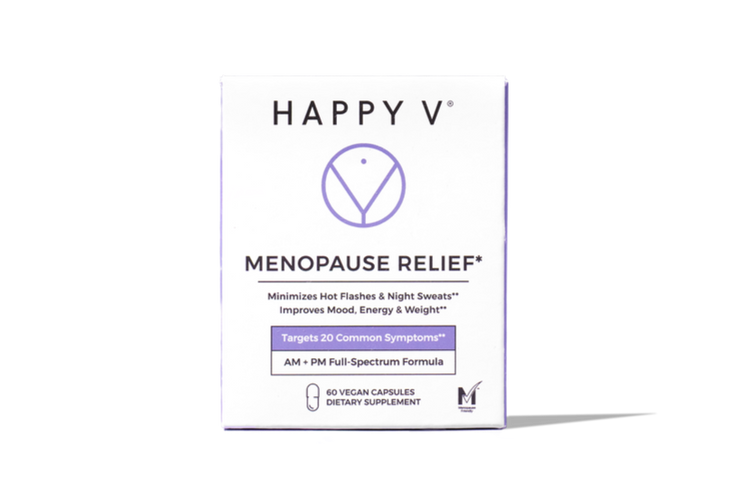
Menopause Relief AM + PM
Supports mood, energy and weight. Minimizes hot flashes and night sweats.
Local Vaginal Estrogen
When non-hormonal options don't provide enough relief, low-dose local vaginal estrogen is the most well-established effective treatment for GSM.26 Available as a prescription estradiol vaginal cream, suppository, vaginal tablet, or slow-release vaginal ring, it works directly on the tissues to restore moisture, elasticity, and thickness. Very little estrogen enters the bloodstream with these formulations, making them a generally safe option for most women, including many who aren't candidates for systemic hormone therapy. Full benefits can take up to 12 weeks, and ongoing maintenance use is needed to sustain results.
Systemic Hormone Therapy (HRT)
If vaginal itching accompanies significant hot flashes, night sweats, sleep disruption, or mood changes, HRT addresses the hormonal root cause (both estrogen and progesterone) across all symptoms at once.27 It comes in pill, patch, gel, and spray forms, all of which must be prescribed by a doctor, and the right approach depends on your individual health history.
Prescription Treatments for Skin Conditions
Lichen sclerosus requires high-potency topical corticosteroids (typically clobetasol propionate), which are prescription-only and often needed long-term to prevent progression.28 Vulvar eczema and psoriasis may also require prescription-strength treatment. OTC hydrocortisone cream can offer temporary relief from acute itching but is not a substitute for a proper diagnosis.
Pelvic Floor Therapy, Vaginal Dilators, and CO2 Laser
For women with significant tissue changes affecting daily comfort or sexual function, pelvic floor physical therapy and vaginal dilator therapy can help restore elasticity alongside other treatments.29 CO2 laser therapy has also emerged as a non-hormonal office-based option for GSM, best suited for women who haven't found adequate relief from other approaches.
When to See a Healthcare Provider
See a provider if you notice any of the following:
- Itching that persists beyond a few weeks without improving
- Unusual, odorous, or colored discharge
- Vaginal bleeding after menopause (this always requires prompt evaluation!)
- Visible skin changes on the vulva, including white patches, shiny or crinkled texture, thickening, or lesions
- Pelvic pain or burning during urination
- Cloudy or strong-smelling urine
- Recurrent BV or yeast infections
- Symptoms that are disrupting your sleep, sex life, or daily routine
Too many women assume uncomfortable menopause symptoms are just part of the deal. And while that may be true to some degree (menopause symptoms do happen, whether we like it or not), they are not something to just suck up or push through. This is especially true for GSM-related symptoms, which worsen without treatment and can lead to the complications we mentioned above. You deserve to feel comfortable in your body at every stage of life, and effective treatment exists. There's no reason to just live with it.
Keep the Conversation Going
- Visit our blog for more women's health tips.
- Join our private Happy V Facebook group to hear from others who've been there.
- Explore supplements designed to support your vaginal health journey.
Disclaimer: This blog is for informational and educational purposes only and is not intended to diagnose, treat, cure, or prevent any disease. Statements about supplements have not been evaluated by the Food and Drug Administration. For more information about vaginal infections, visit the CDC or speak to a licensed healthcare provider.