



- Fact Checked
- September 30, 2026
- 9 min read
Can You Have Thrush and BV at the Same Time?

- Written by Daniella Levy • Updated on September 30, 2026
- Updated on September 30, 2026

Table of Contents
Table of Contents
You wake up one day and notice something feels… off. You're itchy and have some discharge you didn't notice the day before. Those are both signs of bacterial vaginosis (BV), right? Or is it a vaginal thrush? Or is it possible you actually have both at the same time?!
It turns out that the last question is not as far-fetched as it sounds. Vaginal thrush (also known as a yeast infection) and BV can absolutely happen at the same time, and figuring out which one (or both) you are dealing with is the first step to actually protecting your vaginal health.
This post is for informational purposes only and does not constitute medical advice. See full disclaimer below.
What Are Thrush and BV, Exactly?
BV and thrush are both incredibly common vaginal infections. They are not the same infection, but they do share a connection.
Thrush, also called a vaginal yeast infection or vaginal candidiasis, happens when there’s an overgrowth of Candida (most often Candida albicans) in the vagina. Now, Candida is normally present in the vaginal microbiome in small amounts, but when something disrupts the balance of protective Lactobacillus bacteria, yeast can take hold. These typically leads to symptoms like:
- Itching and irritation
- Burning sensation during urination
- Soreness and inflammation
- Unusual, cottage cheese-like vaginal discharge
Bacterial vaginosis, or BV, is different. It is not a fungal overgrowth like thrush. It’s caused by an overgrowth of anaerobic bacteria in the vagina, most commonly Gardnerella vaginalis. When this overgrowth occurs, people may report symptoms like:
- Thin, grey or white watery discharge
- Discomfort
- Strong, fishy odor, particularly after sex
Like thrush, BV occurs when something causes an imbalance of Lactobacillus bacteria, leading to a shift in vaginal pH that gives opportunity for other bacteria to take over. This link is why both can occur together, and why maintaining vaginal health is about more than treating infections when they occur.
Distinguishing Thrush and BV
BV and thrush do share many common symptoms, with unusual vaginal discharge being the biggest. However, there are some difference to pay attention to that will help you distinguish one from the other, particularly when it comes to:
- Discharge texture and color. Thrush tends to cause thick, white, clumpy discharge that many describe as being cottage cheese-like. BV usually causes a thinner, grey or white discharge.
- Odor. BV is known for a distinct fishy smell, especially after intercourse. Thrush typically has little to no odor.
- Itching versus soreness. Thrush often causes intense vaginal itching, burning, and irritation of the vulva. BV is less likely to cause itching and more likely to just feel "off."
- Discharge color. White vaginal discharge points more toward thrush, while grey discharge points more toward BV, though this is an area where there is overlap.
If you have both at the same time, distinguishing one from the other becomes even more difficult. That’s why your best bet when you’re experiencing any kind of vaginal symptoms is to make an appointment with a gynecologist or other healthcare professional. Many people who self-diagnose and self-treat get it wrong, leaving symptoms to get worse and potential complications to occur.
Diagnosis and Testing
When you make an appointment with your doctor for suspected BV or thrush, your visit may include:
- Microscopic observation of a vaginal swab to identify Candida species or BV-associated bacteria.
- Dipstick tests to check vaginal pH, since BV is associated with a higher pH than a healthy vagina.
- STI testing, since some sexually transmitted infections can mimic or coexist with thrush and BV.
All of these will give your doctor a clear picture of exactly what infection (or which infections, plural) you’re dealing with, so they can get you started on the right treatment plan.
Treatment Approaches for Thrush and BV
Another similarity that both thrush and BV have: they’re very treatable. Since one is fungal and one is bacterial in nature, though, these treatments differ.
For thrush, your doctor may suggest:
- Over-the-counter antifungal medication, such as a clotrimazole 1% vaginal cream or a clotrimazole pessary
- Prescription fluconazole, an oral antifungal
For BV, your doctor will likely prescribe an antibiotic, with the two most common being:
- Metronidazole tablets or metronidazole gel
- Clindamycin, in cream or oral form
When you have both at once, your provider may prescribe an antifungal and an antibacterial treatment together, or ask you to treat one first depending on symptom severity. Because antibiotics for BV can trigger a yeast infection, some providers proactively recommend an antifungal alongside or immediately following antibiotic treatment.
Whatever treatment plan your doctor prescribes, be sure to follow it exactly. Don’t stop taking any medication (especially antibiotics) because you’re feeling better. Finish the course as prescribed to help clear the infection completely and reduce your chances of recurrence.
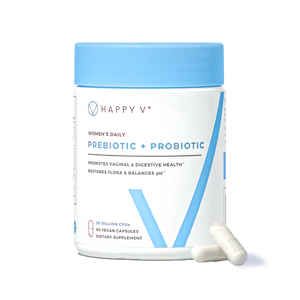
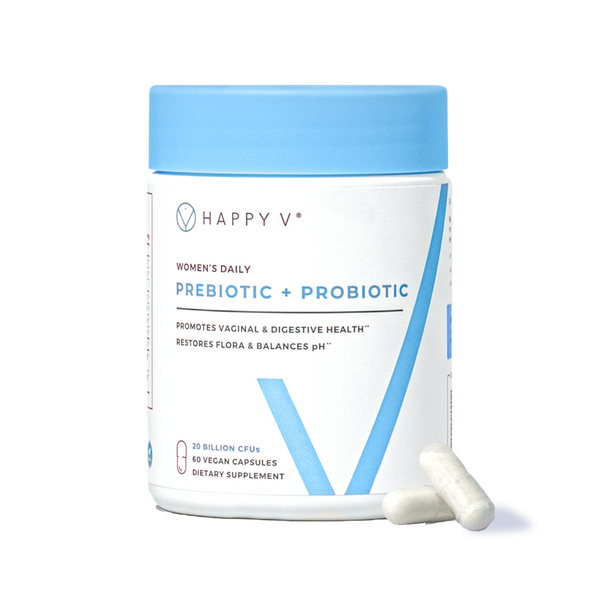
This is also where Happy V’s Prebiotic + Probiotic can be helpful. While antifungals and antibiotics treat the overgrowth, they don't replenish the lactobacilli your vaginal microbiome needs to stay balanced and prevent future overgrowths. Taking a daily probiotic alongside your prescribed treatment, and continuing it once you have finished, gives your vaginal flora a better shot at staying protected and lowers your risk of the same infection circling back.
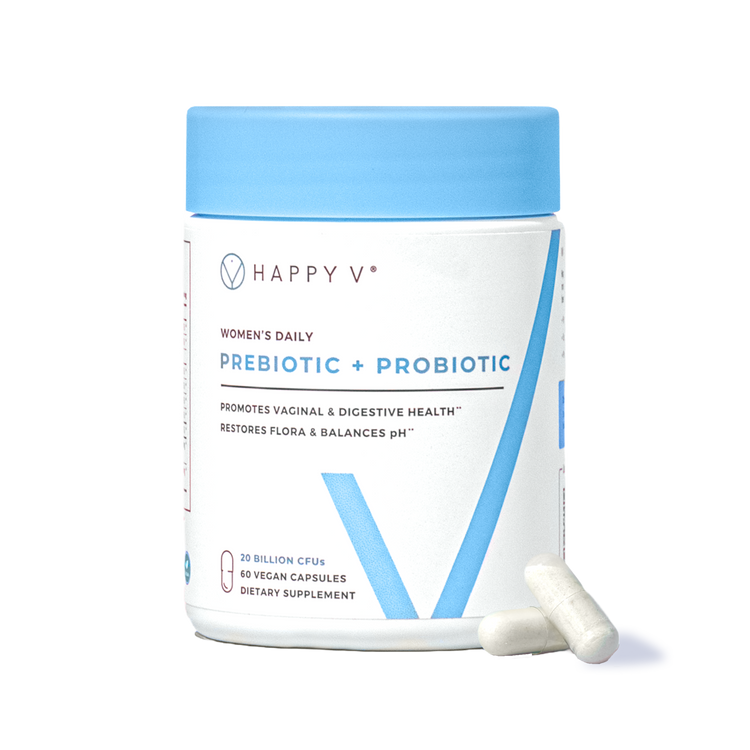 Bestseller
Prebiotic + Probiotic
Maintains vaginal pH and restores gut health.
Co-Occurrence of Thrush and BV: How Common Is It?
Having thrush and BV at the same time isn’t all that rare. And when you understand that both conditions stem from a disrupted vaginal microbiome, having both at the same time makes sense.
There are a few reasons this co-infection happens, with the main reasons being:
- A BV-like environment can make Candida overgrowth easier. Once Lactobacillus levels are diminished and vaginal pH rises, the vagina becomes more hospitable to other organisms, including yeast.
- Recurrent BV weakens your natural defenses over time, making you more susceptible to a secondary yeast infection.
- Antibiotic treatment for BV can inadvertently trigger thrush, since metronidazole or clindamycin target the anaerobic bacteria causing BV but do nothing to stop Candida, which can then grow unchecked.
- A weakened immune system, including in people who are immunocompromised or living with HIV, can make it harder to keep either Candida or BV-associated bacteria in check, raising the odds of both showing up together.
Another reason BV and thrush can occur together, or keep coming back, comes down to shared risk factors. These events or lifestyle factors can all impact Lactobacillus levels in your vaginal microbiome, which as we know, make these infections more likely:
- Antibiotics. Any course of antibiotics can disrupt lactobacilli, the beneficial bacteria that maintain a healthy vaginal pH, opening the door to both BV and yeast overgrowth.
- Hormonal changes. Fluctuations from your menstrual cycle, pregnancy, or birth control can shift vaginal pH and glycogen levels in ways that favor yeast or disruptive bacteria.
- Vaginal pH disruption. A healthy vagina sits on the acidic side. Anything that raises that pH, like semen, certain soaps, or douching, creates room for imbalance.
- Uncontrolled diabetes. Higher blood sugar levels can feed yeast overgrowth, making thrush more frequent and harder to clear.
- Genetics. Some people are simply more prone to recurrent yeast infections or BV due to how their microbiome is naturally composed.
- Sexual activity. New or multiple partners, and unprotected sex, can introduce new bacteria or shift your vaginal pH.
- Vulvar skin conditions. Underlying dermatologic conditions can mimic or worsen irritation, complicating both diagnosis and healing.
- Misdiagnosis. Treating the wrong condition (or only one of two co-occurring conditions) practically guarantees recurrence, because the untreated infection is left to keep multiplying.
Prevention Strategies
Clearing an infection is an important first step toward vaginal health, but it’s just that: a first step.
Maintaining vaginal health over time comes down to protecting the same vaginal microbiome that thrush and BV both take advantage of. These simple lifestyle changes and hygiene habits go a long way in doing exactly that:
- Only use antibiotics when necessary, and talk to your doctor about antifungal support if you need a course of them.
- Stop douching. Your vagina is self-cleaning, and douching strips away the Lactobacillus bacteria and lactic acid you need to maintain a healthy vaginal pH.
- Choose breathable, cotton underwear and avoid staying in wet swimsuits or sweaty workout clothes longer than necessary, since a warm, damp environment favors fungus.
- Be mindful of scented products, including deodorants, vaginal sprays, and heavily fragranced soaps, near the vulva. These can irritate delicate tissue and throw off your vaginal microbiome.
- Take daily targeted probiotics. Happy V's Prebiotic + Probiotic is formulated with a unique blend of clinical studied Lactobacillus strains that, in preclinical testing, has been shown to help limit the growth of both Candida and Gardnerella vaginalis, making it a natural way to support balance against both types of overgrowth rather than just offer symptom relief after they start.
- Talk to your partner if reinfection seems to be a pattern, since partner transmission can play a role in recurring infections.
- Manage underlying conditions, like uncontrolled diabetes or a weakened immune system, that make yeast overgrowth more likely.
- Pay attention during pregnancy. Hormonal shifts in pregnancy can make both BV and vaginal yeast infections more likely, so keep up these self-care tips and mention any changes to your OB-GYN early.
Final Thoughts
Thrush and BV can absolutely happen together, and the thought of dealing with two infections at once can feel overwhelming. But the truth is, the fix for both isn’t complicated. Get a proper diagnosis instead of guessing, follow your treatment plan all the way through, and support your vaginal microbiome afterward so Lactobacillus can hold its ground against future infections.
Keep the Conversation Going
- Visit our blog for more women's health tips.
- Join our private Happy V Facebook group to hear from others who've been there.
- Explore supplements designed to support your vaginal health journey.
Disclaimer: This blog is for informational and educational purposes only and is not intended to diagnose, treat, cure, or prevent any disease. Statements about supplements have not been evaluated by the Food and Drug Administration. For more information about vaginal infections, visit the CDC or speak to a licensed healthcare provider.
FAQ
Can I have both BV and Candida at the same time?
Can I treat a yeast infection and BV at the same time?
Why do I have BV and thrush at the same time?
Can high cortisol cause Candida overgrowth?
If I have BV and a yeast infection, which should I treat first?
What should I do if I have BV and a yeast infection at the same time during pregnancy?
Why do I keep getting BV and yeast infections at the same time?
What can mimic BV and a yeast infection?
Our experts continually monitor the health and wellness space, and we update our articles when new information becomes available.
- Published on: September 30, 2026
- Last updates: September 30, 2026
Written by Daniella Levy
Edited by Liz Breen