

- Fact Checked
- December 25, 2025
- 12 min read
Can Antibiotics Affect Your Menstrual Cycle? Everything You Need to Know


- Written by Daniella Levy • Updated on August 28, 2026
-
Medical Reviewed by Dr. Mariya Petrova

Internationally recognized microbiome specialist focused on urogenital microbiota and lactobacilli; PhD...
- Updated on August 28, 2026

Table of Contents
Table of Contents
If you've ever noticed changes in your period timing after taking antibiotics, you're not alone. Many women have wondered whether their medication could be influencing their menstrual cycle. And, let’s be real, if you’re reading this right now, you’re probably one of them, so let’s get into it. We’ll explore the connection between antibiotics and your period, what else could be contributing to changes, and when you should be concerned.
This post is for informational purposes only and does not constitute medical advice. See full disclaimer below.
Can Antibiotics Affect Your Period?

The short answer is: there’s not really a short answer. While most antibiotics don't directly alter your menstrual cycle, they can indirectly influence your period because they can affect your body’s hormonal balance and gut health… which can then influence your period.
Sound complicated? Stick with us. Your gut contains beneficial bacteria that play a crucial role in hormone metabolism, particularly estrogen1. When you take antibiotics, the antibiotics don’t just kill the infection-causing bacteria, but can also affect the beneficial bacteria in your gut that balance your hormones and regulate your cycle.
More than that, illness can be pretty stressful on the body. When you’re sick, your body prioritizes fighting the infection over reproductive processes, which totally makes sense, but may lead to temporary cycle changes.
Some other common questions we get about antibiotics and menstrual cycles include:
Can antibiotics delay your period?

So far, evidence of this is really limited, and any effects appear to be temporary.
Antibiotics can temporarily alter your gut bacteria, including the group involved in recycling estrogen. In theory, shifts there could influence hormone levels enough to delay ovulation and push your period late, but that connection is largely speculative. There's very little clinical evidence that a typical course of antibiotics directly causes a late period this way.2 What we do know and what is well established, though, is that being sick can temporarily suppress ovulation as your body puts its focus elsewhere. So if your cycle shifts while you're on antibiotics, the illness and the general stress of fighting an infection are the more likely culprits.
Can antibiotics prolong your period?
Some women do report longer or heavier periods after taking antibiotics. This could be because the bacteria responsible for metabolizing estrogen have been affected, leading to temporarily higher levels of estrogen3. If estrogen stays higher than usual for a bit, it can make the uterine lining build up more, which can mean more bleeding or a longer period.
Can antibiotics make your period early?
An early period after taking antibiotics is possible, but less commonly reported. This might occur if the antibiotic disrupts your hormonal balance in a way that triggers early shedding of the uterine lining, or if stress and inflammation from your illness cause hormonal fluctuations.
Can antibiotics make you bleed between periods?
Spotting or bleeding between periods while taking antibiotics can happen, especially if you're also using hormonal birth control4. Specifically, the antibiotic rifampin accelerates liver hormone processing, which can lead to breakthrough bleeding. Most of the commonly prescribed antibiotics, though, don’t cause this issue.
Antibiotics and Birth Control Effectiveness

While we are clearing up myths with science, let’s talk about how antibiotics affect birth control effectiveness.
Most women have probably heard that antibiotics can make hormonal birth control less effective. This isn’t exactly true. When it comes to most common antibiotics (think: amoxicillin, doxycycline, or ciprofloxacin), research shows they don’t significantly reduce birth control protection, though many providers still suggest using condoms during treatment and for a week-ish afterwards as extra precaution for women who do not want to become pregnant.
The big exception is rifampin and related rifamycin antibiotics (yup, the same one that can also make you bleed between periods), which can affect how your liver breaks down birth control hormones, making them less effective5. In this case, you should definitely use a backup barrier method, like condoms.
Rifampin and rifampicin can also potentially lead to:
- Abnormal bleeding patterns
- Menstrual cycle alterations
- Reduced effectiveness of hormonal contraception
- Changes in estrogen and progesterone levels
- Disruptions to vaginal flora
Good news is, they aren’t used for common vaginal infections like bacterial vaginosis or yeast infections. They are mostly used in the case of tuberculosis.
Other Common Reasons for Late or Irregular Periods

While antibiotics can contribute to cycle changes, they are not among the more common culprits for menstrual irregularities. Though your menstrual cycle just seems to happen in the background without you thinking about it, the truth is, it’s a complex interplay of hormones, and even small disruptions to your physical or emotional well-being can throw things off balance.
Lifestyle Factors
Your everyday habits play a bigger role in your menstrual cycle than many people realize6. Things like stress levels, changes in weight, exercise intensity, and even sleep can all influence the hormones that control ovulation. When these lifestyle factors shift—especially all at once—it’s common for your period to respond with changes in timing, flow, or regularity.
Stress
Stress is one of the most common reasons women experience late or irregular periods. When you experience significant emotional or physical stress, your body produces cortisol, which can interfere with the hormones that regulate ovulation, delaying or preventing it altogether7. Some women find their periods disappear entirely during particularly stressful periods of their lives. If this is you, know that, while you aren’t alone, this isn’t something that should be ignored or dismissed. Look into daily practices like meditation, exercise, or talking to friends, and talk to your doctor about therapy options.
Weight Fluctuations
Both significant weight gain and weight loss can disrupt cycle regularity. That’s because your body fat plays a crucial role in hormone production, particularly estrogen.
When your body weight drops too low, your body may not produce enough estrogen to maintain a regular cycle8. On the flip side, excess body weight can lead to elevated estrogen levels, which can cause irregular bleeding patterns. If your weight has fluctuated up or down rapidly, your cycle can be temporarily thrown off as your body adjusts to the new hormonal environment.
Intense Physical Exercise
While regular exercise is healthy, excessive or intense physical exercise can suppress ovulation, especially in athletes or those who exercise multiple hours daily9. This is particularly common in endurance athletes, dancers, and gymnasts.
The combination of low body fat percentage, high energy expenditure, and physical stress can signal to your body that it's not an ideal time for reproduction, leading to irregular or absent periods, a condition known as exercise-induced amenorrhea.
Diet and Sleep Habits
Your body needs sufficient calories, healthy fats, and key nutrients to produce reproductive hormones10. Restrictive diets, eating disorders, or even well-intentioned but overly restrictive "clean eating" can disrupt your cycle.
Similarly, poor sleep habits interfere with your body's natural circadian rhythms, which regulate hormone release. Chronic sleep deprivation or irregular sleep patterns (like shift work) can lead to menstrual irregularity because your body's hormonal signals get confused.
Life Stages and Natural Transitions
Beyond everyday lifestyle factors, certain stages of life naturally come with hormonal shifts that can change your cycle11. These transitions are normal, expected, and often temporary, but they can still be surprising if you’re not expecting them.
Pregnancy
We gotta say it, right? If your period is late, pregnancy is the first thing to rule out through a simple home pregnancy test. Even if you've been careful with contraception, no method is 100% effective.
Breastfeeding
Breastfeeding naturally suppresses menstruation in many women through elevated prolactin levels. This is nature's way of spacing pregnancies (cool, right?).
Remember, though, that breastfeeding is not birth control. The return of fertility while breastfeeding is unpredictable. Some women remain period-free for months while exclusively nursing, while others see their cycles return within weeks, even while still breastfeeding regularly.
Perimenopause and Menopause
Perimenopause (or the transition to menopause) typically begins in a woman's 40s but can start earlier12. During this time, cycles become increasingly irregular as hormone production becomes erratic. You might experience shorter or longer cycles, heavier or lighter periods, or skipped periods. Menopause is officially diagnosed after 12 consecutive months without a period, typically occurring around age 51, though the age range is wide.
Health Conditions That Affect Your Cycle
Sometimes, irregular or missed periods aren’t about lifestyle or timing at all. Underlying health conditions can directly affect the hormones that regulate ovulation and menstruation, leading to ongoing or unpredictable cycle changes.
Polycystic Ovary Syndrome (PCOS)
PCOS, recently renamed PMOS or polyendocrine Metabolic Ovarian Syndrome, is one of the leading causes of irregular periods and affects approximately 1 in 10 women of reproductive age13. This hormonal imbalance condition is characterized by elevated androgens (aka male hormones), insulin resistance, and often multiple small cysts on the ovaries, all of which can contribute to irregular or missed periods.
Other symptoms of PMOS include acne, excess hair growth, and difficulty losing weight. You can read more about PMOS in our separate post here.
Thyroid Disease
Your thyroid gland plays a critical role in regulating metabolism and hormone production throughout your body14. Both an underactive thyroid (known as hypothyroidism) and an overactive thyroid (known as hyperthyroidism) can significantly impact menstrual regularity, though in different ways. Hypothyroidism often causes heavier, more frequent periods, while hyperthyroidism typically leads to lighter, less frequent periods.
Because thyroid disorders are relatively common and can develop gradually, many women don't realize their cycle changes are thyroid-related until tested.
Chronic Conditions and Serious Illness
Chronic health conditions including diabetes, celiac disease, inflammatory bowel disease, and autoimmune disorders can affect menstrual regularity15. These conditions create ongoing physical stress and inflammation in the body that can interfere with hormone production.
Similarly, acute serious illness temporarily disrupts your cycle as your body redirects energy toward healing and survival rather than reproduction. This is why the illness requiring antibiotic treatment may have more impact on your cycle than the antibiotics themselves.
Other Medications
Beyond antibiotics, several other medications can influence your period, including:
- Over-the-counter pain relievers, like Motrin or Advil
- Antidepressants and antipsychotics
- Hormonal birth control and hormone therapy
- Thyroid medications
- Blood thinners
- Epilepsy medications and chemotherapy drugs
Different medications can also interact with each other in such a way that cycles get disrupted. If you're taking multiple medications and notice menstrual irregularity, be sure to ask your provider about any interactions. Better yet, discuss any potential interactions with existing medications before taking any new ones.
When to Consult a Healthcare Provider

While temporary cycle changes after antibiotics are usually nothing to worry about, certain symptoms warrant professional evaluation.
Contact your OB-GYN or healthcare provider if you experience:
- Heavy or prolonged bleeding (soaking through pads or tampons every hour, or periods lasting more than seven days)
- Bleeding between periods or spotting after sex
- Severe cramping that interferes with daily activities
- Missed periods after ruling out pregnancy with a pregnancy test
- Irregularities in your cycle after starting new medication, including rifampicin
- Suspicion of PCOS or thyroid dysfunction based on other symptoms
- Persistent menstrual changes that last beyond one or two cycles after completing antibiotics
While there are trustworthy sources of health information online (oh hey), your healthcare provider is the best person to take these concerns, and they will be able to get to the bottom of them quickly and without potentially stressful rabbit holes.
How to Support Your Body During Antibiotic Treatment
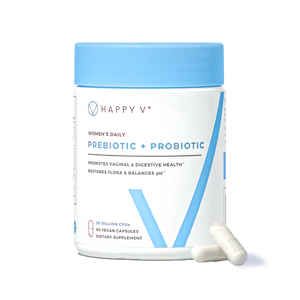
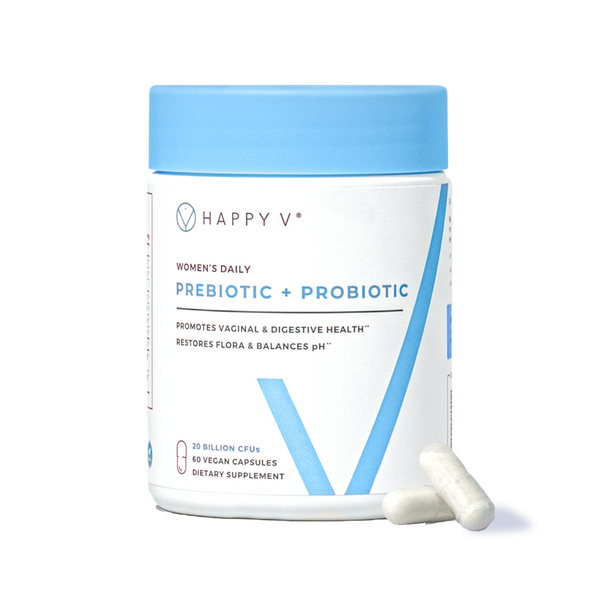
Antibiotics are often necessary to clear an active infection, but they aren’t without side effects, particularly when it comes to your gut and vaginal microbiomes. They wipe out the beneficial bacteria that keep your microbiome balanced and your menstrual cycle regular. That’s why many people add daily prebiotics + probiotics to their daily wellness routine during and after treatment. Probiotics help replenish helpful bacteria, while prebiotics help feed and support the good microbes you want to keep around.
Happy V’s Fresh Start Kit is built around our best-selling and doctor-formulated Prebiotic + Probiotic, designed to support your gut and vaginal microbiome during antibiotic use and beyond through clinically studied strains of probiotics. It also contains other supportive, science-backed, easy-to-take extras to make the whole “getting back to normal” thing a lot simpler:
- Liquid Chlorophyll, an easy add-in that helps remove toxins while providing daily hydration support
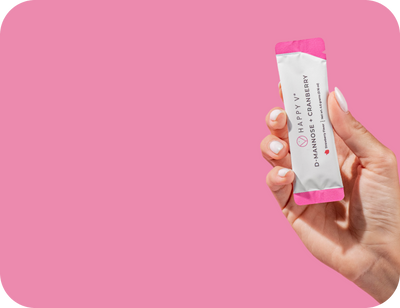
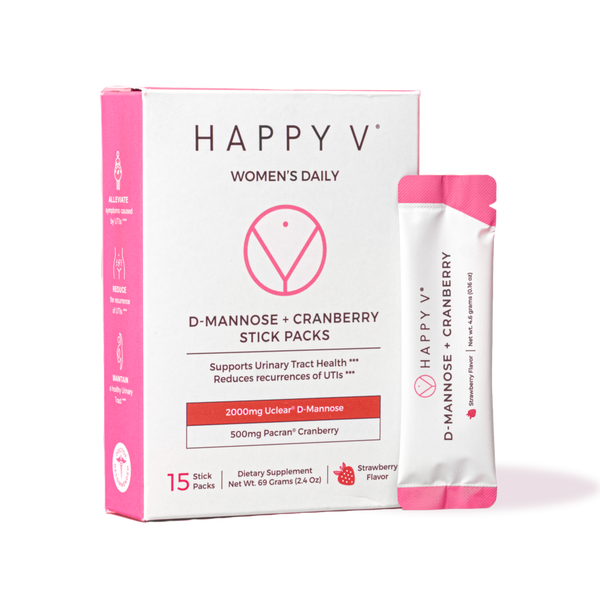
- 5-pack of D-mannose + Cranberry Stick Packs, a convenient, travel-friendly support for your urinary tract (no secondary UTI infections, thanks!)
- Happy V water bottle to make it easier to stay on top of hydration, especially while you’re recovering
- The Self-Care Crew cap, a little reminder to prioritize you (even when you’re not feeling your best)
Final Thoughts
While antibiotics don’t usually directly change your menstrual cycle, they can contribute indirectly by disrupting gut and vaginal bacteria and increasing physical stress.
The most important thing to remember is that short-term cycle changes are common and usually temporary. In many cases, your body simply needs time to recover from the infection, the medication, or both. Paying attention to patterns, supporting your microbiome, and giving yourself a little grace during recovery can go a long way.
That said, your period is also a valuable signal of your overall wellness. If changes are severe, persistent, or paired with other symptoms, it’s always worth checking in with your healthcare provider. Antibiotics are just one small piece of a much bigger hormonal picture, and with the right support, your cycle typically finds its way back to normal.
Keep the Conversation Going
- Visit our blog for more women's health tips.
- Join our private Happy V Facebook group to hear from others who've been there.
- Explore supplements designed to support your vaginal health journey.
Disclaimer: This blog is for informational and educational purposes only and is not intended to diagnose, treat, cure, or prevent any disease. Statements about supplements have not been evaluated by the Food and Drug Administration. For more information about vaginal infections, visit the CDC or speak to a licensed healthcare provider.