

- Fact Checked
- May 11, 2026
- 9 min read
From PMS to Gut Health: What Causes Bloating in Women and How to Fix It

- Written by Lenia Lopez • Updated on July 29, 2026
- Updated on July 29, 2026

Table of Contents
Table of Contents
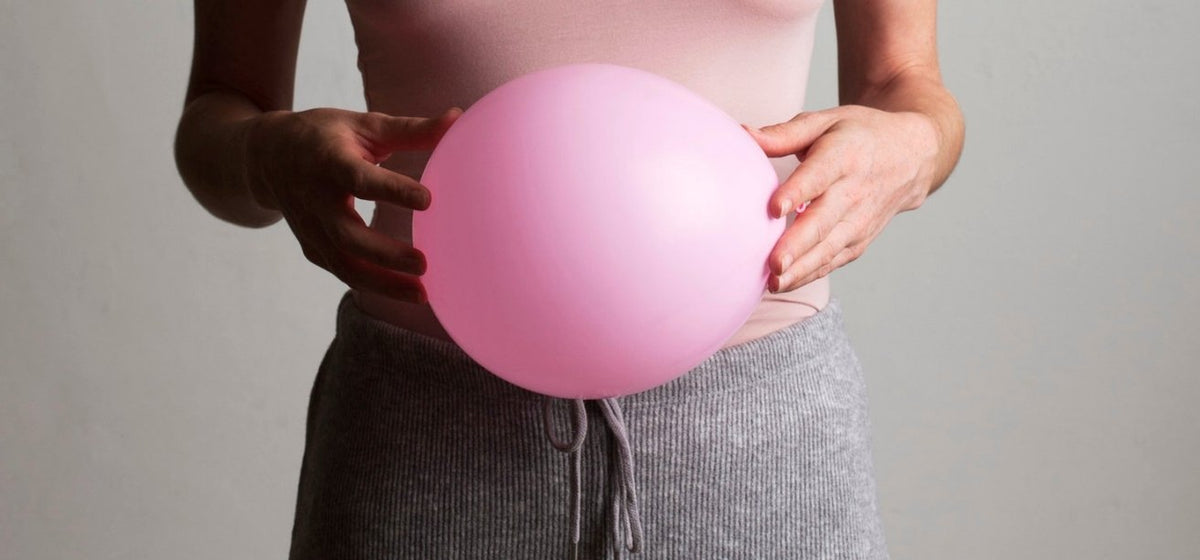
That puffy feeling in your abdomen that affects not only your comfort level but also your confidence in bathing suits, crop tops, and tight jeans? Yeah, most women know it well. Abdominal bloating affects up to 75% of women before and during their periods, and among those with irritable bowel syndrome (IBS), over 80% report it as a regular symptom.
The good news? Bloating can be both temporary and manageable once you know what’s driving it. And this guide is designed to help you do exactly that.
This post is for informational purposes only and does not constitute medical advice. See full disclaimer below.
What Is Bloating? Symptoms and Signs to Know

Bloating happens when your gastrointestinal tract (aka your gut) fills with excess air or gas, or when fluid accumulates in your tissues, causing your abdomen to feel swollen, tight, or larger than usual.1 Doctors sometimes call this abdominal distension, and it can range from mildly annoying to genuinely disruptive to your day.
Bloating isn't just one sensation. It's a cluster of symptoms that can show up together or on their own. These symptoms include:
- Fullness or pressure in the abdomen, even when you haven't eaten much
- Visible distension, where your belly looks or feels physically swollen
- Excess gas with flatulence, belching, or burping
- Bloating after eating, often within 30 to 90 minutes of a meal
- Abdominal pain or cramping, ranging from dull and achy to sharp
- Changes in bowel habits, including constipation, loose stools, or overall unpredictable patterns
- Nausea or general digestive unease
- Loss of appetite due to persistent fullness
- Unexplained weight loss in cases where chronic digestive issues are interfering with nutrient absorption
For most women, these symptoms are temporary and tied to something identifiable: a specific food, your menstrual cycle, or a stressful stretch.2 But when bloating is frequent, severe, or comes with persistent abdominal pain, unexplained weight loss, or blood in your stool, it's worth seeking medical attention and talking with your healthcare provider.
Common Causes of Bloating in Women

Most women deal with bloating more than they’d like, and that’s because there isn’t just one cause but several causes behind it, many that are linked directly to the female physiology.3
Hormonal Changes During Your Menstrual Cycle
The Office on Women's Health notes that over 90% of menstruating women experience premenstrual symptoms, and of these, bloating ranks among the most common. That’s because the week before your period, progesterone levels drop while estrogen rises. That hormonal shift causes your body to hold onto more water and sodium. Fluid retention typically peaks at the onset of your flow and resolves within a few days.4
Gut Bacteria Imbalances
Your gut houses trillions of bacteria that influence everything from your digestion to immune function.5
When the balance tips and harmful bacteria start to outnumber beneficial ones (which is a condition called dysbiosis), gas production and discomfort often follow.
How to Increase Good Bacteria in Your Gut Naturally
How to Increase Good Bacteria in Your Gut Naturally (Without Overcomplicating It)
Small Intestinal Bacterial Overgrowth (SIBO)
Small intestinal bacterial overgrowth (SIBO) happens when excess bacteria colonize the small intestine, fermenting food prematurely and producing gas before your body has a chance to absorb nutrients properly.6
According to the NIH, SIBO typically presents not simply with bloating but also abdominal pain, distension, and diarrhea. Research suggests that as many as 78% of IBS patients also have SIBO, with female patients being at a higher risk.
Food Intolerances and Sensitivities
Food intolerance is one of the most common reasons for abdominal discomfort in women. About 20 to 25% of the global population reports having a food intolerance, and for many women, the biggest culprits are:
- Lactose. The digestive system breaks down lactose using an enzyme called lactase. When lactase levels are low, dairy products like milk, cheese, and ice cream can trigger gas and bloating. Lactose intolerance is more common than most people realize, and it can develop over time, even if dairy never bothered you before.
- High-FODMAP foods. Fermentable carbohydrates found in foods like beans, wheat, onions, and certain fruits are rapidly fermented by gut bacteria, producing excess gas in the process.
- Fructose and sugar alcohols. Fructose malabsorption and sensitivity to sugar alcohols like sorbitol (found in sugar-free products and some whole grains) can cause significant fermentation and gas buildup in the digestive tract.
- Celiac disease: For people with celiac, gluten triggers an immune response that damages the small intestine and causes bloating, abdominal pain, and changes in bowel habits.7 It's worth ruling out with a healthcare provider if gluten-containing foods consistently trigger symptoms.
Swallowing Air
It sounds simple, but swallowing excess air is one of the more overlooked common causes of bloating. Eating too quickly, talking while eating, drinking through a straw, and chewing gum all introduce extra air into your digestive system.
Carbonated beverages and carbonated drinks add to this by releasing carbon dioxide directly into your gastrointestinal tract, contributing to gas buildup and that overly full feeling.8
Constipation and Slow Digestive Transit
When stool moves slowly through your digestive tract, bacteria have more time to ferment undigested food and produce excess gas. Progesterone naturally slows gut motility, which is why constipation and bloating tend to intensify during the luteal phase of your cycle, as well as during pregnancy. Adequate hydration, high-fiber foods, and regular physical activity all help keep things moving.9
Other Health Conditions
Some underlying health conditions can cause or worsen persistent bloating.
Gastroparesis, a condition where the stomach empties too slowly, can cause significant gas buildup and a feeling of fullness that lingers long after eating.10 Gastroesophageal reflux (also just known as acid reflux or reflux) can also contribute to upper abdominal discomfort and bloating symptoms.
If you've addressed the other common causes and your symptoms persist, a gastroenterology evaluation may help identify what's actually going on.11 Your primary care doctor should have a referral.
How to Reduce Bloating

Once you know what's driving your symptoms, you can take targeted steps to get relief. Here's what the evidence actually supports:
Support Your Gut with Probiotics
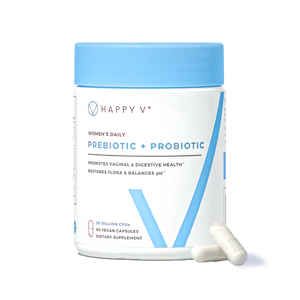
If bloating is just one of many digestive discomforts you’re experiencing, that’s a sign to give your gut health some attention. Daily probiotic supplements are one way to do this, with specific strains showing real results in clinical studies. A double-blind trial found that Lactobacillus acidophilus and Bifidobacterium lactis significantly reduced bloating severity compared to placebo, and a meta-analysis of 35 trials confirmed that multi-strain supplements meaningfully improve scores in people with IBS.
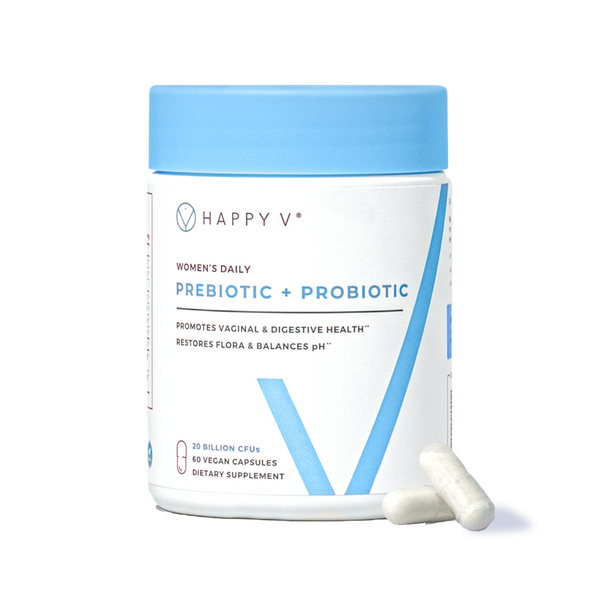
Happy V's Prebiotic + Probiotic contains both of those studied strains (LA-14® and HN019™) alongside five additional clinically researched strains, including Lactobacillus rhamnosus HN001™ and Lactobacillus reuteri HR7™, for a total of 20 billion CFU. Just know that even the best probiotics don't work overnight: most people need two to four weeks of daily use before noticing meaningful improvement.
Try Digestive Enzymes
If your discomfort tends to hit after meals, a digestive enzyme supplement may help.
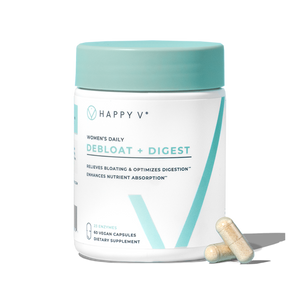
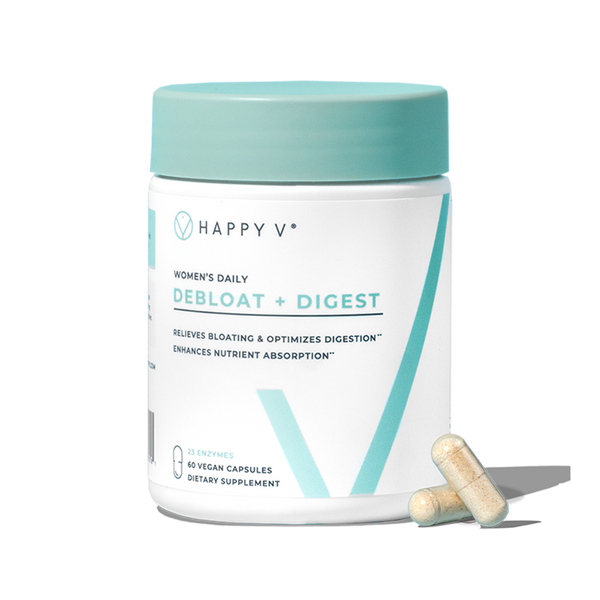
Enzymes break down proteins, fats, and carbohydrates before undigested food can cause problems further down the line, and Happy V's Debloat + Digest was formulated to do exactly that. It combines a full digestive enzyme blend with ginger and peppermint extracts, both of which have carminative properties that help soothe digestive discomfort and ease gas buildup. Together, the enzymes and botanicals work on bloating from two angles: breaking down what your body struggles to digest and calming the irritation that follows. Most people notice relief within 30 to 60 minutes.
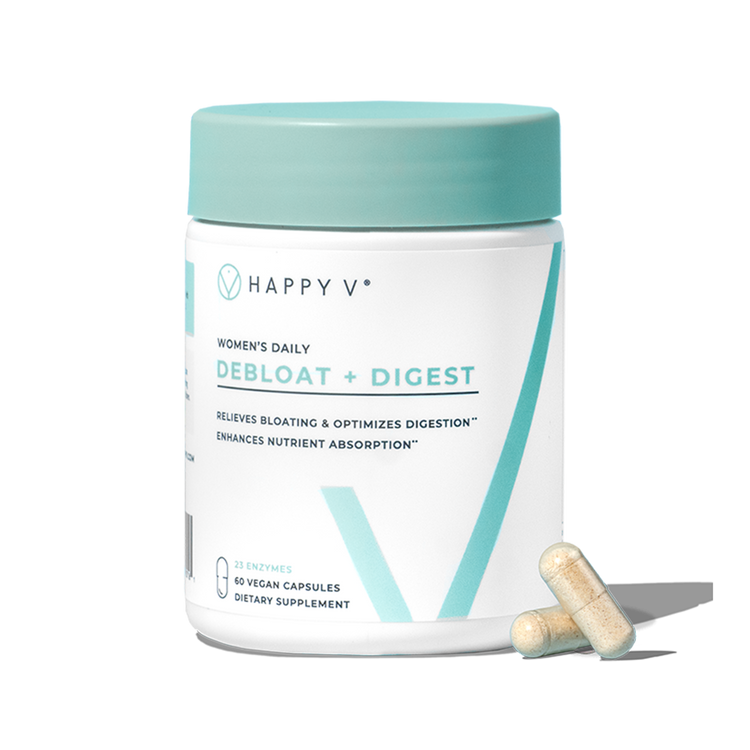
Debloat + Digest
Reduces bloating and soothes constipation, by supporting healthy digestion and enhancing nutrient absorption
Watch Your Sodium, Increase Potassium
Research shows that higher sodium intake increases bloating regardless of what you're eating. Potassium helps counteract sodium by promoting fluid excretion. Bananas, avocados, spinach, and sweet potatoes are all excellent sources (and also quite tasty!).12
Consider Magnesium
Studies show that 200 mg of daily magnesium can reduce premenstrual fluid retention and bloating within just one month of use.13 Magnesium supports muscle relaxation and fluid balance. The recommended daily amount for women is 310 to 320 mg, which is achievable through leafy greens, nuts, seeds, or a daily supplement, depending on your preference.
Move More
Physical activity stimulates gut motility and helps move gas through your digestive system more efficiently.14 Research suggests that just 20 minutes of aerobic exercise three times a week can reduce PMS-related bloating in women. Even a short walk after dinner can make a noticeable difference.
Work with a Dietitian
If you're dealing with persistent bloating and struggling to identify your triggers, working with a registered dietitian, especially one with experience in gut health or gastroenterology, can help.
A dietitian can guide you through an elimination protocol, help you implement that low FODMAP diet we mentioned, and make sure you're not cutting out more than necessary for your overall wellness.15
When to Seek Medical Attention
Occasional bloating is a normal part of life. But some symptoms shouldn't be ignored. Talk to your healthcare provider if you experience:
- Persistent bloating that doesn't resolve on its own
- Unexplained weight loss
- Blood in your stool
- Severe or worsening abdominal pain
- Significant changes in bowel habits
These could point to underlying health conditions, including celiac disease, gastroparesis, or other gastrointestinal issues, that need proper diagnosis and care (not just an internet search).
Keep the Conversation Going
- Visit our blog for more women's health tips.
- Join our private Happy V Facebook group to hear from others who've been there.
- Explore supplements designed to support your vaginal health journey.
Disclaimer: This blog is for informational and educational purposes only and is not intended to diagnose, treat, cure, or prevent any disease. Statements about supplements have not been evaluated by the Food and Drug Administration. For more information about vaginal infections, visit the CDC or speak to a licensed healthcare provider.