

- Fact Checked
- May 21, 2026
- 9 min read
Perimenopause or Menopause? A Complete Women's Health Breakdown

- Written by Daniella Levy • Updated on August 28, 2026
- Updated on August 28, 2026

Table of Contents
Table of Contents
Tell us if this sounds like you: your periods have gone from clockwork to chaotic, you're waking up drenched in sweat at 2 a.m., your mood is swinging like a pendulum, your jeans are fitting differently, and you can't remember why you walked into the kitchen.
If you're in your late 30s, 40s, or 50s, there’s a reason this all might be happening, and it’s one of the biggest hormonal transitions of your life: perimenopause or menopause.
Despite what many women believe, the two words do not mean the same thing, though they are related. This guide is here to discuss the similarities and differences between the two and how to tell what you’re experiencing right now.
This post is for informational purposes only and does not constitute medical advice. See full disclaimer below.
What Is Perimenopause?

Perimenopause, meaning "around menopause", is the transitional phase when your body starts winding down reproductive function.1 During this time, estrogen and progesterone levels fluctuate unpredictably, creating a wide range of physical and emotional changes, including:
Irregular Menstrual Cycles
For most women, irregular periods are the first signal that perimenopause has begun. Your cycles may get shorter or longer, heavier or lighter, or start showing up whenever they feel like it. These menstrual changes happen because estrogen levels are no longer following a consistent pattern, and organized bleeding becomes harder to predict.2
Though your periods may be irregular (sometimes frustratingly so), there is still the possibility for conception during this transition, so birth control is still important for those not looking to expand their family.
Hot Flashes and Night Sweats
Hot flashes and night sweats are hallmark symptoms of perimenopause, and contrary to popular belief, they often start before menopause is officially reached.3 Research shows that these vasomotor symptoms are most pronounced in the year before and the year after the final menstrual period5, lasting anywhere from 30 seconds to several minutes and bringing sudden waves of heat, flushing, and sweating that disrupt daily life (and sleep!).
Mood Swings, Anxiety, and Fatigue
Fluctuating hormone levels during perimenopause directly affect brain chemistry, contributing to mood swings, increased anxiety, irritability, and fatigue that can feel disproportionate to what's actually going on.4 If you've been feeling more emotionally reactive than usual and can't figure out why, you aren’t “going crazy” or imagining things. Hormonal changes may well be the culprit.
Sleep Disturbances and Brain Fog
Sleep disturbances are one of the most underreported symptoms of this stage. CDC data indicate that perimenopausal women are actually more likely than premenopausal or postmenopausal women to sleep fewer than seven hours per night.5 Poor sleep, in turn, feeds into forgetfulness, difficulty concentrating, and the general cloudiness often described as brain fog.
Other Common Symptoms
The symptom list for perimenopause is longer than most people expect. Along with the above, you may experience:
- Breast tenderness from fluctuating estrogen
- Weight changes, particularly around the midsection, as metabolism shifts
- Decreased libido, driven by both hormonal and sleep-related factors
- Vaginal dryness, which can begin before menopause and tends to worsen over time
- Irregular periods that may become heavier or lighter than your baseline
The median onset for perimenopause around age 47, though some women begin noticing significant changes in their late 30s. The transition typically lasts 4 to 8 years.
What Is Menopause?
Unlike perimenopause, menopause isn't a phase; it’s a moment. Menopause is clinically diagnosed after 12 consecutive months without a menstrual period, marking the end of your reproductive years.6 At that point, the ovaries stop releasing eggs and produce significantly less estrogen and progesterone.
The average age of menopause in the United States is 51 to 52, and the phase of life after that is referred to as postmenopause.7
Some important things to know about menopause and postmenopause:
Hormone Levels Stabilize
While estrogen levels are low following menopause, they're at least consistent.8 The dramatic hormonal fluctuations of perimenopause give way to a lower but more stable baseline, and for many women, that stabilization actually brings relief from the unpredictability of the preceding years.
Genitourinary Changes Become More Prominent
Genitourinary refers to the vagina and urinary tract, and genitourinary changes, like vaginal dryness often becomes more pronounced after menopause as declining estrogen levels continue to affect vaginal tissue.9 Studies actually indicate that 27% to as many as 60% of postmenopausal women report vaginal dryness or discomfort during intercourse. Unlike hot flashes, which often ease over time, genitourinary symptoms tend to be progressive without treatment. This treatment can start during perimenopause, so don’t be shy. Speak up and share your symptoms with your doctor, so they can help you find relief.
Long-Term Health Considerations After Menopause
Estrogen plays a protective role in both bone health and heart health. After menopause, women face an increased risk of osteoporosis and heart disease.10 The rapid bone loss that occurs in the first 4 to 8 years post-menopause makes this an important window to focus on calcium intake, physical activity, and regular screenings.
Key Differences Between Perimenopause and Menopause

Though they share a lot of similarities, perimenopause and menopause share key differences when it comes to age of onset, duration, and symptoms, all of which can clue you into where you are in the journey.11
| Perimenopause | Menopause | |
|
What it is |
A transitional phase |
A single moment in time |
|
How long it lasts |
4–8 years on average |
Confirmed after 12 consecutive months without a period |
|
Average age |
Mid-40s onset (sometimes late 30s) |
~51–52 |
| Hormone patterns |
Fluctuating estrogen and progesterone |
Consistently low estrogen and progesterone |
|
Menstrual cycles |
Irregular periods; ovulation still possible |
Menstruation ceases entirely |
|
Fertility |
Pregnancy is still possible |
Natural conception no longer possible |
| Key symptoms |
Mood swings, hot flashes, irregular cycles, sleep disturbances, breast tenderness, weight changes |
Vaginal dryness, hot flashes (may ease), bone loss, heart health considerations |
Managing Symptoms and Supporting Your Body Through the Hormonal Transition

Sometimes that’s true about both perimenopause and menopause: they aren’t something to suffer through.12 Whatever symptoms you are experiencing at either stage, there are evidence-based strategies that can make a real difference. Finding relief starts with an open, honest conversation with your doctor.
Lifestyle Changes
Regular physical activity, stress management techniques, and a nutrient-rich diet are foundational during this hormonal transition.13 Exercise supports bone health, heart health, and mood and, for some women, can also help reduce the frequency and intensity of hot flashes. Avoiding known triggers (like alcohol, caffeine, and spicy food) may also help with vasomotor symptoms.
Hormone Therapy and Non-Hormonal Medications
Hormone therapy (HT and sometimes called HRT) remains one of the most effective medical treatments for moderate to severe menopause symptoms, including hot flashes, night sweats, and vaginal dryness.14 Non-hormonal medications are also available for women who can't or prefer not to use systemic estrogen. Low-dose vaginal estrogen treatments can address genitourinary symptoms specifically, with minimal systemic absorption.
If you're considering any of these options, a conversation with your gynecologist is the right starting point. They can help you evaluate your symptoms, review your health history, and determine what personalized options make sense for you.
Microbiome Support
Here's something most people don't know: the vaginal and gut microbiomes undergo significant changes during this hormonal transition. As estrogen levels decline, beneficial Lactobacillus bacteria often decrease, which can affect vaginal pH balance, digestive comfort, and overall vaginal health8, which is why the risk of infections like bacterial vaginosis (BV) increases during perimenopause.15
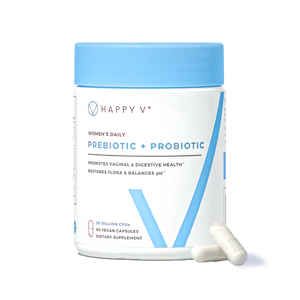
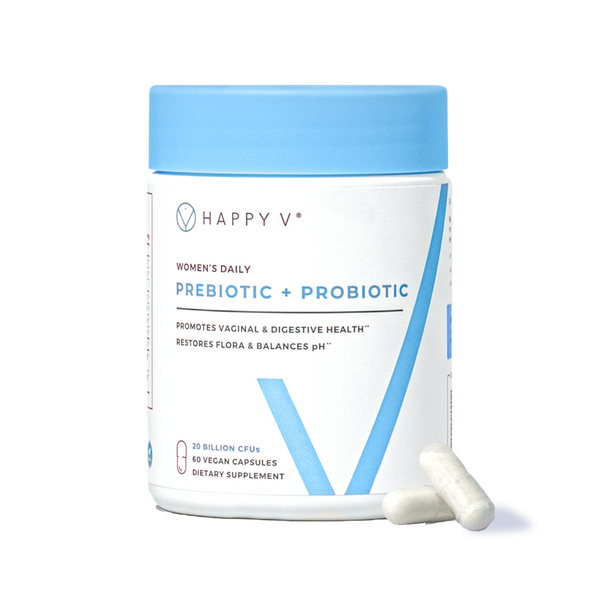
If you're experiencing new vaginal symptoms, supporting your microbiome through targeted supplementation is one non-hormonal remedy worth considering. Happy V's Prebiotic + Probiotic combines clinically studied Lactobacillus strains, including LA-14®, HN001™, and CCFM1110™, with PreforPro®, a patented prebiotic, to help restore healthy vaginal flora and support pH balance during and after the transition.
Managing Vasomotor and Genitourinary Symptoms Together
For women dealing with what feels like the full range of possible symptoms (think: hot flashes, night sweats, vaginal dryness, sleep disruptions, AND mood changes), a targeted supplement approach can be a helpful addition to lifestyle changes.
Happy V's Menopause Relief AM + PM is a hormone-free, dual-action formula that works around the clock. The AM capsule uses DIM, Genistein, and Sensoril® Ashwagandha to support estrogen metabolism, energy, and morning cortisol. The PM capsule brings in Graminex® Flower Pollen Extract and HMRlignan™ to ease night sweats and support vaginal comfort while you sleep. It's a non-hormonal remedy designed for where most women actually live: somewhere in the middle of this transition, looking for options that work with their body.
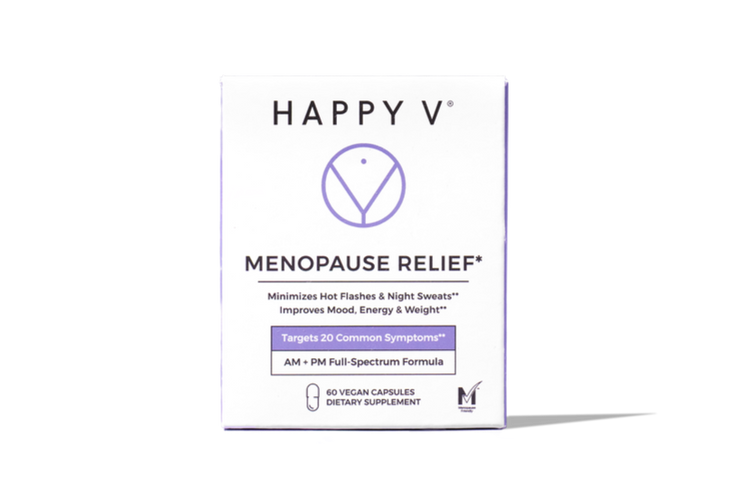
Menopause Relief AM + PM
Supports mood, energy and weight. Minimizes hot flashes and night sweats.
Navigating Information (and Misinformation) About Perimenopause
Perimenopause has become a major topic online, which is great in one regard because it means it's finally getting the attention it deserves.16 But it's also not-so-great because not all the information online is accurate.
One common myth worth calling out: that there's nothing you can do about menopause symptoms and you just have to white-knuckle your way through them.17 That's not true. There are effective hormonal and non-hormonal options, and the right combination depends on your specific situation.
Especially when it comes to evaluating supplements or treatments (even "natural" ones), look for sources grounded in clinical research and peer-reviewed studies, and remember your gynecologist remains your best resource for guidance that's specific to your health history, genetics, and symptom picture, especially if symptoms overlap with other conditions or if you're navigating significant changes in mood, bleeding patterns, or physical symptoms.18
When to See a Doctor
While perimenopause and menopause are natural stages of women's health, certain symptoms warrant further evaluation and attention. Contact a healthcare provider if you experience:
- Extremely heavy bleeding requiring a pad or tampon change every one to two hours
- Bleeding after intercourse or between periods
- Any vaginal bleeding after 12 consecutive months without a period (this is considered postmenopausal bleeding and needs medical evaluation)
- Symptoms that significantly disrupt daily life or sleep
- Significant changes in mood that feel persistent or overwhelming
During your appointment, your doctor can rule out other causes, discuss medical treatments including hormone therapy, and create a personalized plan for managing your symptoms.
Keep the Conversation Going
- Visit our blog for more women's health tips.
- Join our private Happy V Facebook group to hear from others who've been there.
- Explore supplements designed to support your vaginal health journey.
Disclaimer: This blog is for informational and educational purposes only and is not intended to diagnose, treat, cure, or prevent any disease. Statements about supplements have not been evaluated by the Food and Drug Administration. For more information about vaginal infections, visit the CDC or speak to a licensed healthcare provider.