


- Fact Checked
- March 13, 2026
- 13 min read
Can Probiotics Help Prevent UTIs? What the Research Actually Says

-
Written by
Hans Graubard
• Updated on April 02, 2026

Dietary supplement manufacturing, regulatory and product development, and DTCt; leadership experience...
- Updated on April 02, 2026
Table of Contents
Table of Contents
If you’re reading this, you’re probably more than familiar with the UTI cycle of doom: that tell-tale burning sensation, followed by a doctor’s visit, a course of antibiotics, temporary relief, then—bam!—the cycle starts all over again. If this is your reality, you are far from alone. Nearly 50% of women will experience a urinary tract infection in their lifetime, and of those, about 25–30% will go on to have recurrent UTIs.
While a course of antibiotics is almost always the best way to treat an active infection, there are side effects you need to know about, like disrupted gut and vaginal microbiomes, to prevent symptom recurrence. Probiotics can help women mitigate these side effects by supporting the microbiomes during and after antibiotic treatment, but only if you take one that uses clinically studied strains.
This post is for informational purposes only and does not constitute medical advice. See full disclaimer below.
What Is a UTI and Why Do They Keep Coming Back?
A urinary tract infection occurs when pathogenic (or bad) bacteria enter the urethra and travel up into the urinary system, causing infection in the bladder (cystitis) and sometimes the kidneys.1 Most commonly, this is Escherichia coli, or E. coli, which accounts for roughly 80–85% of urinary tract infections. Unlike some other common infections, UTIs are generally symptomatic, with symptoms like a frequent, urgent need to urinate, burning during urination, cloudy or strong-smelling urine, and pelvic pressure.
For many women, UTIs are a one-time event. They take the antibiotics, clear the symptoms, and never have to think about them again. For others, UTIs become a frequent and frustrating visitor, with recurrent infections that occur three or more times a year.2
Women are more prone to UTIs than men due to anatomical differences (women have a shorter urethra, making it easier for bad bacteria to travel to the bladder and cause infection).3 But other risk factors compound the likelihood of recurrent urinary tract infections:
- Sexual activity. This is the most common trigger, as intercourse can push bacteria toward the urethra
- Menopause. Declining estrogen affects the vaginal microbiome and urogenital tissue, reducing natural defenses
- Catheter use. Catheters introduce bacteria directly into the urinary system
- A history of UTIs. Prior infection is one of the strongest predictors of recurrence
- Disrupted vaginal microbiome. A vaginal environment low in protective Lactobacilli is associated with higher UTI risk4
That last point is where probiotics come in, especially once you understand the connection between the gut, the vagina, and the urinary tract.
The Gut-Vaginal-Urinary Tract Connection
Though your body is made of different systems, these systems are deeply connected. Nothing operates in isolation, and your gut, vagina, and urinary tract are no exception. They're part of an interconnected microbial ecosystem, and what happens in one area affects the others.5
E. coli and other pathogenic bacteria are commonly found in your gut. As the microbes move through your body, certain activities (like sexual activity or even improper wiping) can transfer them from the rectal area to the vaginal and urethral openings, and from there into the bladder, which is how the majority of UTIs actually begin.6
A healthy gut microbiome will still contain these pathogenic bacteria, but it will largely be dominated by beneficial bacteria, which help keep pathogen populations in check and reduce the number of bad bacteria available to cause trouble downstream.7
The vaginal microbiome is equally important. A healthy vaginal environment is dominated by certain Lactobacillus species, which produce lactic acid and hydrogen peroxide, maintain an acidic vaginal pH, and create a hostile environment for pathogens like E. coli.8 So if the rogue E. coli enters your vaginal area, it can be killed off before it causes trouble.
When Lactobacilli levels drop due to antibiotic use, hormonal changes, douching, or other disruptions, this natural defense mechanism (aka your vaginal pH) weakens, causing the risk of vaginal infections and UTIs to rise.9
Even the urinary tract itself, once considered sterile, has its own microbiome.10 Research published in the past decade has shown that a healthy urinary microbiome contains Lactobacilli and other beneficial microbes that appear to play a protective role. Disrupting this environment (often through repeated antibiotic courses) can actually increase your vulnerability to future infections.
This is why supporting beneficial bacteria across all three systems is a more comprehensive approach to urinary tract health than using antibiotics alone.
Can Probiotics Help Prevent UTIs?
Yes… but not all of them. Certain probiotic strains have meaningful clinical evidence showing they support urinary health. Others not so much.
Probiotics are live microorganisms that, when consumed in adequate amounts, confer a health benefit.11 There are hundreds and hundreds of different probiotic species and strains. For UTI prevention specifically, the most relevant probiotics are Lactobacillus strains that can colonize the vagina, lower local pH, and competitively exclude harmful bacteria.
A 2023 meta-analysis published in Clinical Infectious Diseases reviewed randomized controlled trials of Lactobacillus probiotics for recurrent UTI prevention and found that vaginal Lactobacillus strains significantly reduced UTI recurrence compared to placebo.12 Oral Lactobacillus strains showed benefit as well, particularly when they included strains with demonstrated ability to migrate from the gut to the vagina.
So what are those stains, exactly?
Before we get into that, one important note: we are discussing probiotics as a potential prevention tool, not as a treatment for an active UTI. If you have symptoms of a UTI, you need to see your healthcare provider and, most likely, take a prescribed course of antibiotics to clear the infection. Letting a UTI go untreated will only lead to more serious consequences.
Which Probiotic Strains Have Been Studied for UTIs?
If you are pursuing probiotics for UTIs as opposed to digestive health or general wellness, strain specificity is more important than ever.13 A general gut health supplement is unlikely to deliver meaningful UTI prevention because it likely doesn’t contain strains that have clinical evidence behind them for urogenital health.
Here are the strains to look for in a probiotic formula. If the formula doesn’t list these exact strains, listing a more generic “Lactobacillus acidophilus,” for example, or even a vague “proprietary blend,” it will likely not help you reach your urinary health goals.
Lactobacillus acidophilus LA-14®
LA-14 is one of the most studied Lactobacillus strains for women's health, and for good reason. In lab studies, L. acidophilus, including the LA-14 strain specifically, ranked among the highest of any Lactobacillus species for its ability to inhibit uropathogenic E. coli,14 the bacteria responsible for the majority of UTIs. It works by competing with pathogens for the same attachment sites on vaginal and urethral cells (aka it crowds them out), while also producing lactic acid to keep pH low and hostile to harmful bacteria, and supporting immune function.
In a randomized controlled trial, LA-14 was specifically shown to reduce the risk of vaginal and urinary tract infections in postmenopausal women, a group at particularly elevated UTI risk.15 LA-14 has also been studied in combination with L. rhamnosus HN001 (see below), where the pair showed the ability to colonize the vagina after oral supplementation and inhibit BV-associated pathogens.
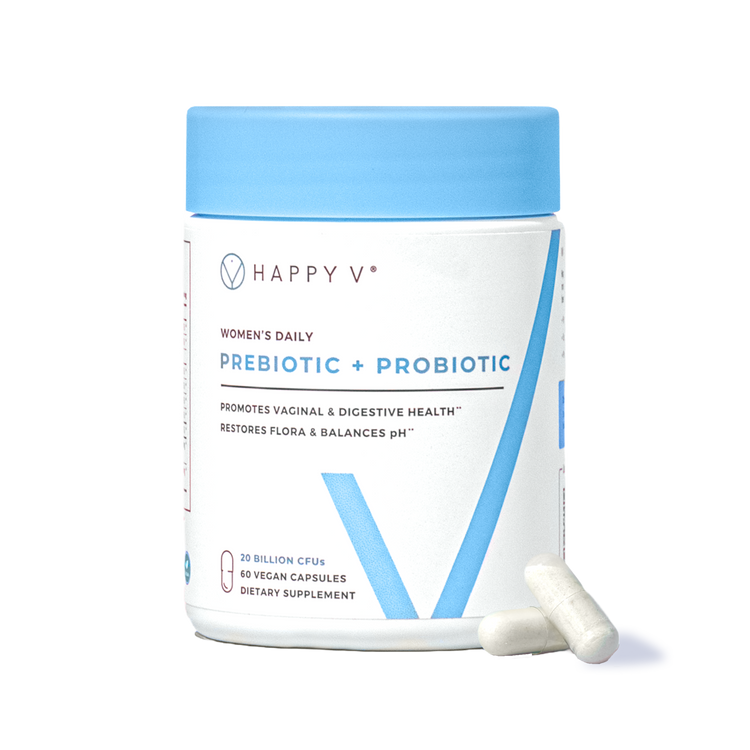 Bestseller
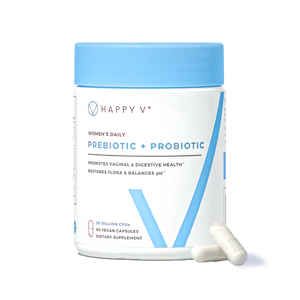
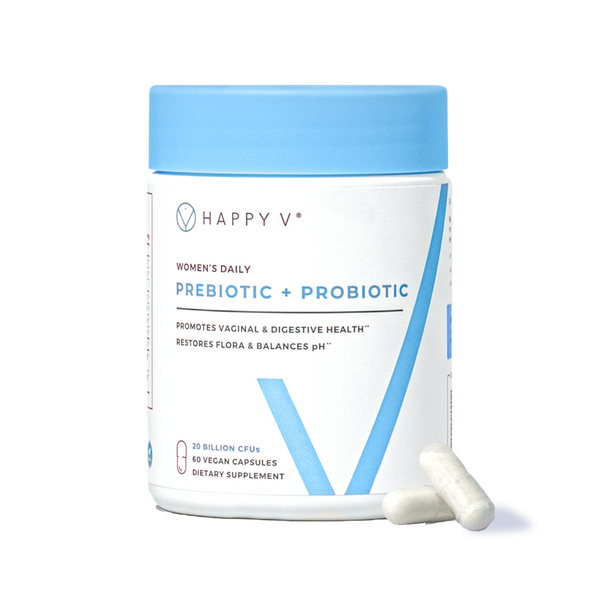
Prebiotic + Probiotic
Maintains vaginal pH and restores gut health.
Lactobacillus rhamnosus HN001™
HN001 is a well-characterized strain with a solid track record in women's vaginal health.16 It's been studied alongside LA-14 multiple times in multiple contexts, including a randomized, placebo-controlled trial. In that trial, the pair was shown to significantly reduce the kind of vaginal inflammation associated with infection risk.
In lab research, HN001 has also demonstrated direct inhibitory activity against common uropathogens like E. coli and Candida, producing lactic acid, hydrogen peroxide, and other antimicrobial compounds that make it harder for harmful bacteria to survive.17
Lactobacillus crispatus CCFM1110™
If there's a star of the show when it comes to UTI prevention, it's L. crispatus. It's the dominant strain in the healthiest vaginal microbiomes, and its presence is one of the strongest predictors of low UTI risk.18
A randomized, double-blind, placebo-controlled trial published in Clinical Infectious Diseases found that women using an L. crispatus probiotic had a UTI recurrence rate of 15%, compared to 27% in the placebo group.19 To put that in context, that cuts the likelihood of recurrence by roughly half. That’s a big deal, and women who achieved the highest levels of L. crispatus colonization saw the greatest benefit. That’s because L. crispatus produces hydrogen peroxide, maintains an acidic vaginal pH, and physically competes with E. coli and other uropathogens for attachment to urogenital cells.
Lactobacillus reuteri HR7™
One of the things that makes L. reuteri particularly useful is that it can travel from the gut to the vagina after being taken orally, something not all probiotic strains are capable of.20 It produces a compound called reuterin, a broad-spectrum antimicrobial that inhibits a wide range of pathogenic bacteria. Clinical research on L. reuteri strains shows meaningful reductions in recurrent UTI frequency when used consistently, particularly as part of a multi-strain Lactobacillus regimen.
Lactobacillus gasseri HLG13™
L. gasseri is one of four Lactobacillus species that naturally dominate a healthy vaginal microbiome.21 Its presence is associated with healthy vaginal pH and lower rates of both UTIs and bacterial vaginosis. L. gasseri strains produce lactic acid and bacteriocins (or natural antimicrobial compounds) that help keep uropathogens from gaining traction in the urinary tract.
Bifidobacterium lactis HN019™
E. coli lives in the digestive tract first, and from there it can migrate toward the urethra and bladder, leading to UTIs.22 That's where HN019 comes in. Rather than directly benefitting the vaginal microbiome, like the Lactobacillus strains above, HN019 works upstream by supporting a balanced gut environment and bolstering the immune system's ability to fight off bacterial invaders.
Multiple randomized controlled trials have shown it significantly enhances immune function by boosting natural killer (NK) cell activity and the ability of immune cells to engulf and destroy pathogens.23 A meta-analysis of four clinical trials confirmed these benefits, with effect sizes that were both statistically significant and clinically meaningful. Think of HN019 as the strain that helps your body's defenses stay sharp before an infection has the chance to start.
PreforPro® Prebiotic Bacteriophage Blend
PreforPro is a newer kind of prebiotic, and a pretty interesting one. Rather than feeding good bacteria the way traditional fiber-based prebiotics do, PreforPro uses bacteriophages (or tiny viruses that target bacteria) to selectively reduce populations of harmful gut bacteria, including E. coli, without disrupting the broader microbiome.24 It also creates a more favorable gut environment for the Lactobacillus and Bifidobacterium strains in the formula to thrive.
What Else to Look for in a Probiotic for UTI Prevention
Strain specificity is one (very important, very large) piece of the puzzle when it comes to choosing a quality probiotic for UTI prevention, but there are other things to consider, too, ones that should all be clearly listed on the label of whatever product you’re looking at,25 including:
- CFU count for each strain. CFU (or colony-forming units) indicates the number of live microorganisms per serving. Effective doses in clinical trials typically range from 1 to 10 billion CFU. More isn't always better. What matters is that the CFU count at the end of shelf life matches the dose used in studies, not just at the time of manufacture.
- Quality and third-party testing. Look for products that have been third-party tested for purity, potency, and safety.
- Guaranteed potency through expiration. A quality probiotic should guarantee CFU counts through the expiration date, not just at the time of manufacture. If a label only lists potency "at time of manufacture," that's a red flag. Probiotics are living organisms, and they die off over time. What's in the bottle when you buy it (or when you finish it) is what actually matters.
- No unnecessary additives. A clean label matters. Look for products free of GMOs, artificial fillers, binders, and unnecessary excipients. The fewer ingredients that aren't doing something useful, the better, especially if you're taking a probiotic daily for prevention.26
Happy V's Prebiotic + Probiotic checks every one of these boxes. It contains clinically studied strains at clinically effective doses, guarantees potency through the expiration date, is third-party tested for purity and potency, and is free of GMOs and unnecessary fillers. It's the kind of straightforward, no-guesswork formula that actually earns a place in your daily routine.
Other Natural Ways to Support UTI Prevention
Probiotics can be a useful tool in your urinary health toolbelt, but there are other evidence-based strategies shown to reduce your risk of recurrent UTIs that shouldn’t be forgotten,27 either:
- Stay hydrated. Drinking enough water is one of the simplest and most effective ways to support urinary tract health. Adequate fluid intake flushes the urinary system regularly, flushing bad bacteria with it. Aim for enough water that your urine is pale yellow.
- Urinate after sex. Post-coital urination helps flush bacteria introduced during sexual activity before they have a chance to ascend into the bladder. It's one of the most consistently recommended behavioral strategies for women with sex-related recurrent UTIs.
- Avoid douching and scented products. Douching and scented vaginal products disrupt the Lactobacillus-dominant vaginal microbiome that protects against UTIs and other infections. Avoid them entirely. If you want to wash yourself, wash your vulva (that’s the outside part!) with mild, unscented soap and warm water only.
- Fermented foods. Incorporating fermented foods like yogurt, kefir, kimchi, and sauerkraut into your diet provides bacteria that support gut microbiome diversity and the broader microbial ecosystem that influences urinary tract health.
- Wipe front to back. A simple but important habit, wiping from front to back after using the bathroom prevents fecal bacteria from being introduced near the urethra.
- Address menopause-related changes. Declining estrogen during menopause affects urogenital tissue and the vaginal microbiome in ways that significantly increase UTI risk. If you're postmenopausal and experiencing recurrent UTIs, talk to your healthcare provider about vaginal estrogen therapy, which has strong evidence for reducing UTI recurrence in this population.28
When to See a Healthcare Provider
Probiotics and lifestyle changes are valuable prevention tools, but they are never a substitute for medical care when you have an active infection.29 See your healthcare provider if:
- You have symptoms of a UTI, like burning urination, urgency, frequency, cloudy urine, or pelvic pressure
- Your symptoms don't resolve after a course of antibiotics
- You're experiencing recurrent UTIs (two or more in six months)
- You have fever, back pain, or flank pain alongside urinary symptoms, which may indicate a kidney infection
- You are pregnant, since UTIs during pregnancy require prompt evaluation and treatment
Keep the Conversation Going
- Visit our blog for more women's health tips.
- Join our private Happy V Facebook group to hear from others who've been there.
- Explore supplements designed to support your vaginal health journey.
Disclaimer: This blog is for informational and educational purposes only and is not intended to diagnose, treat, cure, or prevent any disease. Statements about supplements have not been evaluated by the Food and Drug Administration. For more information about vaginal infections, visit the CDC or speak to a licensed healthcare provider.