



- Fact Checked
- February 20, 2026
- 14 min read
Wellness Unfiltered with Jessica Younes, PhD: A Microbiologist’s Take on Vaginal Balance, pH, and Probiotics


- Written by Daniella Levy • Updated on July 23, 2026
-
Medically Reviewed by Dr. Jessica A. Younes

Biotics (probiotics/prebiotics) specialist with focus on women’s health; PhD in Medical...
- Updated on July 23, 2026

Table of Contents
Table of Contents
There's no shortage of advice online about vaginal health, probiotics, and "balancing your pH." But between buzzwords, half-explained science, and products that promise the world, it's hard to know what's actually backed by evidence and what's just sneaky marketing.
That's why we created Wellness Unfiltered, a monthly interview series that cuts through the noise by amplifying honest, science-informed conversations with real experts in women's health, education, and healthcare.
For this edition, we’re featuring Dr. Jessica Younes, PhD, a microbiologist who’s spent her career studying microbes, biofilms, and how probiotic science is evaluated (and too often misunderstood). After years designing experiments and clinical studies and publishing scientific research, she now brings that same evidence-based approach to her consulting work in the biotics and microbiome space, helping companies evaluate evidence and communicate in a way clinicians and consumers can trust.
In speaking with us, Jessica breaks down what “good chemistry” in the body really means, why Lactobacillus dominance matters for vaginal pH, why BV and yeast infections can be so (SO) persistent, and what to look for when choosing a probiotic or women’s health supplement.
This post is for informational purposes only and does not constitute medical advice. See full disclaimer below.
8 Questions for Jessica Younes, PhD
1. As an expert in microbiology, tell us more about what you do and who you are?
I’m a microbiologist with a PhD, so yes, I’ve been in school for a very long time. But I’ve always believed science shouldn’t stay in the lab. It should be understood, useful, and accessible, because people make real decisions based on it.
Early in my career, I spent years doing hands-on research alongside some very high-class scientists. I designed and ran experiments and clinical studies, analyzed results, and published scientific papers. That training taught me to be very clear-eyed about what the evidence truly supports, and just as importantly, what it doesn’t. It also shaped how I think. I’m always asking why something works, where the data is weak, and what would need to be proven before making conclusions.
Today, I bring that same rigor into my consulting work in the biotics and microbiome industries. I help companies use science to make better decisions: how to design smarter studies, how to evaluate the evidence behind ingredients and products, and how to communicate clearly and accurately in a way that clinicians and consumers can trust.
So, while I started in the lab building the evidence, I now help apply that evidence in the real world for real people with care, clarity, and integrity. I love helping people understand the important role of our tiny microbes in human health!
2. When we talk about “good chemistry” in the body, what systems are we really talking about, and how are they connected?
When people say a woman has "good chemistry," they're really talking about how well her body's systems work together: her vaginal environment, hormones, immune system, and the bacteria in nearby areas like the gut. When everything is balanced, a woman tends to feel comfortable with no itching or unusual discharge.
First on the list: the vaginal environment. Think of it as a small ecosystem with beneficial bacteria, low pH (acidity level), and healthy vaginal tissue. When this ecosystem is stable, it can protect itself from itching and irritation and keep harmful bacteria from growing.
Hormones, and especially estrogen, control the conditions in the vagina. Estrogen keeps moisture levels right and keeps the vaginal lining healthy. This creates the perfect environment for good bacteria to grow. Hormones change naturally during your menstrual cycle and at different life stages. That's why women can notice shifts quickly, even when nothing is actually wrong.
Next is the immune system. It constantly watches for anything unusual. When it's working well, it fights problems without causing too much inflammation. And inflammation is often what makes you feel uncomfortable.
Finally, the vagina doesn't work alone. It's connected to other areas of the body, especially the gut and urinary tract. These areas don't directly control vaginal health, but they do affect things like inflammation and how fast you recover from antibiotics, stress, or infections.
So "good chemistry" really means your whole system is working together to keep you balanced and healthy.
3. Why is Lactobacillus dominance so important for vaginal pH, and why do specific strains matter?
When lactobacilli dominate the vagina, they help keep the pH naturally low and acidic. That matters because an acidic environment makes it harder for unwanted microbes to overgrow. I often describe it as the vagina’s built-in pH management system.
Lactobacilli create this protection by making lactic acid1. Lactic acid is especially good at keeping pH low and reducing inflammation in the vagina.
Not all Lactobacillus bacteria are the same. Different types (and even different strains within the same type) work differently2. Some make more lactic acid than others. Some are better at keeping pH low and stable.
Here's how I like to explain the importance of strain specificity. Say you are trying to find a particular person. Saying "Lactobacillus" is like saying "Jessica." It's a start, but it doesn't tell you which Jessica you're looking for, and there are thousands out there.
A strain name is like a full name with a unique ID: “Jessica Younes with this specific LinkedIn profile.” Now you know exactly who you're talking about and what she's done.
This matters when you're choosing a probiotic. If a product just says "contains Lactobacillus," you can't trace it back to any real research. But when a company lists the specific strain on the label, you can check: Has this exact strain been studied? Did it work for this specific problem?
Without that detail, you're trying to find "Jessica" with no last name and no way to know if you've got the right person.

4. From the research and data you’ve seen, why do BV and yeast infections so often recur after treatment, and what’s missing in the typical treatment approach?
From a microbiology perspective (disclaimer: I’m not a medical doctor), BV comes back so often because treatment kills some bacteria but doesn't always fix the root problem: the bacterial community and environment that allowed BV to grow in the first place.
In a healthy vagina, bacteria naturally form protective communities called biofilms. But in BV, harmful bacteria create an extra-thick, dense biofilm that's very hard for antibiotics to reach3. Think of it like a protective fortress where the bad bacteria can hide.
Antibiotics might kill the bacteria on the surface, but the ones deeper inside the biofilm keep growing. They stay protected in their fortress, creating the high pH environment where BV thrives. That's why the infection often comes back.
I studied biofilms during my PhD, and we saw clear connections between unhealthy biofilms and the symptoms women actually experience, like discharge and inflammation4. That's why I believe the biofilm is a key reason BV keeps returning.
The good news is that some probiotic strains can actually break through and destroy these harmful biofilms, kind of like a Trojan horse. But not all probiotics do this. That's why it matters which specific strains you choose. Whether you take them orally or use them vaginally, both types can work, as long as they're backed by solid research5 6.
When it comes to recovery after antibiotics, the science shows it's not enough to just kill everything and hope things reset on their own. You need a plan to rebuild a stable, protective environment in the vagina.
For BV, that usually means two steps: breaking down the harmful biofilm7, then helping good bacteria re-establish so BV is less likely to return.
5. How are the gut and vaginal microbiomes connected, and why can digestive or inflammatory issues show up as vaginal symptoms?
The gut and vagina are connected in three main ways.
First, the gut acts as a backup source of bacteria for the vagina8 9. Because these areas are physically close, bacteria from the gut area can move to the vagina over time through everyday contact, clothing, and simply being neighbors.
Second, they're linked through your bloodstream. Gut bacteria produce compounds that travel throughout your body. These compounds affect your immune system and inflammation levels everywhere, including in the vagina10.
Third, there's a hormone connection. Gut bacteria influence how your body processes estrogen11. And estrogen controls the conditions in your vagina. So changes in your gut can indirectly affect vaginal health.
Here's what this means in real life: If your gut is irritated or inflamed, that inflammation doesn't stay in your gut12. It can affect your whole body, including your vagina13. Some women notice more vaginal irritation or sensitivity when their digestion is off.
Leading researchers have shown that the body's bacterial communities don't work alone. They're all connected.
For example, Prof. Jacque Ravel's research shows there isn't just one "perfect" vaginal microbiome14. There are actually several different healthy patterns. And all of them respond to what's happening in the rest of your body15. And large-scale research projects, like Sarah Lebeer's ISALA citizen-science study16, have confirmed why whole-body factors, like digestion and inflammation, can show up as vaginal symptoms. Your body is one connected system.
You can read more about the link in our article What Your Gut Health Means for Your Vaginal Health.
6. From a microbiome science perspective, how do changes in odor or discharge reflect shifts in bacterial balance or pH, and when do those signals indicate disruption versus normal variation?
Odor and discharge are signals from your vaginal ecosystem. They tell you which bacteria are present, what they're producing, and whether your vaginal environment is stable or irritated.
When helpful bacteria like lactobacilli are in charge, they keep pH naturally low by producing lactic acid. That's why odor stays minimal.
When that balance shifts and pH rises, BV-associated bacteria produce certain compounds (called biogenic amines17) that cause that classic "fishy" odor. They also create other byproducts that raise pH even more and irritate vaginal tissue.
Here's the part I wish more people understood: the biofilm.
Bacteria don't just float around in the vagina. They live in structured communities that attach directly to the vaginal lining. They're literally stuck there.
In BV, that biofilm becomes thicker and harder to break down18. More bacteria sit in place, producing more irritating byproducts.
Your vaginal cells try to fix this by shedding the top layer to get rid of the problematic biofilm19. That's why you see more discharge. Then the tissue rebuilds... and the biofilm tries to re-establish itself. It becomes a race to control the surface.
Here's how to tell the difference between normal changes and a real problem. Normal changes are mild and don't last long. Maybe you notice slight differences at certain points in your cycle, but there's no discomfort.
A real problem looks different: a strong odor that's new or won't go away, especially if you also have redness, itching, burning, or irritation. Those symptoms mean your bacterial balance has actually shifted, not just your normal hormones fluctuating.
7. How do hormonal shifts across the menstrual cycle - or during perimenopause - change vaginal chemistry and infection risk?
Great question! Hormones, especially estrogen, control the vaginal environment in women of reproductive age.
During your menstrual cycle, when estrogen is higher, the vaginal lining is healthier and stores more glycogen (a natural sugar). That glycogen becomes food for the beneficial bacteria in your vagina.
When bacteria feed on glycogen, they produce lactic acid20. That lactic acid keeps pH low and protective.
When hormones shift and estrogen drops, there's less glycogen available21. That means vaginal pH can rise. Some women feel more sensitive or irritated at certain points in their cycle, or feel slightly more vulnerable to imbalance, even without an actual infection.
During perimenopause, hormone swings become bigger and less predictable. Over time, estrogen levels drop overall.
This can lead to a thinner, drier vaginal lining, less glycogen, and higher pH22. That makes it easier for harmful bacteria to take over, build their protective biofilm, and cause recurring irritation or infections.

8. When evaluating women’s health supplements, what markers indicate a product is truly science-backed rather than generic?
This is such an important practical question. And honestly, it’s probably the one I get most often.
When I’m evaluating women’s health supplements, especially probiotics, I use a very simple filter: does this product meet the basic scientific definition of a probiotic, and can I trace the evidence to robust research?
Two organizations have put out excellent guidance here.
First, ISAPP (International Scientific Association for Probiotics and Prebiotics).This is a nonprofit group of leading scientists who publish guidelines to advance probiotic science. They helped officially define what "probiotic" means23, so they have serious credibility.
Second is IPA (International Probiotics Association), where I'm the Scientific Director. IPA is a nonprofit that promotes best practices and standards in the probiotics industry. Part of my job is protecting the scientific integrity of probiotics. We publish guidance on labeling and quality to help companies do it right, help regulators protect consumers, and help healthcare professionals and consumers know what they're actually buying.
Both organizations agree on what makes a probiotic product science-based24 25 26 27. Here are the 10 things you should see on the label:
- Full ull microbe ID for each strain. Look for genus + species + strain (example: Lactobacillus rhamnosus HN001), not just "Lactobacillus" or "probiotic blend."
- Dose in CFU. CFU stands for colony forming units, which measures live bacteria. If the label only shows "mg," that's just weight, not how many live bacteria you're getting.
- CFU guaranteed at the end of shelf life. The label should guarantee how many live bacteria will still be there when you take it, not just "at time of manufacture."
- Expiration date that matches the CFU amount. The expiration date should align with the guaranteed CFU count.
- Clear storage directions. The label should tell you whether to refrigerate or store at room temperature, and whether to protect from heat or moisture.
- Serving size and directions for use. You should know exactly how much to take and how often.
- Company name and contact info. Credible companies stand behind their products and make it easy to reach them.
- Lot number or production code. This is important for traceability and quality control.
- Transparency with proprietary blends. If the product uses a "proprietary blend," ingredients should still be listed in order by CFU amount.
- Real strain ID for trademarked names. If they use a trademarked strain name, the actual strain ID should still be on the label.
If a product misses basically any of the above, you can’t verify that it’s “science-backed” in any meaningful way because you can’t connect it to studies or confirm you’re getting the dose that was actually tested and produced.
So in the real world, I’m not chasing “the most CFUs” or “the most strains.”
I’m looking for the right strains (fully named on the label), at the right CFU dose (that matches the research), and a company that’s transparent about expiration, storage, and viable counts through shelf life. Because that’s what separates science-backed from generic.
Keep the Conversation Going
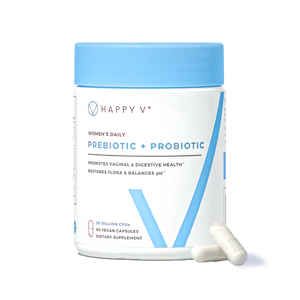
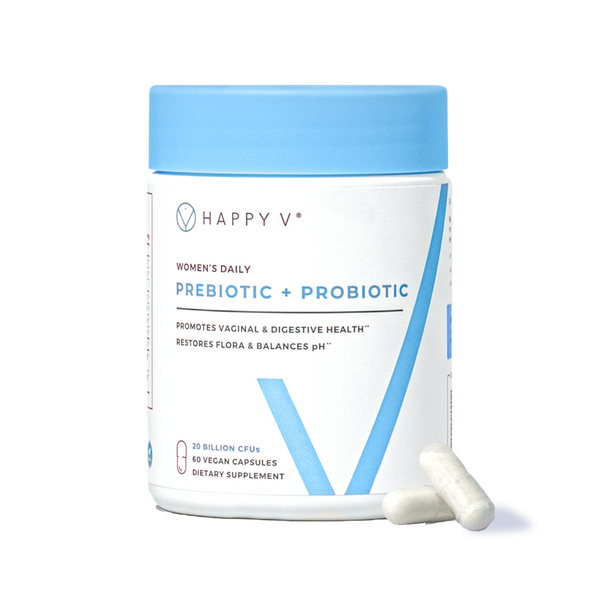
- Shop evidence-based probiotics that meet all 10 of Jessica’s standards.
- Visit our blog for more interviews and women's health tips.
- Join our private Happy V Facebook group to hear from others who've been there.
Disclaimer: This blog is for informational and educational purposes only and is not intended to diagnose, treat, cure, or prevent any disease. Statements about supplements have not been evaluated by the Food and Drug Administration. For more information about vaginal infections, visit the CDC or speak to a licensed healthcare provider.