

- Fact Checked
- April 22, 2026
- 11 min read
Do Cranberry Pills Help With pH Balance?

-
Written by
Hans Graubard
• Updated on April 30, 2026

Dietary supplement manufacturing, regulatory and product development, and DTCt; leadership experience...
- Updated on April 30, 2026
Table of Contents
Table of Contents
Cranberry pills are a long-time staple in the women's wellness world, right up there with probiotics and a good water bottle.1 They've been used for decades to support urinary tract health, and somewhere along the way, people started wondering if they do something for vaginal pH, too.
It's a reasonable question, since both UTI prevention and vaginal pH balance involve keeping unwanted bacteria at bay. But the connection between cranberries and pH is more nuanced than a lot of supplement marketing lets on, and worth understanding before you stock up.
Here's what the science actually says.
This post is for informational purposes only and does not constitute medical advice. See full disclaimer below.
What Is Vaginal pH Balance, Anyway?
A healthy vaginal pH falls between 3.8 and 4.5, meaning it's naturally acidic. That acidity isn't random.2 It's your vagina's first line of defense, making it harder for unwanted bacteria and yeast to establish themselves, and it comes as a result of healthy bacteria in your vagina (mostly certain strains of Lactobacillus) producing lactic acid.
When something disrupts these Lactobacillus strains, your pH creeps too high, giving you less natural defense against bacterial vaginosis (BV), yeast infections, and other discomforts.3 Common disruptors of vaginal pH include unprotected sex (since semen is alkaline instead of acidic), antibiotics, hormonal fluctuations, fragranced soaps, and diet.
So when people ask the question as to whether cranberry pills help balance pH, what they’re really asking is, “Do cranberries help support the Lactobacillus that make the vagina naturally acidic?” The answer is partially yes, but indirectly.
What Cranberry Pills Actually Do
Cranberries contain a specific type of antioxidant called A-type proanthocyanidins (or PACs for short).4 Unlike other antioxidants, PACs are almost exclusive to cranberries. They’re also the reason cranberries have such a well-documented relationship with urinary tract health.
PACs don’t help make the vaginal or urinary tract microbiomes more acidic. Instead, they interfere with the ability of E. coli (aka the bacteria responsible for the vast majority of UTIs) to grip the walls of the urinary tract.5 If you really want to dig into the exact mechanism, they bind to the P-fimbriae on the surface of E. coli, physically altering how the bacteria interact with epithelial cells. Bacteria that can't adhere can't colonize, meaning that a UTI can’t actually occur.
All this from a simple, unassuming cranberry may sound unbelievable, but it’s supported by science.6 Research confirms that A-type PACs disrupt E. coli's ability to adhere to the epithelial cells lining the urinary tract, and the more PACs present, the stronger that protective effect. Notably, this same anti-adherence activity extends to vaginal epithelial cells, not just bladder cells, which is a meaningful detail for overall vaginal health.
Another large 2023 Cochrane review of 50 clinical trials found that cranberry products reduced the risk of recurrent UTIs in women by roughly 26%.7 There's an important catch, though: those results held for concentrated cranberry extract capsules with a meaningful amount of PACs, not for generic cranberry juice, which is often loaded with added sugar that can actually make things worse. In short, the form and quality of cranberry you take matters as much as whether you take it.
So Do Cranberry Pills Balance pH Directly?
No. Not directly.
Cranberries contain acidic compounds and antioxidants with some anti-inflammatory and antimicrobial properties, and some sources suggest this helps the vagina maintain its vaginal pH by making the vagina less hospitable to troublemakers that would crowd out lactic-acid-producing Lactobacillus for resources.8 That being said, you won't find strong clinical evidence that taking a cranberry pill measurably lowers vaginal pH the way Lactobacillus supplementation (aka taking a daily probiotic with clinically proven strains of Lactobacillus) does.
Where D-Mannose Fits In
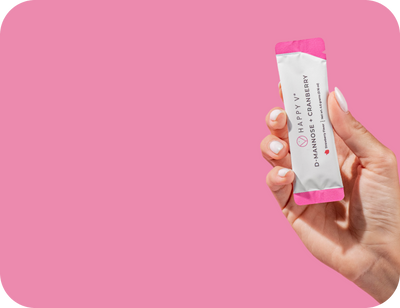
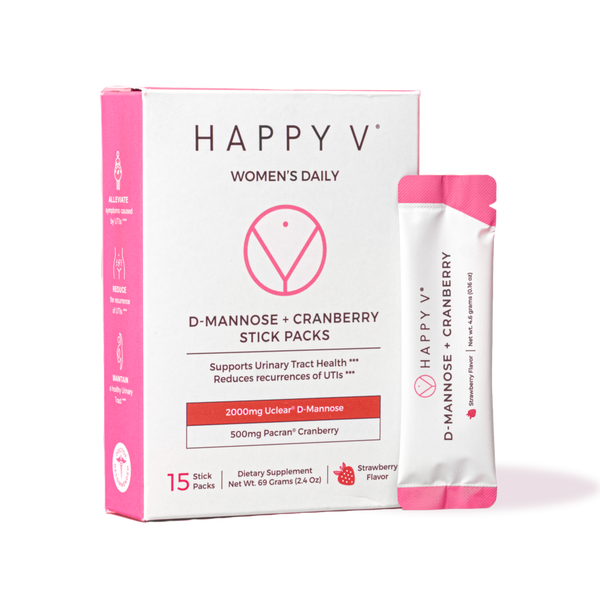
As much of a UTI prevention powerhouse as cranberry is, D-mannose is just as powerful, and understanding how the two work together explains why Happy V's D-Mannose + Cranberry is formulated the way it is.9
D-mannose is a simple sugar that, when consumed, passes quickly through the body and concentrates in the urine.10 Once there, it acts as a decoy. E.coli will actually bind to the D-mannose instead of the walls of the urinary tract, where it can be flushed right out of the body before establishing infection. A 2020 study found that taking cranberry and D-mannose together led to better recovery from UTIs than either alone, with especially strong results in cases where antibiotics weren't working.
This is why Happy V D-Mannose + Cranberry brings these two clinically-studied ingredients together in one clean formula designed to support urinary tract health from multiple angles. If you're prone to recurrent UTIs or want proactive support between infections, it's a smart combination backed by real science.
The Role of Probiotics and Prebiotics in Vaginal pH Balance
If there's one thing that has the most direct impact on vaginal pH, it's the health of your vaginal microbiome, more specifically the population of Lactobacillus strains that call it home.11
As we said earlier, these Lactobacillus bacteria produce lactic acid as part of their normal function, which is what keeps the vaginal environment acidic.12 When Lactobacillus populations are depleted by antibiotics, hormonal changes, or a disruptive diet (among other things), pH rises, and these good, protective bacteria lose their competitive edge against bad bacteria like Gardnerella vaginalis (aka the main baddie behind bacterial vaginosis).
Two Lactobacillus strains in particular have strong clinical support for vaginal health: Lactobacillus rhamnosus HN001™ and Lactobacillus acidophilus LA-14®. Both have been studied specifically for their ability to colonize the vaginal environment, maintain healthy pH levels, and reduce the recurrence of BV and yeast infections, and studies show these benefits are especially pronounced when the two work in tandem.
While you may read about “probiotic-rich foods” like Greek yogurt, kefir, kimchi, and sauerkraut, the truth is these foods don’t actually contain these clinically studied strains of probiotics, though they do contain beneficial bacteria.
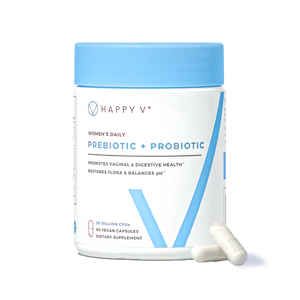
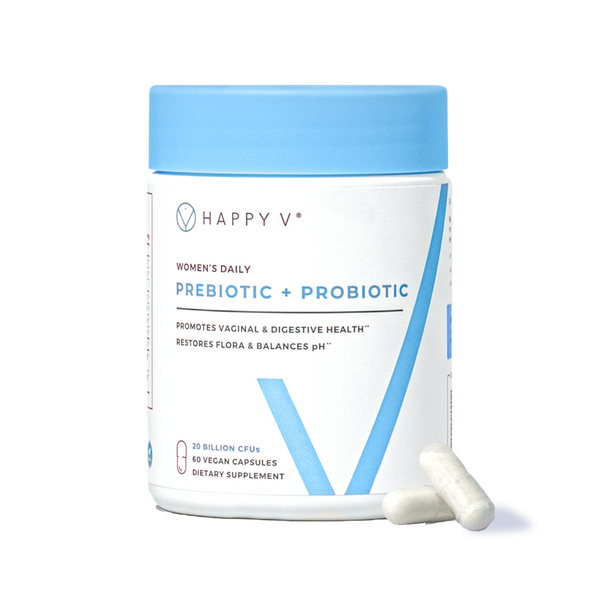
The best way to get clinically studied Lactobacillus strains at their clinically effective doses is through a supplement like Happy V’s Prebiotic + Probiotic that lists these strains, among others, specifically on their label.
In preclinical studies, Happy V’s unique blend was shown to help keep harmful bacteria like Gardnerella vaginalis and Candida albicans at bay, while promoting overall pH balance and vaginal wellness.

The Foundationals Kit
Promote urinary tract health and balance your vaginal microbiome
Other Foods That Support Vaginal Health
What you eat affects your vaginal health in more ways than most people realize.13 Beyond cranberry, here are a few foods worth knowing about. You can read more about foods that support and detract from vaginal wellness in our separate blog post, The Best and Worst Foods For Vaginal Health.
- Sweet potatoes. Sweet potatoes are rich in beta carotene, which the body converts to vitamin A. Vitamin A helps maintain healthy mucosal tissue (including the vaginal walls) and supports immune function in the vaginal area.
- Dark leafy greens. Spinach, kale, collard greens, and chard are high in vitamin E, magnesium, and calcium. These nutrients support muscle health, tissue integrity, and healthy circulation, all very relevant to vaginal comfort and function. Greens are also packed with antioxidants that help reduce systemic inflammation.
- Avocados. Along with being delicious, avocados deliver plant-based fats, vitamin B6, and potassium. Healthy fats support natural lubrication, and vitamin B6 plays a role in hormone regulation, which in turn affects vaginal dryness, especially around menopause or hormonal fluctuations.
- Omega-3 fatty acids. Found in fatty fish, flaxseed, chia seeds, and walnuts, Omega-3s have anti-inflammatory properties that support overall tissue health and may help with vaginal dryness. Some research also suggests omega-3s support healthy estrogen levels, which are closely tied to vaginal lubrication and pH stability.
- Citrus fruits and vitamin C–rich foods. Oranges, bell peppers, strawberries, and kiwi all support immune function and may help maintain an acidic urinary environment. Vitamin C has mild antibacterial properties and supports the body's overall defenses against vaginal infections and UTIs.
- Soy products. Soy products like edamame, tofu, tempeh, and miso contain phytoestrogens including isoflavones and the compound phloridzin, which mimic estrogen in the body. For women with lower estrogen levels (particularly those going through menopause), minimally processed soy products may help address vaginal dryness and support overall vaginal tissue health.14
Lifestyle Practices for a Healthy Vagina
You can take a high-quality probiotic and eat clean at every meal and still struggle with vaginal pH balance due to certain lifestyle habits that detract from vaginal health.15
If you struggle with ongoing imbalance and recurring infection, here are the lifestyle changes that can make a meaningful difference:
- Hydration. Staying well-hydrated supports every system in the body, and the reproductive system and vagina are no exception. Adequate water intake helps flush bacteria from the urinary tract, supports natural vaginal lubrication, and keeps mucosal tissues hydrated and resilient. If you're prone to UTIs or vaginal dryness, water intake is one of the simplest levers you can pull. Aim for at least eight glasses a day, and even more if you're active or in a hot climate.
- A balanced, low-sugar diet. As discussed above, what you eat directly affects your vaginal microbiome. A diet heavy in processed foods, sugar, and alcohol doesn't just affect your gut health; it raises vaginal pH, feeds harmful bacteria and yeast, and depletes the Lactobacillus populations you need to keep things balanced. A balanced diet rich in whole foods, fermented options, lean protein, fiber, and healthy fats supports vaginal flora from the inside out.
- Good hygiene. Most people think “good hygiene” is washing regularly, but the vagina is self-cleaning. It doesn't need soaps, douches, scented wipes, or fragranced products to stay clean. In fact, using them often does more harm than good by stripping away healthy bacteria and disrupting pH. For the external vulvar area, warm water is enough. Avoid fragranced soaps, and be skeptical of any product marketed as a "feminine hygiene" necessity. If you're experiencing persistent odor, discharge changes, or irritation, that's information worth taking to your doctor, not a signal to reach for a scented wash.
- Cotton underwear. It's such a simple thing, but it matters. Breathable cotton underwear allows airflow and reduces moisture buildup in the vaginal area. Synthetic fabrics trap heat and moisture, creating conditions more favorable to bacterial and yeast overgrowth. If you're dealing with recurrent yeast infections or BV, switching your underwear is one of the lowest-effort changes you can make.
- Safer sex practices. Semen is alkaline, which temporarily raises vaginal pH after intercourse. Using condoms during sex helps minimize this pH disruption and also reduces exposure to sexually transmitted infections that can alter vaginal flora and pH. Urinating after sex is another simple practice that helps flush bacteria from the urethra before they have a chance to establish themselves.
- Regular gynecological visits. Annual well-woman visits give your healthcare provider the chance to catch changes in vaginal health early, before they become recurring problems. And if you notice unfamiliar vaginal odor, unusual discharge, itching, or discomfort, don't wait for your annual visit to bring it up. A healthcare professional can accurately diagnose whether you're dealing with BV, a yeast infection, or something else entirely, and guide you toward the right treatment. Self-diagnosing and self-treating can often make things worse.16 When in doubt, ask your OB-GYN.
The Bottom Line
Cranberry pills are genuinely useful, just not quite in the way the marketing sometimes suggests.17 Their documented strength is in helping prevent recurring urinary tract infections. This can have a pH-balancing effect, but indirectly.
When it comes to your vaginal and urinary health, cranberry pills work best as part of a bigger picture, one that includes a high-quality probiotic to support Lactobacillus populations, a nutrient-dense diet, good daily hygiene habits, and regular gynecological care.18
Your vaginal microbiome is doing a lot of work on your behalf. The goal is to give it everything it needs to keep doing its job.
Keep the Conversation Going
- Visit our blog for more women's health tips.
- Join our private Happy V Facebook group to hear from others who've been there.
- Explore supplements designed to support your vaginal health journey.
Disclaimer: This blog is for informational and educational purposes only and is not intended to diagnose, treat, cure, or prevent any disease. Statements about supplements have not been evaluated by the Food and Drug Administration. For more information about vaginal infections, visit the CDC or speak to a licensed healthcare provider.