







- Fact Checked
- June 09, 2025
- 10 min read
BV vs. UTIs: Causes, Symptoms, and Prevention Tips

-
Written by
Hans Graubard
• Updated on January 13, 2026

Dietary supplement manufacturing, regulatory and product development, and DTCt; leadership experience...
- Updated on January 13, 2026
Table of Contents
Table of Contents
Bacterial vaginosis (BV) and Urinary Tract Infections (UTIs) are both incredibly common infections, affecting millions of women every year, just in the United States.
Though these two infections share certain symptoms, like burning during urination, as well as certain treatment options, they also have some key differences, especially when it comes to risk factors, that you should know to help minimize the risk of reoccurrence.
What Causes BV and UTIs?

BV and UTIs are both bacterial infections, meaning that uncomfortable symptoms, like fishy odor or frequent urination, are due to an overgrowth of bad bacteria.
With bacterial vaginosis, that infection (as the name might imply) is in the vagina, and the bacteria at play is usually Gardnerella vaginalis. Now, the presence of Gardnerella vaginalis is not always a sign of BV. In fact, even healthy vaginas have controlled levels of G. vaginalis.
When a person has BV, though, something has caused an imbalance in the vaginal microbiome, affecting the amount of healthy bacteria (typically Lactobacillus) present in the vagina. Without healthy bacteria, harmful bacteria have the room and resources they need to multiply and thrive.
Urinary Tract Infections affect the urinary tract. The most common bacteria associated with UTIs is E. coli. Typically, E. coli enters through the urethra and leads to symptoms like burning during urination and a frequent need to “go.” If left untreated, the infection can spread up the urinary tract to the bladder and kidneys, leading to more severe symptoms.
Symptoms of BV vs UTIs

Though they have different root causes, BV and UTIs can be easy to confuse because many of the symptoms overlap.
Many women who have an active BV infection don’t experience any symptoms at all. For those that do, the most common symptoms include:
- Thin, gray vaginal discharge
- Unpleasant vaginal odor often described as “fishy”
- Change in vaginal pH
- Pain, itchiness, or burning in or around the vagina
- A burning sensation when urinating
With a UTI, the most common symptoms include:
- A frequent urge to urinate
- Strong smelling urine
- A burning or stinging sensation while urinating
- A change in the urine’s appearance from clear and pale yellow to cloudy and dark yellow or reddish pink
- Pelvic pain, especially in women
- Nausea, vomiting, and chills
The last two UTI symptoms in that list are signs that your infection has spread to your kidneys. This is a severe infection known as pyelonephritis and requires immediate medical attention.
While pyelonephritis is an urgent matter, Dr. Barry Peskin, an OBGYN with two decades of experience, says no symptoms of BV or a UTI—however mild—should ever be ignored:
“Symptoms are your body’s way of telling you something is wrong,” Dr. Peskin says. “Both BV and UTIs are highly treatable infections, especially with early intervention. The longer someone waits before seeing a healthcare provider, the more severe the symptoms can get and the higher the chance of other complications becomes.” - Dr. Peskin

Diagnosing BV vs UTIs
While you may feel 100% certain that you have BV or a UTI, it’s best to receive an official diagnosis from a doctor or other healthcare provider before beginning treatment.
Diagnostic testing for BV includes:
- A pH test. Normal vaginal pH is around 3.8 to 4.5. A medical provider may test your vaginal pH using a pH paper to see if your vaginal pH is higher than expected, which could indicate a BV infection.
- Wet mount test. In this test, a sample of vaginal discharge is checked for bacteria by seeking out white blood cells and clue cells. If clue cells are present, it may mean you have BV.
- Whiff test. In the whiff test, a special solution is added to a sample of vaginal discharge. If an unusual ionic or metallic odor occurs, BV is likely present.
If a UTI is suspected, a doctor will typically perform one or more of the following:
- Urine sample analysis. A doctor may conduct a lab analysis to look for white blood cells, red blood cells, or bacteria present in your urine since these can indicate a UTI.
- Bacteria cultures. In this test, a medical provider may use a bacteria culture to determine which bacteria is causing your infection and determine which medication would be most effective for treating it.
- Urinary tract imagery. If you’re experiencing recurring UTIs that aren’t responding well to medication, your doctor may want to conduct a more advanced screening test to understand what the underlying problem is. These tests may include an ultrasound, a computerized tomography (CT) scan, or a magnetic resonance imaging (MRI) test.
- Cystoscopy. If the above tests do not yield results, your doctor may perform a cystoscopy. A cystoscope is a long, thin camera that is inserted in your urethra and passed through to your bladder.
The good news is that most of these tests are quick, relatively painless, and highly accurate. With these results, your doctor will be able to advise the best course of treatment.
Standard Treatment Options for BV and UTIs
The most common form of treatment for BV and UTIs is antibiotics. The most common antibiotics prescribed for BV are metronidazole and clindamycin, while for UTIs, a doctor will typically prescribe trimethoprim, fosfomycin, nitrofurantoin, cephalexin, or ceftriaxone.
While antibiotics are highly effective at eliminating bad bacteria, like E. coli, they are not without side effects. Antibiotics don’t just kill off the bad bacteria in your body; they kill all the bacteria in your vaginal, gut, and urinary tract microbiomes, including that healthy Lactobacillus bacteria.
Without healthy bacteria, you are prone to recurrence or even secondary infections, like yeast infections, following a course of antibiotics. That was the experience of 26-year-old Asia, who was caught in a vicious infection cycle of BV and yeast infections for years. As Asia says:
“It got to a point where I would go to the doctor’s, and they would just give me both BV medicine and medicine for a yeast infection because I already knew that I was going to get it once they gave me the medicine [for BV].” - Asia
Natural Interventions for BV and UTIs

While antibiotics are the standard treatment, some people explore natural options to help manage symptoms alongside medical advice. Evidence for natural interventions varies, so consult your healthcare provider before making changes to your treatment plan.
These statements have not been evaluated by the Food and Drug Administration. Any products mentioned are not intended to diagnose, treat, cure, or prevent any disease (though they will hopefully make you feel a little more informed about your health!)
Natural interventions include:
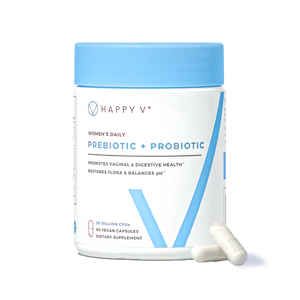
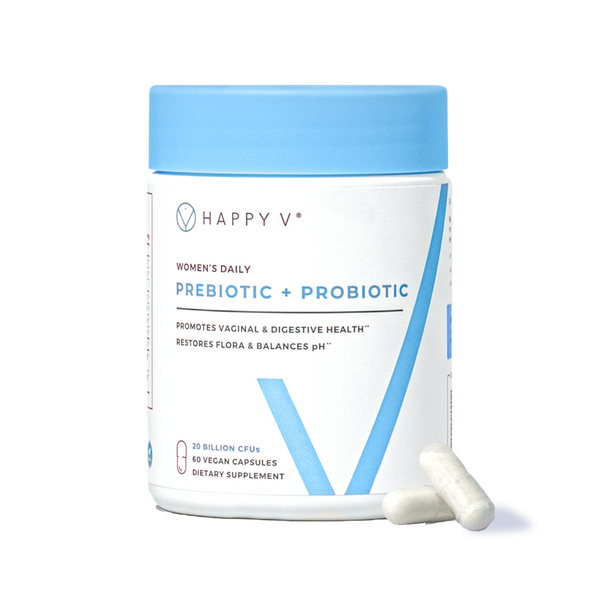
- Probiotics: Probiotics for vaginal health may provide healthy strains of bacteria to your vaginal flora so your body’s natural defenses against infection remain strong. Some probiotic supplements contain strains of Lactobacillus studied for vaginal health support; however, results can vary. You may consider taking probiotics at the first sign of symptoms or alongside antibiotics, but always consult your healthcare provider before use.
- Prebiotics: Prebiotics are essentially food for probiotics. When you consume prebiotics, you make it more likely that good bacteria will populate your microbiome. You can get prebiotics naturally through foods like berries, oats, and beans, but oftentimes, you can get a quality probiotic supplement that includes prebiotics as well.
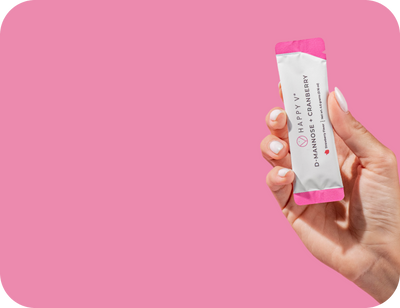
- Cranberry supplements: Cranberry supplements offer antioxidant properties without the added sugar found in cranberry juice. Some supplements include D-Mannose, which preliminary studies suggest may help reduce E. coli adhesion in the urinary tract. However, more research is needed. Discuss with your healthcare provider whether cranberry supplements might be appropriate for you.
Can UTIs and BV Cause Each Other?

While BV and a UTI are two different infections, they are related, and unfortunately, having BV can often trigger recurring urinary tract infections.
That’s because Gardnerella vaginalis (aka the bacteria most often associated with BV) has the ability to activate hidden E. coli from a previous UTI. If you do not have enough healthy bacteria in your microbiome to fight off the E. coli, it will begin to multiply and eventually cause a recurrent UTI. This happens frequently. In fact, in a study by Amatya et al, it was found that 75% of female participants who had BV, also had a UTI.
How To Prevent BV and UTIs
If you experience a BV infection or UTI, don’t blame yourself—these infections are common and can occur regardless of any prevention measures taken to ward them off.
That being said, don’t resign yourself to recurring infections and all the uncomfortable symptoms that come with them, either. Oftentimes, smart lifestyle changes are all you need to help end the cycle.
Some of the most effective lifestyle changes to help prevent symptoms of BV and UTIs include:
- Taking a probiotic supplement. Probiotics encourage the growth of good bacteria that help fight off infection-causing bacteria. Eating foods full of probiotics like yogurt and/or taking a probiotic supplement may help to prevent the risk of BV and BV-associated UTIs. However, research is still ongoing, and you should consult your doctor for personalized advice.
- Drink plenty of water. Drinking lots of water means you use the bathroom more. And using the bathroom more means you help flush out bad bacteria from the urinary tract and prevent UTIs.
- Avoid drinks that irritate the bladder. Drinks such as coffee, soda, and alcohol may take a toll on the bladder. If you’re experiencing an active infection, try to limit your consumption of these drinks to prevent worsening symptoms.
- Don’t use scented soaps or washes. While they may smell delicate, scented products contain chemicals that can be harsh on your sensitive vaginal area and disrupt your vaginal pH. Only wash your genital area using warm water and mild, unscented soap.
- Don’t douche. Douching can force an active infection deeper up the urinary tract, and it can also clear your urinary or vaginal tract of good bacteria, making you more prone to future infections.
- Use protection during intercourse. Using condoms or dental dams can help prevent the spread of bacteria between sexual partners, which can reduce your chance of developing BV, a UTI, or even a sexually transmitted infection (STI).
- Keep the vaginal environment dry. Change out of bathing suits, sweaty workout clothes, and wet panty liners quickly, and wear dry cotton underwear when possible. Moisture causes bacteria to grow, which can increase your risk of infection.
Keep Your V Healthy With Happy V
If you ever experience symptoms of BV or a UTI, contact your healthcare provider as soon as possible. They can give you an accurate diagnosis and help you determine the best course of treatment.
When you meet, speak with your healthcare provider about whether natural options like probiotics or cranberry supplements may be right for you.
Remember 26-year-old Asia, who struggled with recurring BV? She talked with her doctor about incorporating Happy V probiotics into her care routine. Here’s what she had to say about how taking Happy V, alongside other medical advice, helped her. Individual results may vary.
“My BV was taking a mental toll on me. I kept my BV a secret, but with Happy V, I am not only BV-free, but I’m more confident talking about these kinds of issues.” - Asia
Disclaimer: This blog is for informational and educational purposes only and is not intended to diagnose, treat, cure, or prevent any disease. Statements about supplements have not been evaluated by the Food and Drug Administration.